Miami Area Guide
Best Areas in Miami for International Buyers
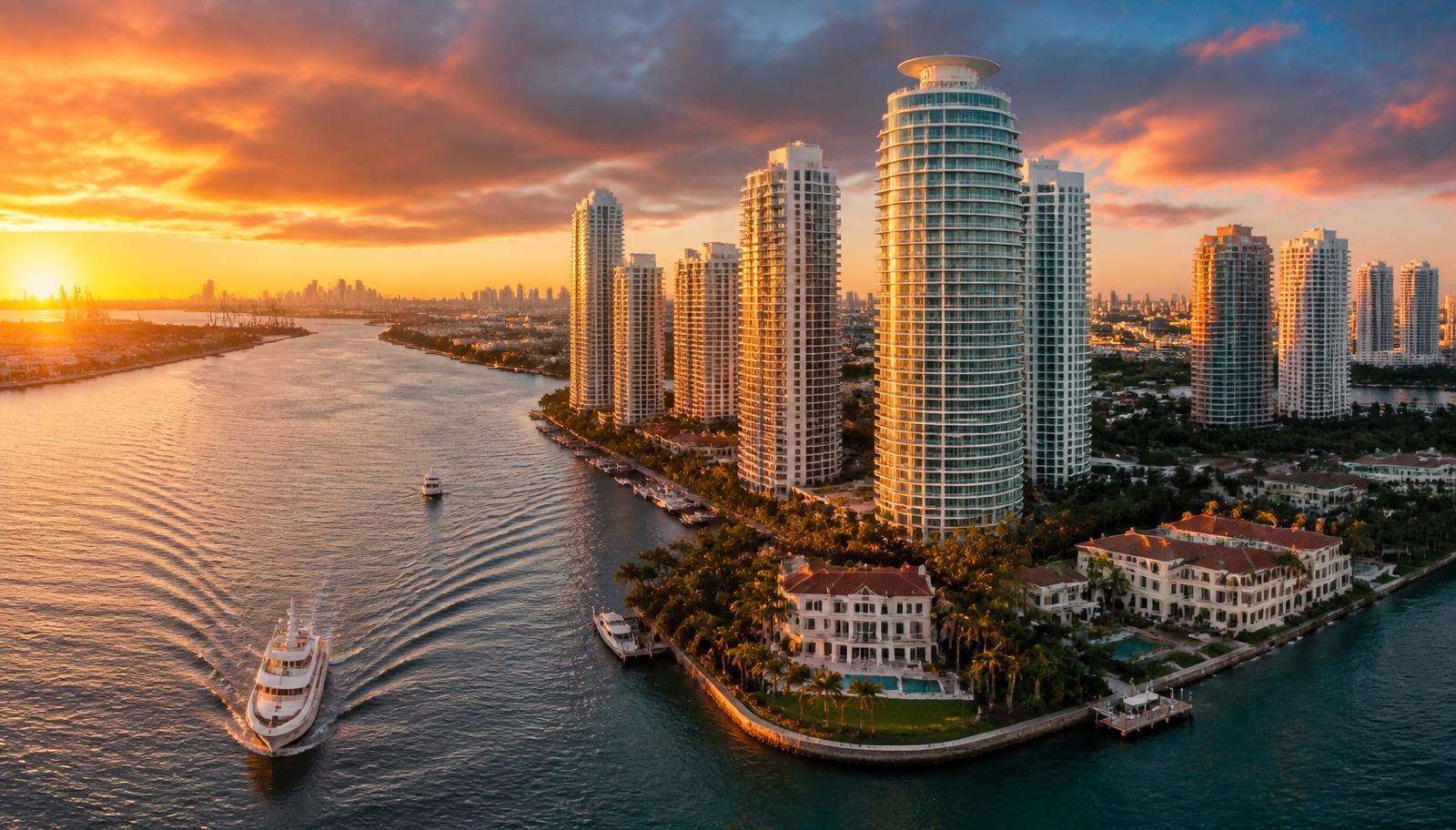
What Are the Best Areas in Miami for International Buyers?
There is no single best area for every international buyer. Brickell, Miami Beach, Edgewater, Coral Gables, Coconut Grove, Key Biscayne, Bal Harbour and Sunny Isles Beach offer different combinations of condos, houses, waterfront property, walkability, privacy and ownership style. The right choice depends on what you are buying, how you plan to use it and the ownership experience you want after closing.
Most international buyers open the conversation the same way: which neighborhood is best? It is the wrong first question, because the areas below are not competing versions of the same product. They differ in what is actually for sale — towers, houses, land, shoreline — and in what owning there feels like when you are not in Florida.
This guide compares the main areas an international buyer typically shortlists, using the same editorial structure for each: what the area is, what you are primarily buying, what ownership tends to involve, what may appeal to a remote owner and what to verify before making an offer. It does not rank areas, and it does not forecast returns.
Start With the Property Type, Not the Neighborhood
Property type is the first filter because it narrows the map faster than any other criterion. A buyer looking for a high-rise condominium, a single-family house, a waterfront estate, new construction, a lock-and-leave residence or a full-time home will naturally end up comparing different areas.
Each type is really a bundle of things you are buying at once, and the bundle is what determines your due diligence.
What you are actually buying
- Building + association + services + view
- Condo
- House + land + street + condition
- House
- Property + shoreline + water access + dockage
- Waterfront
- Project + developer + timeline + future ownership
- New construction
If the property type is still open, the specific guides are the faster route: how the process works for a condominium purchase in Miami, how condominiums and houses differ in Miami pricing and ownership, what changes when a property sits on the water in our Miami waterfront homes guide, and what a pre-construction purchase involves in the Miami new construction guide.
How Will You Use the Miami Property?
Use is the second filter, and it changes the answer more than budget does. A full-time residence, a seasonal second home, a lock-and-leave property, a rental where legally permitted, a base for a future relocation and a long-term family holding are different assignments for the same money.
A full-time residence tends to prioritize schools, commute, daily services and the street itself. A seasonal home prioritizes what happens while nobody is there. A lock-and-leave prioritizes building services and simplicity. A property intended for rental use, where the local rules and the building's own documents permit it, has to be selected against those rules rather than against a preference. A future relocation is the case where the practical daily-life questions deserve as much weight as the property.
What Kind of Ownership Experience Do You Want?
Ownership experience is the part buyers underestimate from abroad. A full-service condominium, a house whose maintenance you control, a waterfront home, a gated or private community, a new development and an established neighborhood all place different demands on an owner.
For an international owner in particular, the questions worth asking early are practical: what happens while the property sits vacant, what services the building provides, who handles maintenance, how security and access work, who lets a contractor in, how much association involvement the property implies, and who checks on the property between visits. None of these are answered by the area name.
Supreme Capital Real Estate Agents Miami is a brokerage; we do not provide property management. Raising these questions during the search simply keeps them from becoming surprises after closing.
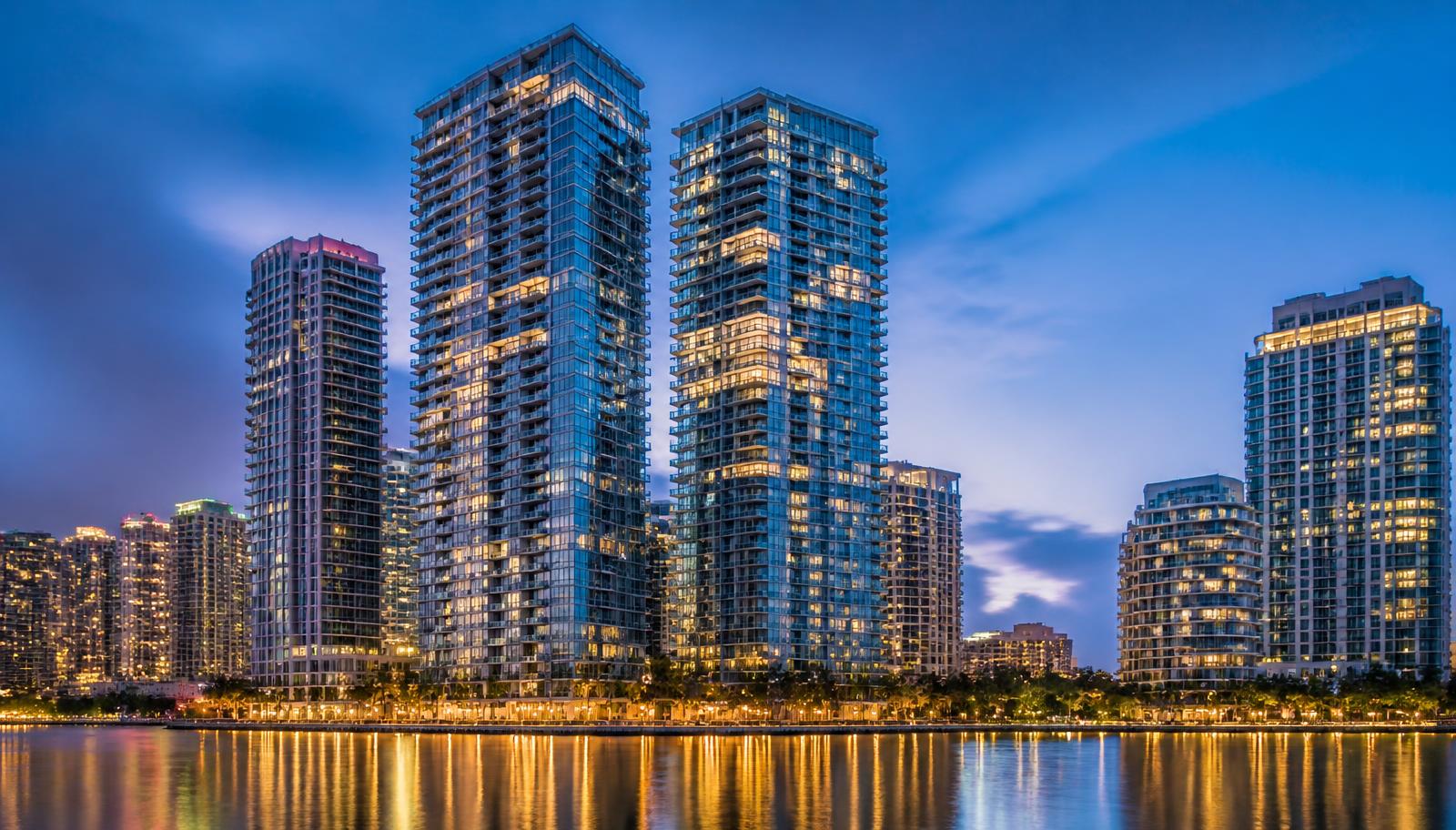
How Do Miami's Main Areas Compare for International Buyers?
Each area below is described by character and property mix rather than by expected performance. Before the descriptions, one geographic note matters: several of these places are separate municipalities in the Greater Miami area rather than neighborhoods inside the City of Miami. Miami Beach, Key Biscayne, Bal Harbour and Sunny Isles Beach each have their own municipal government and their own rules.
Editorial orientation
Mainland
- Edgewater
- Brickell
- Coconut Grove
- Coral Gables
Coast & islands
- Sunny Isles Beach
- Bal Harbour
- Miami Beach
- Key Biscayne
Brickell: Urban High-Rise Condo Ownership
Brickell is primarily a high-rise condominium environment in Miami's urban core, walkable by Miami standards, with restaurants, services and offices at street level. What you are buying is almost always a unit inside a building rather than land, which is why building-to-building differences matter so much here.
For a remote or international owner, the appeal is usually the full-service building: staffed lobbies, on-site management and the lock-and-leave simplicity of vertical ownership. The items to verify are building management, parking, amenities, association fees, leasing rules, building finances and reserves or assessments where applicable. Newer and long-established towers behave differently on every one of those points. Our Brickell community guide covers the area in more depth.
Miami Beach: Condos, Homes and Waterfront Property
Miami Beach is a separate municipality on the barrier island, and it is not one property type. It includes condominiums, single-family homes and waterfront houses across several submarkets and building eras, which produces genuinely different ownership experiences within the same city.
Three purchases inside one city
- Unit + building + association + view
- Miami Beach condo
- House + land + street + condition
- Miami Beach house
- House + land + waterfront + access
- Miami Beach waterfront
For an international buyer, that means the question is rarely whether to buy in Miami Beach; it is which Miami Beach purchase is being considered. Rental use deserves particular care here: rental rules can be highly specific to the location, property and building, and both the municipal rules and the building or association documents govern what is permitted. The City of Miami Beach publishes its own regulations, and they should be read alongside the specific building's documents rather than instead of them. Our Miami Beach condos and homes guide and the Miami Beach community page go further into the submarkets.
Edgewater: Bayfront High-Rise Living Near the Urban Core
Edgewater is a mainland neighborhood oriented toward high-rise condominium living along Biscayne Bay, north of the downtown core and near the Arts & Entertainment District. Newer condominium inventory sits alongside long-established buildings, and bay frontage or bay views are property-specific rather than area-wide.
For an international owner, the practical items are building services, association costs, view and exposure, nearby construction and new development that may affect outlook, leasing rules and building-specific due diligence. Because the area has been actively developed, checking what is approved or under construction within sight of a unit is more than a formality. The Edgewater community guide describes the area in detail.
Coral Gables: Established Residential Ownership
Coral Gables is a separate municipality heavily oriented toward established single-family residential ownership: houses, lots, architecture, tree-lined streets and privacy, with condominiums and some waterfront or private-community options also present. What you are buying is typically a house and land on a specific street rather than a unit in a tower.
That changes the ownership profile for a remote buyer. Maintenance is owner-controlled, property oversight matters more, and the lot, the condition and any renovation plans carry real weight. Where a property is subject to historic designation, zoning conditions or architectural review, those requirements are specific to the parcel and are administered by the City of Coral Gables, not by general reputation — not every older home is historic. Waterfront characteristics, where a property has them, need their own verification. The Coral Gables community guide covers the residential picture.
Coconut Grove: Houses, Condos and Waterfront Character
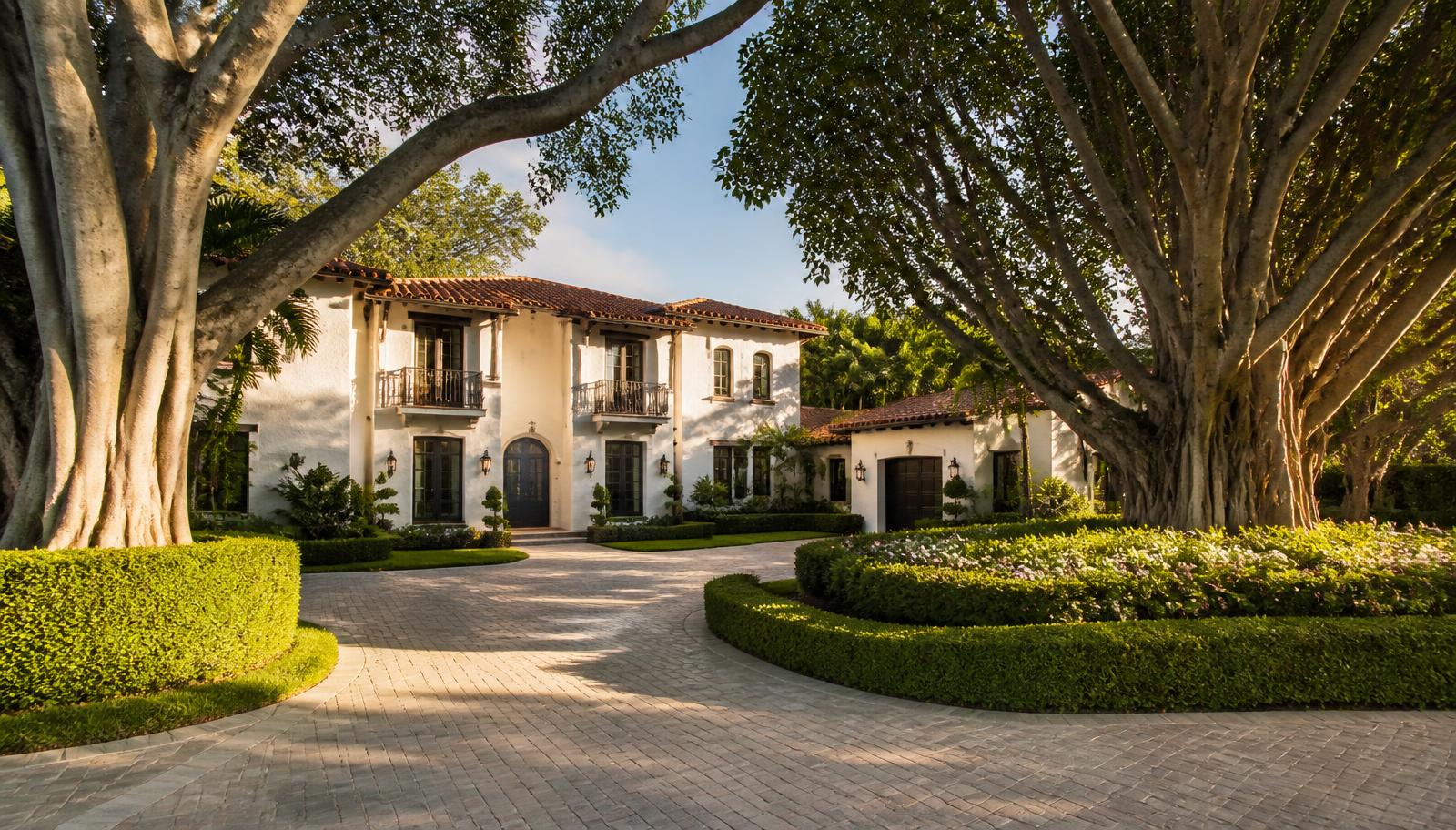
Coconut Grove is a mixed property environment inside the City of Miami: single-family homes, condominiums including newer luxury projects, and waterfront property where a parcel offers it, around a village-oriented core. The mix is the defining feature.
For an international buyer, the first decision is house versus condominium, because that determines maintenance, building services and how the property is looked after between visits. After that, location within the Grove, property condition, waterfront characteristics where applicable and new construction versus resale carry the analysis. The Coconut Grove community guide is the deeper reference.
Key Biscayne: Island Residential Ownership
Key Biscayne is an island municipality with a limited geographic footprint and a distinctly residential feel, containing both condominiums and single-family homes, with waterfront property where a parcel provides it. It is not a neighborhood of the City of Miami.
Island ownership introduces its own checklist: access to and from the island, whether you are buying a building unit or a house, insurance, flood exposure where applicable, maintenance and association costs for condominiums. For an owner who is abroad much of the year, those items usually matter more than the view. The Key Biscayne community guide adds local context.
Bal Harbour: Coastal Condo-Oriented Ownership
Bal Harbour is a small coastal municipality with a strong high-end condominium presence in an oceanfront setting, generally in full-service buildings. The scale of the village itself means the building you choose largely defines the experience.
The comparison points are building selection, fees, association finances, reserves and assessments where applicable, service levels, leasing rules, unit positioning and views. These are the same categories a buyer should apply anywhere, but in a condominium-dominated municipality they carry nearly all the weight. The Bal Harbour community guide describes the village in more depth.
Sunny Isles Beach: Oceanfront High-Rise Condo Ownership
Sunny Isles Beach is a separate municipality known for high-rise oceanfront condominiums, with buildings spanning several development eras along a narrow coastal strip. Almost every purchase here is a unit in a tower.
Building services, association costs, unit view and exposure, building condition, reserves and assessments where relevant, leasing rules and the difference between newer and long-established buildings are the substance of the decision. Two towers a block apart can differ on all of them. The Sunny Isles Beach community guide covers the local picture.
Other areas worth a look in specific cases
A few additional areas earn a place on a shortlist when the brief calls for them rather than by default: Downtown Miami for urban condominium buyers who want the core itself, South of Fifth as a distinct Miami Beach submarket, Pinecrest for single-family buyers who want larger lots on the mainland, and private waterfront enclaves such as Gables Estates where an ultra-luxury private or waterfront comparison is genuinely relevant.
Primary character
- Urban high-rise condos
- Brickell
- Bayfront high-rise condos
- Edgewater
- Condos + houses + waterfront
- Miami Beach
- Established single-family + mixed ownership
- Coral Gables
- Homes + condos + waterfront
- Coconut Grove
- Island condos + homes
- Key Biscayne
- High-end coastal condos
- Bal Harbour
- Oceanfront high-rise condos
- Sunny Isles Beach
Condo or House: Which Ownership Model Fits?
A condominium is a unit within a building governed by an association; a house is a structure plus land on a street you also live with. The difference decides who is responsible for the roof, who schedules the landscaper, who approves a renovation and who is called when something fails while you are abroad.
Neither is inherently better for an international buyer. A condominium concentrates responsibility in an association and a fee, which suits an owner who is away often but introduces rules, shared finances and assessments where applicable. A house concentrates responsibility in the owner, which suits an owner who wants control, land and privacy but requires reliable local coordination. The Miami condo versus single-family comparison works through both models.
How Much Should Waterfront Access Affect the Area You Choose?
Waterfront should narrow the area only after you define what waterfront means to you, because the term covers very different properties. Ocean frontage, bay frontage, a canal with access to the bay and a property with a view but no water access are four different purchases.
What has to be verified is property-specific: shoreline and seawall condition, water depth, dockage, bridge clearance on the route out, exposure and insurance considerations. Those checks belong to the parcel, not the area, which is why waterfront tends to be the criterion that most often overrides a neighborhood preference. The waterfront homes guide sets out the full framework.
Should International Buyers Consider New Construction?
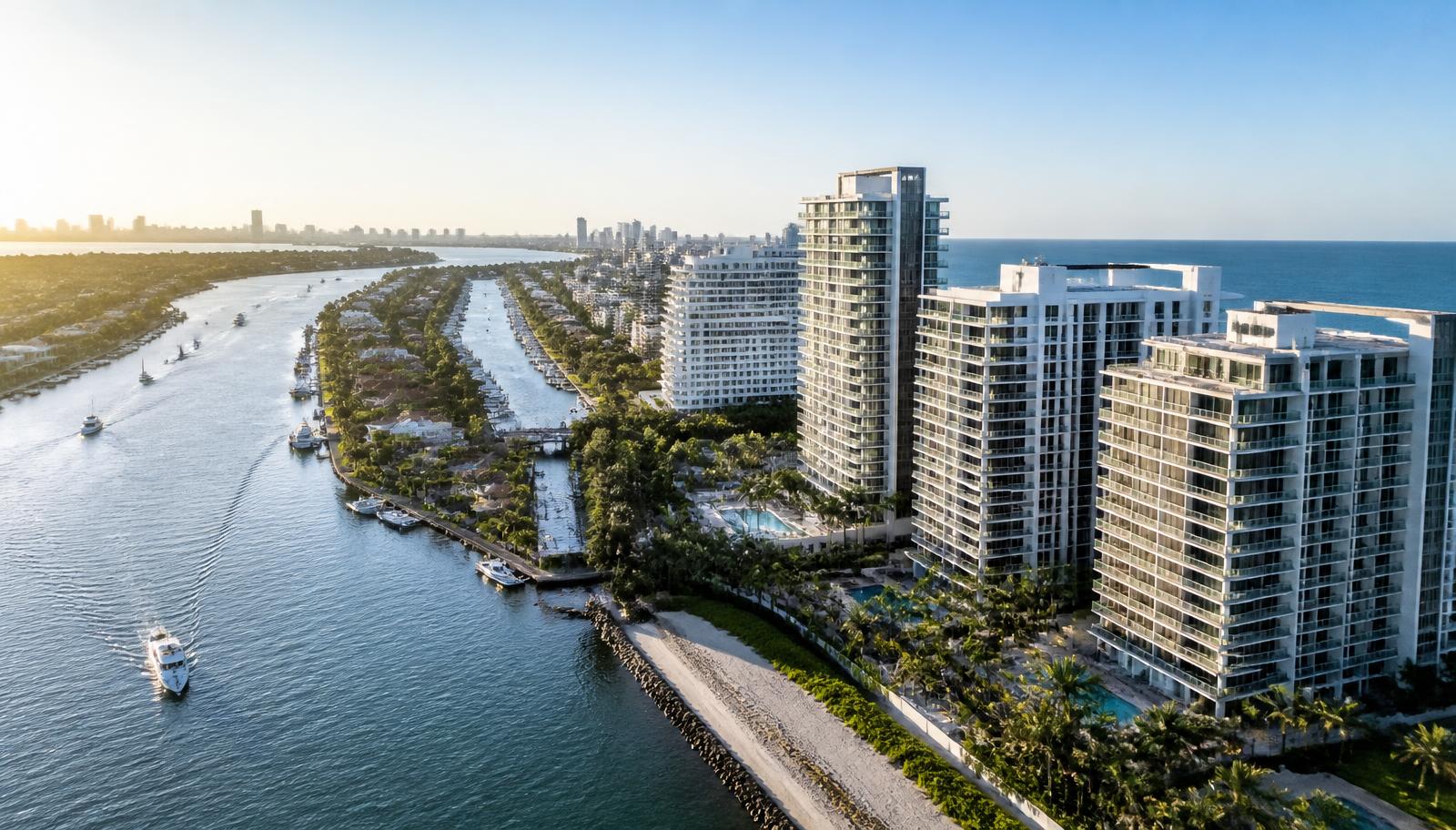
New construction is worth considering when a buyer wants a current building and can accept a timeline, but it is a different transaction rather than a newer version of the same one. What is being purchased is a project, a developer, a delivery schedule and a future ownership structure.
For an international buyer, that adds deposit structure, delivery timing, what is contractually included and the fact that future financing should not be assumed. The new construction guide and our Miami new development listings cover the process and current projects.
How Much Should Rental Rules Affect the Area You Choose?
If you plan to rent the property, rental rules should shape the shortlist from the beginning, because a buyer must satisfy two separate layers: local rules and building or association rules. Passing one does not imply the other.
Rather than chasing yield language, the useful comparison is rental eligibility, lease-term restrictions, carrying costs, vacancy, building fees, whether management is available and demand conditions for that specific property. Registration and tax obligations may also apply; the Miami-Dade County short-term vacation rental requirements are one starting point, alongside the municipality and the building's documents. Our comparison of short-term and long-term rental rules explains how the layers interact.
How Should International Buyers Compare Ownership Costs Between Areas?
Compare the whole cost of holding the property, not the price. Purchase price, property taxes, insurance, condominium or HOA fees, assessments where applicable, maintenance, property management where needed and parking or storage where relevant together form the real cost of ownership.
Published ranges for fees, insurance or maintenance are not reliable across areas or buildings, so this guide does not publish them. Property taxes are assessed parcel by parcel and can be looked up directly through the Miami-Dade Property Appraiser; association costs come from the building's own current budget and financials.
Which Miami Areas Work Well for a Buyer Who Will Not Be Here Full Time?
No single area wins this category, because remote ownership is decided by the property rather than the postcode. What to evaluate is concrete: building services, house maintenance, security and access, availability of property management, storm preparation, mail and packages, association support, parking, guest access, contractor access, relative airport accessibility and how easily someone can check on the property.
Read against that list, the condo-versus-house decision often matters more than the area. A staffed building can absorb much of the work of an absent owner; a house transfers it to the owner and whoever they arrange locally. The purchase mechanics of buying while abroad are covered separately in how to buy property in Miami from outside the U.S.
Can the Area or Property Type Affect Financing?
Yes, but the specific property or building usually matters more than the area name. For condominiums, lender review of the building or project can influence what is financeable, and for new construction future financing should not be assumed at the time of contract. The financing guide for foreign buyers covers loan structures and documentation.
Do Taxes Change Depending on Where or What You Buy?
They can. Property taxes are assessed on the specific parcel, and how you own the property, whether you rent it and what happens at a future sale can each create different considerations. Those questions belong with qualified tax professionals; the overview for international owners is in taxes for foreign property buyers in Florida.
A note on eligibility
Eligibility to own is a separate subject from area selection, and it is generally settled before a shortlist matters. If it is still an open question for you, our guide on whether foreigners can buy property in Miami addresses it directly.
A note on appreciation
Different Miami submarkets and property types can perform differently over time based on supply, land, building characteristics, current competition, buyer demand and broader market conditions. Past performance does not establish future appreciation, and this guide assigns no appreciation expectation to any area. For current conditions rather than assumptions, see our Miami real estate market overview.
How Should an International Buyer Choose Between Miami Areas?
Work in order. The sequence below moves from the abstract to the specific, and it is deliberately the reverse of how most searches begin online.
- 01Define the property type
- 02Define how the property will be used
- 03Define the lifestyle you want around it
- 04Define your maintenance tolerance
- 05Define waterfront, urban or residential preference
- 06Review rental rules if rental use is relevant
- 07Compare total ownership costs
- 08Compare actual available properties
- 09Review current comparable sales
- 10Complete property-specific due diligence
The final decision should become property-specific. Once the area narrows to two or three candidates, the comparison that matters is between actual buildings, actual streets and actual properties — their condition, their rules, their costs and what else a buyer at that level is being shown at the same time.
Why Local Representation Matters When Comparing Miami Areas
International buyers usually begin with internet research, listing portals, videos and maps, and that work is genuinely useful. Its limitation is that two properties that look similar online can represent very different building quality, street position, views, water access, ownership costs, association conditions, property condition and current competition.
- 01Area
- 02Property type
- 03Building or street
- 04Specific property
That is the practical role of a local representative: not to name a winning neighborhood, but to move a buyer from a shortlist of areas to a defensible decision about one property. Our international buyer representation is built around that sequence, and buyer representation in Miami covers the general process.
Choosing Where to Buy in Miami
The right Miami area should fit the property you want, how you plan to use it and the ownership experience you want after closing. Once the area is narrowed down, the decision becomes increasingly specific: property type, building or street, condition, current competition and the individual property itself.
If you are comparing areas from abroad and want that narrowing handled properly, the team at Supreme Capital Real Estate works with international buyers through the full sequence — area, property type, building or street, and the individual property.