International Buyer Guide
Can Foreigners Buy Property in Miami?
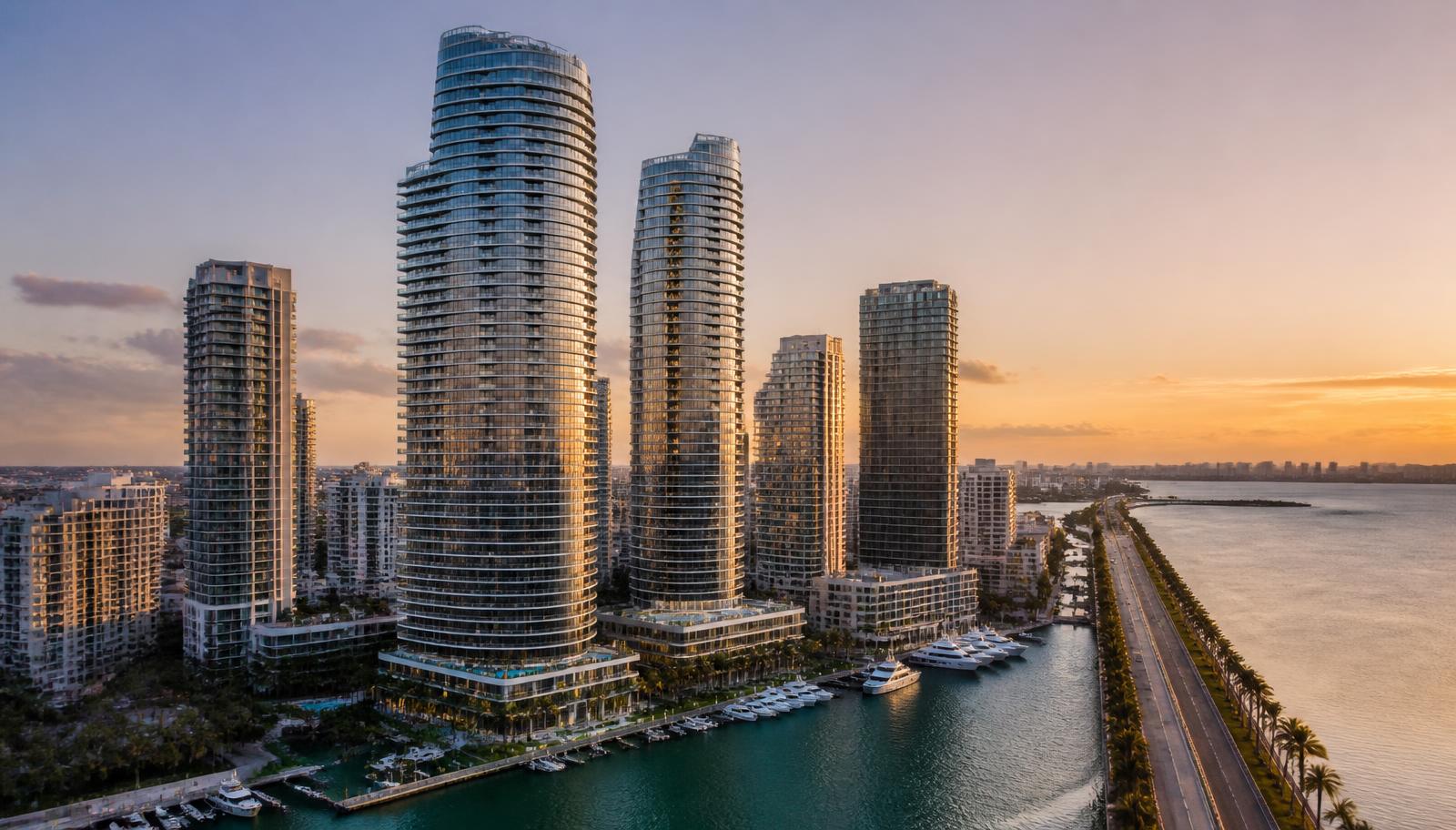
Can Foreigners Buy Property in Miami?
Yes. Foreign nationals and non-U.S. residents can generally purchase real estate in Miami, but certain Florida restrictions may apply in specific circumstances, and buyers should plan ownership, funding, financing and tax considerations before closing. Most difficulties in international purchases come from timing rather than eligibility: funds, title structure and tax questions handled after a contract is signed are harder to solve than the same questions handled before an offer.
Miami is an ordinary market for international ownership rather than an exceptional one, and the local transaction infrastructure — title companies, escrow agents, multilingual lenders and closing attorneys — routinely works with buyers who live abroad. What differs from a domestic purchase is not permission but preparation, and buyers who want representation on that side can start with our international buyer services in Miami.
Do You Need to Be a U.S. Citizen or Resident to Buy Property in Miami?
No, not normally. U.S. citizenship is not generally required to own residential real estate, and U.S. permanent residency is not generally required either. A foreign buyer can generally hold title to Florida real estate, subject to applicable law, property-specific restrictions and the buyer's own circumstances.
Ownership and immigration are separate systems. Holding title to a Miami condominium or house says nothing about the right to enter, live in or work in the United States, and this article does not provide legal or immigration advice.
Seven elements make up what we would call the international buyer's purchase plan, and they are best assembled in this order rather than discovered in escrow.
- 01Eligibility
- 02Identification and source of funds
- 03Cash or financing
- 04Title and ownership structure
- 05Tax planning
- 06Property type
- 07Remote closing and logistics
Are There Florida Restrictions on Foreign Buyers?
Yes, for certain buyers and certain properties. Part III of Chapter 692 of the Florida Statutes restricts acquisitions of Florida real property by persons and entities the statute defines as foreign principals. Those provisions address agricultural land, real property on or within ten miles of a military installation or a listed critical infrastructure facility, and — in a separate section tied to the People's Republic of China — real property more broadly, subject to a limited residential exception and to registration and affidavit requirements the statute describes.
The definitions turn on government affiliation, entity organization and domicile rather than nationality alone, and the law has been litigated since its enactment. In the challenge brought in Shen v. Simpson, the U.S. Court of Appeals for the Eleventh Circuit issued a decision in December 2025 that allowed the restrictions to remain in effect while the case proceeded, and related litigation has continued after that. Status as of August 31, 2026: the statute is in effect, the litigation history is real, and the outcome for a specific buyer depends on facts the statute defines precisely.
Practically, that means two checks early: whether anything about the buyer's affiliation, domicile or entity structure touches the statutory definitions, and whether the property sits near a base, port, airport, utility or other listed facility. Where either is possible, a Florida real estate attorney should review the situation before a contract is signed. The statutory text is published by the Florida Legislature, and nothing in this article is legal advice.
What Documents Do Foreign Buyers Usually Need?
There is no single universal checklist. Requirements vary by transaction, bank, lender, title company, attorney and the structure the buyer uses, so the list should be confirmed early with the specific parties involved. Documents that commonly become relevant include:
- A valid passport or other government identification for each party to the transaction
- Proof of address where a bank, lender or title company requires it
- Source-of-funds documentation and supporting bank statements
- Entity documents, authority to sign and related records where an entity is purchasing
- Financing documentation where a mortgage is involved, on the lender's terms
- Tax identification information where a filing obligation requires it
- Contract, closing statement and verified wire instructions at closing
Where a power of attorney will be used because the buyer is abroad, the title company and any lender normally need to approve its form in advance — one of several reasons the closing team should be identified early rather than in the final week.
How Should International Buyers Prepare Their Funds?
Start earlier than feels necessary. International transfers involve the sending bank, correspondent banking, compliance review, currency conversion where applicable and the receiving escrow account, and each of those can add days that a contract timeline does not forgive. Where the purchase is financed, the lender adds its own documentation and timing requirements on top.
Compliance requests are routine rather than adversarial. Banks and closing agents commonly ask where the funds came from, and answering that with organized documentation — sale proceeds, business distributions, savings history, investment liquidation — usually moves the process forward quickly.
Wire safety
Wire fraud in real estate typically arrives as a convincing email that changes payment instructions at the last moment. Never rely solely on emailed wiring instructions or an emailed change to them. Independently verify instructions by calling a known, previously confirmed contact at the title company using a number you already have, before sending any funds. The Consumer Financial Protection Bureau publishes guidance on closing wire scams. No verification process can be guaranteed, which is exactly why the phone call matters.
Can Foreign Buyers Pay Cash?
Generally yes, subject to transaction-specific and legal requirements. A seller may request proof of funds with an offer, and the closing team may request source-of-funds documentation regardless of the buyer's nationality.
Cash simplifies the financing question and nothing else. Title review, inspections, condominium and association review, insurance planning, tax review and closing compliance all remain. Offer strength also depends on price, terms, contingencies, timing, seller priorities and the competition for that particular property — not on the funding method alone.
Can Foreigners Get a Mortgage in Miami?
Financing may be available. Foreign-national loan programs exist at some banks and private lenders, but underwriting, documentation, down-payment requirements, reserves, rates and loan terms differ by lender and by borrower, and they change over time.
For that reason this page does not publish percentages or rates. The right approach is to speak with lenders early, get requirements in writing and confirm timelines before writing offers. The detailed version of this topic lives in our overview of financing options for foreign buyers in Miami.
How Should a Foreign Buyer Take Title to Property?
There is no single correct answer, and this article does not recommend a structure. Possibilities may include individual ownership, joint ownership, entity ownership and trust or other structures where legally appropriate for the buyer's circumstances.
The structure matters because it can affect tax treatment, estate planning, liability, reporting obligations, financing availability and how a future sale is handled. Those consequences are personal to the buyer's residency, family situation and plans for the property, which is why the decision belongs with qualified legal and tax professionals before closing rather than after.
What Tax Issues Should Foreign Buyers Understand?
At an introductory level, foreign owners typically encounter annual property taxes administered locally, taxation of rental income where the property is rented, tax treatment on a later sale including FIRPTA withholding where it applies, estate and gift considerations depending on circumstances, the effect of the chosen ownership structure, and home-country tax treatment of the same asset.
One practical note rather than advice: Florida's homestead exemption is tied to permanent residency, so a nonresident owner generally cannot claim it, and the annual carrying picture can differ from that of a resident neighbor in the same building. This is an overview only — the deeper treatment is in our guide to taxes for foreign property buyers in Florida, and specific questions belong with a cross-border tax professional.
What Is FIRPTA and Why Does It Matter?
FIRPTA generally relates to withholding when a foreign person disposes of a U.S. real property interest. It is therefore mainly a sale-side issue, and it surfaces at purchase because the buyer in that later transaction is typically the withholding agent.
Two clarifications matter. Withholding is not the same thing as final tax liability, and treatment is not identical in every transaction: exceptions, reduced-withholding certificates and transaction-specific rules can apply. The IRS publishes the governing FIRPTA withholding guidance, and how it applies to a particular owner should be reviewed with qualified tax and legal professionals well before a sale.
Can You Buy Miami Property Without Traveling to the U.S.?
Often, a large part of the process can be handled remotely, depending on the transaction and the parties involved. In practice that can include video and agent-led property tours, electronic signatures on contracts, inspections attended by a representative, coordination with title and closing professionals, execution of documents abroad, remote online notarization where the requirements are met, and wiring funds from abroad.
Whether a specific purchase closes entirely remotely depends on the title company, the lender and the notarization and document requirements that apply to it. The step-by-step sequence is covered in our guide to buying Miami property from outside the U.S., and the closing mechanics themselves are explained in how remote real estate closings work in Florida.
- 01Before offer
- 02Eligibility, funds, financing
- 03Title and ownership structure
- 04Tax planning
- 05Property selection
- 06Due diligence
- 07Closing

What Property Types Can Foreign Buyers Purchase?
Generally, the same residential property types available to any buyer: condominiums, single-family homes, waterfront homes and new construction, along with other residential property where applicable.
The legal ability to purchase says nothing about suitability. Whether a property works for rental, short-term rental, an investment plan, boating or redevelopment depends on association rules, local regulation, the property's physical characteristics and other due diligence that is separate from eligibility.
Condominium considerations
International buyers frequently consider condominiums because a condo offers a different ownership and maintenance structure than a house — the building handles much of what an owner would otherwise manage personally. That is a structural difference, not a verdict about which is better. The review still covers the building, the association and its finances, fees, assessment history, insurance, leasing rules where they exist, financing eligibility in that building and the characteristics of the unit itself. Our guide to buying a condo in Miami walks through that diligence.
House considerations
A house adds land, ongoing maintenance, insurance planning, flood considerations where relevant, and the practical question of who oversees the property while the owner is abroad. Waterfront homes add seawall, dockage and access questions on top.
Should Foreign Buyers Choose a Condo or House?
Neither wins as a category. They are different ownership models, and the comparison is clearer when each is described by what it actually includes.
Condo
Unit
Building
Association
Services
Ownership costs
More of the property is managed collectively, and the building's finances and rules become part of the purchase.
House
House
Land
Maintenance
Privacy
Property responsibility
More control and more direct responsibility, including oversight while the owner is abroad.
Pricing behaves differently between the two segments as well, which we cover in our comparison of Miami condo and single-family prices. For waterfront specifically, it is worth knowing early that waterfront does not automatically mean boat-accessible: water depth, bridge clearance, dockage and seawall condition are property-specific, and our waterfront homes guide covers that technical review. Buyers considering pre-construction should know that deposit structure, delivery timeline, contract terms, developer documents, future ownership costs and closing logistics can differ from an existing property — the new construction guide explains those differences.
Which Miami Areas Do International Buyers Consider?
Different Miami areas offer different ownership environments, and the useful way to read them is by what kind of property and ownership experience each one contains rather than by any ranking.
- Brickell — a vertical condominium market in an urban, walkable setting
- Miami Beach — condominiums, houses and waterfront property across several distinct submarkets
- Edgewater — a predominantly high-rise waterfront condominium environment
- Coral Gables — an established residential environment with both houses and condominiums
- Coconut Grove — condominiums and houses, with waterfront property where applicable
- Sunny Isles Beach — frequently discussed alongside Miami Beach, but a separate municipality with its own market
What Should International Buyers Review Before Making an Offer?
This is the section worth acting on. Before an offer, an international buyer should be able to answer eight questions clearly:
- Legal eligibility, where anything in the buyer's or property's profile makes it relevant
- Source of funds, documented and ready rather than assumed
- Cash or financing, with lender requirements confirmed in writing if financed
- Ownership structure, reviewed with legal and tax professionals
- Tax planning, including how the property will be used
- Property type, matched to the intended use rather than to a general preference
- Property due diligence, including building or land-specific review
- Closing logistics, including whether the buyer will attend or use an approved power of attorney
Who Should Foreign Buyers Speak With Before Closing?
It depends on circumstances, and not every buyer needs every professional. Depending on the transaction, the useful team can include a real estate broker or agent, a Florida real estate attorney, a tax professional or CPA with cross-border experience, a lender where financing is used, a title or closing professional, an insurance professional, a property manager where ongoing oversight is needed, and other specialists where the property or structure calls for them.
Buyer representation coordinates rather than replaces those roles. In practice that means property selection and market comparison, offer strategy, inspection logistics, condominium and property due diligence workflow, and communication among the attorney, lender, title company and inspectors so nothing sits waiting across time zones. A brokerage does not provide legal or tax advice, and this article does not either — general buyer representation is described on our Miami buyer representation page.
One clarification worth stating plainly, because it is a frequent source of confusion: buying property in Miami does not by itself create U.S. immigration status. Ownership and immigration are governed separately, and immigration questions belong with a qualified immigration attorney rather than with a real estate professional.
This article is general real estate information and does not replace legal, tax or immigration advice. Foreign buyers with transaction-specific questions should consult qualified professionals.
International Buyer Representation in Miami
Buying Miami real estate from outside the United States is often less about whether the buyer can purchase and more about organizing the transaction correctly from the beginning. Funding, financing, ownership structure, property due diligence and closing logistics should be coordinated around the buyer's circumstances and the property being purchased. That coordination — across brokerage, attorney, lender and title — is the daily work of Supreme Capital Real Estate Agents Miami.
International buyers
International buyer services
Representation built around funding, structure, due diligence and closing from abroad.
Buyers already in the United States can start instead with general buyer representation.