Remote Miami Buyer Guide
How to Buy Property in Miami from Outside the U.S.
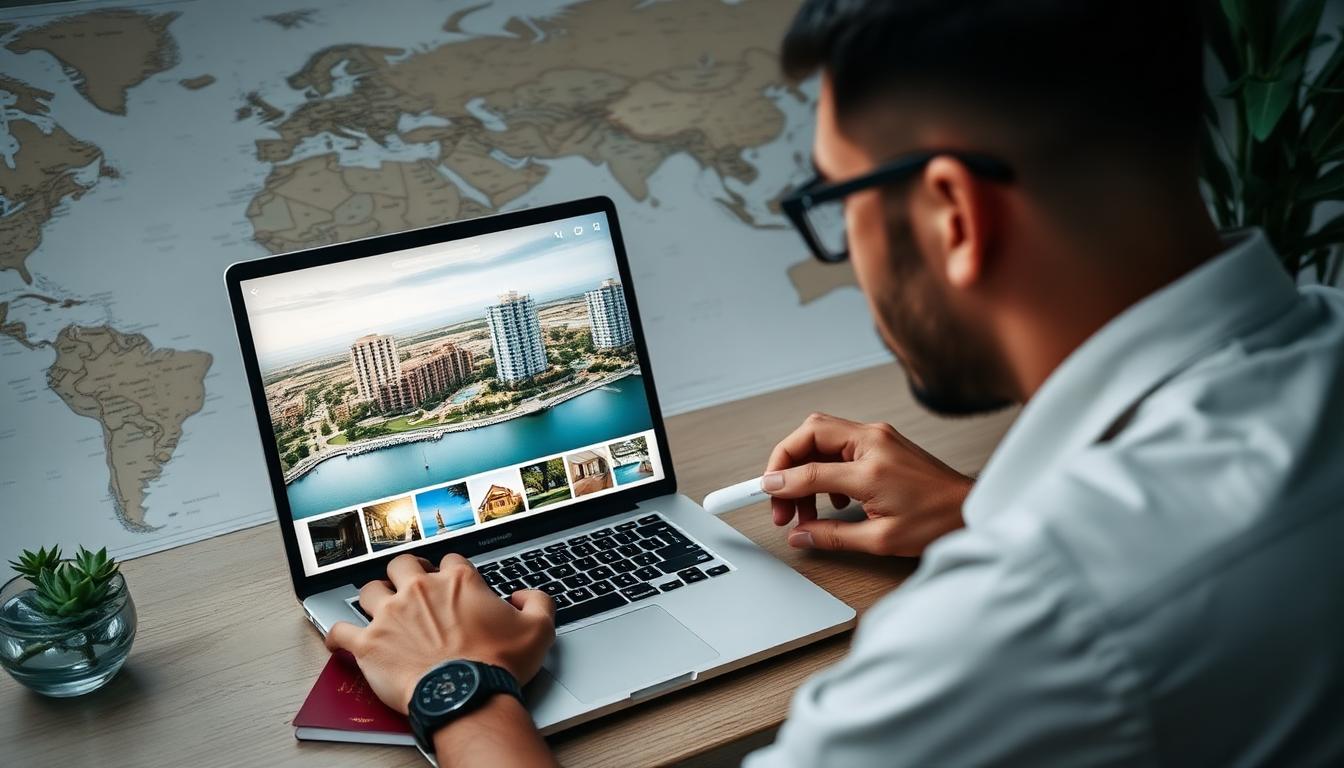
Can You Buy Property in Miami Without Being in the U.S.?
Yes. Many parts of a Miami real estate purchase can be handled remotely, including property search, video tours, electronic offers, inspection coordination and, depending on the transaction, closing. The important part is organizing local representation, funds, financing and document requirements before the transaction reaches critical deadlines.
Distance is a logistics problem, not a barrier. What separates a calm remote purchase from a stressful one is almost never the buyer's location — it is whether funds, financing, document requirements and property access were arranged before a contract created deadlines.
This guide is about process. If you are still determining whether you are legally eligible to purchase, or want to understand Florida's foreign-buyer restrictions and the eligibility, title and tax overview that comes before a purchase, start with whether foreigners can buy property in Miami. That page owns eligibility; this one picks up once you have decided to move forward.
How Does the Miami Remote Buying Process Work?
It follows the same sequence as any Miami purchase, with each step adapted so it can be completed from another country. Below is the full arc, from defining the property to post-closing logistics.
- 01Define
- 02Search
- 03Tour
- 04Analyze
- 05Offer
- 06Contract
- 07Inspect
- 08Finance / Fund
- 09Title
- 10Walkthrough
- 11Close
- 12Post-closing
Abroad
Search
Tour
Analyze
Offer
Review
Sign
Fund
What the buyer does from another country, usually on video, email and electronic signature.
Miami
Property
Agent
Inspector
Lender / Title
Walkthrough
Closing
What has to happen physically and locally, coordinated by the transaction team on the ground.
Step 1: Define What You Want to Buy
Start by narrowing the purchase to something specific enough to search for. A vague brief produces a long, unproductive remote search; a defined one lets your agent filter the market before you spend time on tours.
- Property type: condominium, single-family home, townhome, new construction or resale
- Budget, and whether it is a cash purchase or a financed one
- Intended use: full-time residence, second home or, where applicable, an income property
- Waterfront or non-waterfront, and whether boat access actually matters to you
- Location preferences: urban and walkable, beach, or established residential
- Ownership and maintenance expectations — how much of the property you want managed for you, which is much of what separates condo and single-family ownership in Miami
- Timeline, including any date the purchase needs to be complete by
Step 2: Choose the Right Miami Area
Area selection matters more for a remote buyer than for a local one, because you cannot casually re-check the neighborhood on a Saturday. Choose by the ownership environment you want rather than by reputation.
- Urban and vertical versus low-density residential
- Beach versus mainland, and how often you will actually be there
- Full-time occupancy versus a property that will sit vacant part of the year
- Walkability, privacy, and whether building services matter to you
- Waterfront access and what it requires to maintain
- Airport access where you will be flying in and out frequently
- New construction versus resale, and who oversees the property between visits
As a rough orientation: Brickell is an urban high-rise condominium environment; Miami Beach spans condos, houses and waterfront across several distinct submarkets; Edgewater is largely high-rise waterfront condominiums; Coral Gables is an established residential environment with both houses and condos; Coconut Grove mixes homes and condos with waterfront where applicable; Key Biscayne is an island residential market of homes and condos; Bal Harbour and Sunny Isles Beach are separate municipalities with their own high-end condominium and oceanfront environments. These are descriptions, not rankings. Our Brickell community page, Miami Beach community page and Coral Gables community page go deeper on what each area contains.
Step 3: Search for Miami Properties From Abroad
A remote search should be narrower than a local one. The goal is to reduce the market to a handful of genuinely relevant properties before touring, not to browse endlessly across time zones.
- Saved searches and new-listing alerts matched to the definition from Step 1
- Broker-curated shortlists, including properties ruled out and why
- Building-level and property-level comparison rather than single-listing enthusiasm
- Where they genuinely exist, off-market or pre-market opportunities surfaced through the brokerage
Step 4: Tour Miami Properties Remotely
The remote tour is the step that most often decides whether a distant purchase feels informed or uneasy. A live video tour, led by your agent and driven by your questions, is the core of it; recorded walkthroughs, floor plans and additional photography support it.
For a condominium, ask to see
- The building entrance, lobby, hallways and elevator area
- Parking, including the actual space and how you reach it
- Amenity areas as they look on an ordinary day
- The unit entrance and the condition of the unit itself
- The real view from the actual windows and balcony, panned slowly
- Any adjacent construction or approved development nearby
For a house, ask to see
- The street, both directions, and the neighboring properties
- Front and rear yard, the lot shape and how the house sits on it
- Visible roof and exterior condition
- Pool, garage and access points
- Street noise, with the camera held still and quiet for a moment
- The waterfront edge, dock and shoreline where applicable
A video tour is orientation, not diagnosis. It tells you whether a property deserves an offer; the inspection in Step 8 tells you about condition.

Step 5: Analyze the Property and Comparable Sales
Before an offer, the property should be placed in context. Distance changes how you gather that context, not whether you need it.
- 01Recent comparable sales
- 02Current competition
- 03Price changes
- 04Days on market
- 05Property condition
- 06Property-specific characteristics
- 07Better offer context
For a condominium, the analysis narrows to the building: recent sales in the same building, floor, view, exposure, condition, the association's fees and finances, and assessment history where relevant. For a house, it widens to the lot, the street, location within the neighborhood, condition, architecture, privacy, waterfront where applicable, and the specific competition a buyer would compare it against.
Step 6: Make an Offer Electronically
Offers in Florida residential transactions are commonly prepared and signed electronically, which means a buyer abroad can usually review and sign without couriering paper. Florida's Uniform Electronic Transaction Act generally gives electronic signatures legal effect where the parties agree to transact electronically. That is a general rule, not a guarantee for every document: specific lenders, title companies or parties may still require another signing method, so confirm what your transaction accepts before a deadline forces the question.
The terms that make up the offer typically include price, the deposit and when it is due, the inspection period, financing terms where applicable, the closing timeline and other material contract terms, along with proof of funds or lender documentation.
Step 7: Send the Deposit From Abroad
Once a contract is signed, the escrow deposit is normally due within a short, specific window defined by the contract. This is the single most common place a remote purchase gets uncomfortable, because banking timelines do not adjust to contract deadlines.
- Sending-bank processing time, which can differ from what the bank advertises
- Correspondent banking and compliance review on international transfers
- Source-of-funds documentation where the bank or escrow agent requests it
- Currency conversion where the funds are not held in U.S. dollars
- Cut-off times and holidays in both countries
On safety: never send funds based solely on emailed wiring instructions or an unexpected change to instructions. Verify instructions through a trusted known contact using independently confirmed contact information before sending money. The Consumer Financial Protection Bureau publishes guidance on closing wire scams.
Step 8: Complete Inspections and Due Diligence
Inspections happen locally, on the contract's schedule, whether or not the buyer is in Florida. Your agent or representative arranges access; a licensed inspector examines the property; you receive a written report, usually with photographs, and can normally speak with the inspector about findings.
Where the property calls for it, specialist inspections can be added — roof, structural, mechanical, pool, seawall or dock among them. What you do after the findings is a decision made within the contract's inspection period, and how those provisions apply to your situation is a question for your attorney rather than for a general guide. Florida's home-inspector licensing is administered by the Florida Department of Business and Professional Regulation.
What due diligence adds by property type
- Condominium: unit inspection plus association documents, reserves, assessments, insurance, rules, parking and any rental restrictions — detailed in our Miami condo buying guide
- Waterfront: dock, water access, water depth, bridge clearance, seawall or shoreline condition, flood and insurance, covered in our waterfront homes guide
- New construction: developer, contract, deposit schedule, delivery timeline, unit plan and future ownership costs, covered in our new construction guide
Step 9: Organize Financing or Closing Funds
Funding runs in parallel with due diligence rather than after it. A cash purchase means proof of funds with the offer, wire planning well ahead of closing and source-of-funds documentation where requested. A financed purchase means preapproval or loan planning, lender documentation, appraisal where applicable, underwriting, any additional documentation an international borrower is asked for, and a closing timeline the lender can actually meet.
Foreign-national lending requirements differ by lender, borrower, property and loan type, and they change, so no percentage or timeline published on a website should be treated as your terms. Get them in writing from lenders early; our overview of financing options for foreign buyers in Miami explains what to ask.
Step 10: Coordinate Title and Closing Documents
While inspections and financing proceed, the title company runs its search and assembles the closing file: title work, payoff and lien information, the closing statement, lender requirements where the purchase is financed, identification for each party, and any additional execution requirements that apply because a signer is outside the United States.
How you take title is a decision, not a formality. It can affect tax treatment, estate planning, liability, reporting, financing and a future sale, and there is no structure that is right for everyone — individual, joint, entity and trust ownership all carry different consequences. That decision belongs with a Florida real estate attorney and a cross-border tax professional before closing.
On the tax side, foreign buyers may face U.S. tax considerations, annual property taxes, treatment of rental income, tax on a future sale including FIRPTA withholding where it applies, estate-planning questions and home-country treatment of the same asset. That is the whole overview this process guide should give; the depth is in our guide to taxes for foreign property buyers in Florida.
Step 11: Complete the Final Walkthrough Remotely
Shortly before closing, the property is walked one more time to confirm its condition relative to the transaction. For a remote buyer this is usually a live video walkthrough with your agent, sometimes a recorded one, or one attended by a local representative you designate.
The inspection evaluates the property's condition in depth, early in the contract. The walkthrough confirms, close to closing, that the property is in the condition the transaction expects: agreed items present, nothing removed that should remain, no new damage, systems operating as they were.
Step 12: Close Without Traveling to Miami
Many Miami transactions can be closed while the buyer remains abroad, but the method is transaction-specific rather than universal. Depending on what the title company, the lender and the documents require, the closing may involve electronic signatures, remote online notarization — Florida's online notarization framework is set out in Chapter 117 of the Florida Statutes — notarization at a U.S. embassy or consulate abroad, notarization before a local notary with additional authentication such as an apostille under the U.S. Department of State's authentication requirements, original wet-signed documents couriered back, a power of attorney in limited circumstances where the title company and lender approve its form in advance, and a wire transfer of closing funds.
No single one of those applies to every transaction, and lender requirements frequently narrow the options. Confirm the format early rather than in the closing week. The mechanics of each method are covered in how remote real estate closings work in Florida.
Step 13: Handle Keys and Post-Closing Logistics
Closing is not the last remote step. For a buyer who stays abroad afterward, the days following closing decide whether the property is genuinely usable on the next visit.
- Keys, fobs, garage remotes and access codes, and who holds a spare set locally
- Building registration and association onboarding for condominiums
- Utility accounts opened or transferred, ideally without a gap
- Insurance activated or continued as of the correct date
- Mail handling and where association or municipal notices are sent
- Housekeeping, landscaping and routine maintenance while the property sits unoccupied
- Contractor access for any planned work, and who supervises it
- Security system or camera setup where you want remote visibility
Ongoing property management is something you may need to arrange with an appropriate provider; it is a separate service from brokerage representation and should be set up deliberately rather than assumed.
What Changes If You're Buying a Condo From Abroad?
The building becomes part of the purchase. Alongside the unit, you are evaluating the association, its documents and finances, reserves, fees, assessment history, insurance, rules, parking and any leasing restrictions, plus what else is currently for sale in the same building. For a remote buyer that is mostly a document review, which travels well — it can be done from anywhere with the right materials requested early. Our Miami condo buying guide covers that review in detail.
What Changes If You're Buying a House From Abroad?
A house shifts weight toward physical condition and ongoing responsibility: the structure, the land, inspection findings, maintenance, insurance and who oversees the property between your visits. Remote buyers of houses tend to need more video, more inspection detail and a clearer plan for oversight than remote buyers of condominiums, simply because no building staff exists behind them.
What Changes If You're Buying Waterfront Property From Abroad?
Waterfront adds a verification layer you cannot judge from photographs: the type of waterfront — bay, canal, river or ocean — dockage and its condition, water depth at the property, bridge clearance between the property and open water, seawall or shoreline condition, flood considerations and insurance. Those checks sit on top of ordinary property due diligence, and our guide to waterfront homes for sale in Miami explains what each one involves.
What Changes If You're Buying New Construction From Abroad?
New construction replaces inspection-driven diligence with document-driven diligence. You are reviewing developer documents and the contract, a deposit schedule paid over time, unit selection including floor, view and exposure, the construction and delivery timeline, projected future ownership costs, and closing coordination at delivery — often years after the first deposit. Our new construction guide covers the process, and current projects are listed on our new developments page.
What Should You Organize Before Making an Offer From Abroad?
Nine items. If each has a clear answer before you write an offer, the rest of the transaction is mostly execution.
- Property type, defined specifically enough to search for
- Target area, chosen for the ownership environment you want
- Budget, including the ownership costs that follow the purchase
- Cash or financing, decided rather than left open
- Source of funds, documented before it is requested
- Title and ownership questions, reviewed with the appropriate professionals
- Tax questions where they affect the structure or timing
- A remote communication plan that accounts for the time difference
- Closing logistics, including how you expect to sign and fund
Why Local Representation Matters When You're Buying Remotely
Every step above has a physical component in Miami. Someone has to open the door for the inspector, see the building on an ordinary weekday, ask the association the question that is not in the documents, and keep the lender, the title company and the attorney moving while you are asleep in another time zone.
Buyer representation coordinates: property search, remote tours, market comparison, offer strategy, inspection and specialist access, building and association questions, and communication with the lender, title company, attorney, inspectors and other transaction parties. It does not replace them — a brokerage does not provide legal, tax, lending, inspection, title or property-management services. General representation is described on our Miami buyer representation page, and the international version is on our international buyer services page.
This article provides general real estate information and is not legal, tax, lending or immigration advice. Transaction-specific questions should be reviewed with the appropriate qualified professional.
Buying Miami Real Estate From Abroad
Buying remotely works best when the process is organized before the property is under contract. Property selection, remote tours, offer strategy, inspection access, financing, funds, title documents and closing logistics all need to move together even when the buyer is outside Miami. That coordination is the daily work of Supreme Capital Real Estate Agents Miami.
Buying from abroad
International buyer services
Representation organized around remote tours, due diligence, funding and closing logistics.
Buyers already in the United States can start instead with general buyer representation.