Miami Ultra-Luxury Condo Guide
Most Expensive Condos in Miami: Ultra-Luxury Residences & Penthouses
What Are the Most Expensive Condos in Miami?
Miami's most expensive condos are generally highly distinctive residences within the upper tier of the city's luxury buildings, including penthouses, full-floor residences and other scarce configurations. The exact properties at the top change as inventory, new construction, listings and sales change. Rather than relying on a static top-10 list, buyers benefit more from understanding which buildings compete at the top of the market and what makes the individual residences within those buildings exceptional — then reviewing current inventory directly.
At the top of the Miami condo market, the building matters — but the exact residence matters just as much. Two residences inside the same prestigious tower can occupy very different market positions because of floor, view, exposure, size, layout, terrace, condition, parking, ceiling height, privacy and scarcity. This guide is written for buyers exploring Miami luxury real estate who want to understand what actually separates an ordinary luxury condo from a trophy residence, ideally alongside experienced Miami buyer representation.
"Luxury," "ultra-luxury" and "trophy residence" are market descriptions rather than universal legal classifications, and no single price threshold defines them consistently across Miami's neighborhoods. At the highest end of the market, value becomes increasingly property-specific — which is why this guide focuses on the framework buyers should use rather than a fixed price list.
What Makes a Miami Condo Ultra-Luxury?
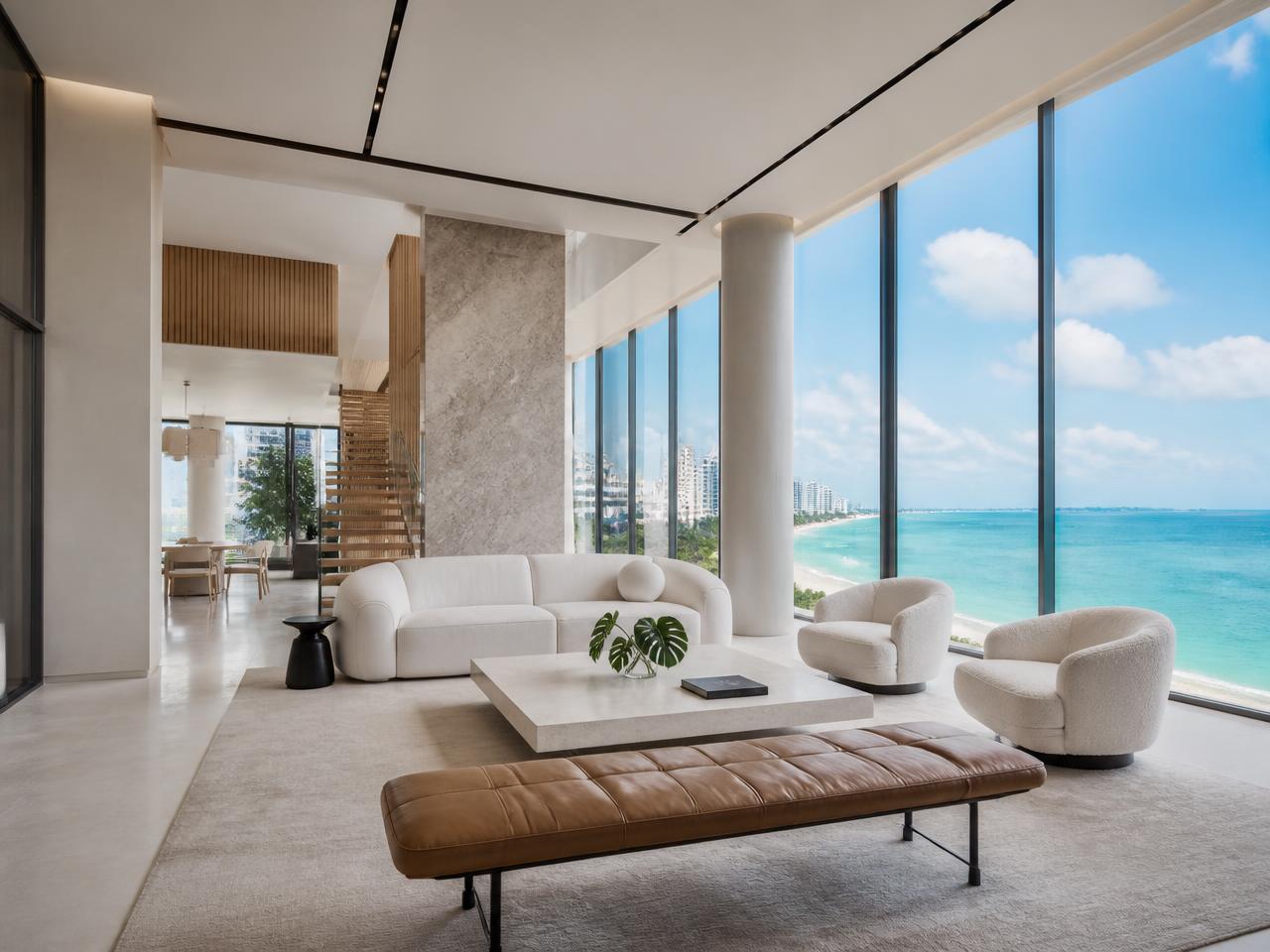
Price alone does not tell the whole story. Depending on the building and the residence, ultra-luxury positioning can reflect some combination of location, architectural quality, residence size, floor, view, exposure, privacy, residences-per-floor density, private elevator access where applicable, terrace or outdoor space, ceiling height, layout, condition, finishes, parking, private garage where applicable, storage, services, amenities, water access or marina proximity where applicable, association strength, scarcity, and new-construction or resale competition. Not every ultra-luxury building offers every one of these features, and the relative importance of each varies by property.
Current Ultra-Luxury Inventory
Explore Ultra-Luxury Miami Condos for Sale
Explore current ultra-luxury condo inventory across Miami, including high-end residences and penthouses where available. Inventory changes continuously, so use the live listings below to see properties currently offered within this segment.
Which Miami Condo Buildings Compete at the Top of the Market?
This is not a ranking, and it is not exhaustive. Miami's ultra-luxury condo market includes dozens of relevant buildings, and the properties that command the highest prices at any given moment shift as inventory changes. The buildings below are a verified, non-ranked editorial selection that illustrates the different types of ultra-luxury environments found across the city.
Fisher Island — Private-Island Residences
Fisher Island is a private island accessible only by ferry, helicopter or boat, and its residential market includes established buildings such as Palazzo Del Sol and Palazzo Della Luna alongside newer development. Why it matters: the island's limited geography and controlled access create a degree of privacy and scarcity that is difficult to replicate on the mainland. What distinguishes the residences: large-format floor plans, water views and an island-wide private amenity environment rather than any single building's feature set.
Miami Beach — Oceanfront Towers
Miami Beach's oceanfront corridor includes Faena House, an 18-story oceanfront condominium designed by Foster + Partners on one of the widest stretches of beach in Miami Beach. Why it matters: direct Atlantic frontage and architectural pedigree place it among the buildings that regularly compete for the highest per-residence prices on the beach. What distinguishes the residences: a limited number of full-floor and multi-floor units with wraparound ocean, bay and skyline views.
Surfside / Bal Harbour Area — Branded Oceanfront Residences
The Surf Club, Four Seasons Private Residences, in Surfside near Bal Harbour, was designed by Pritzker Prize-winning architect Richard Meier and incorporates the historic 1930 Surf Club alongside new construction, with its residences fully sold. Why it matters: it illustrates how a branded, architect-designed oceanfront project can anchor the ultra-luxury conversation in the Bal Harbour/Surfside corridor even after sellout, as resales continue to trade at the top of the market. What distinguishes the residences: oceanfront gardens, hotel-affiliated services and a limited total unit count relative to the site's scale.
Brickell — Urban High-Rise Towers
Brickell's ultra-luxury layer includes branded and design-forward towers such as the Baccarat Residences on the Miami River and Biscayne Bay, which developer materials describe as a waterfront tower with tower residences beginning at its mid-levels and a small number of penthouse residences occupying its top floors. Why it matters: Brickell's density means buildings compete directly on view, floor and finish quality rather than land or privacy. What distinguishes the residences: bay, river and skyline views paired with brand-affiliated services in a walkable urban setting.
Coconut Grove — Bayfront Towers
Park Grove, a three-tower development just off Biscayne Bay in Coconut Grove, was designed by OMA founding partner Rem Koolhaas with interiors by Meyer Davis Studio. Why it matters: it represents a lower-density, bayfront alternative to Brickell's urban core, within an established residential neighborhood. What distinguishes the residences: private balconies with bay and city views and a design pedigree that is unusual for a condominium of this scale.
Sunny Isles Beach, Edgewater and Surfside also contain condominium towers relevant to Miami's upper-luxury market, but they are not covered here in the same depth because this guide focuses on illustrating the range of ultra-luxury environments rather than cataloguing every building.
Why the Exact Residence Matters as Much as the Building
A prestigious address alone does not determine value. Within a single building, residences can differ substantially in floor, exposure, view, size, layout, terrace, ceiling height, condition, renovation, parking, storage, private elevator configuration, penthouse status and scarcity. Two units purchased at similar prices in the same tower can represent very different long-term positions depending on these residence-specific characteristics.
What Makes a Miami Penthouse Different?
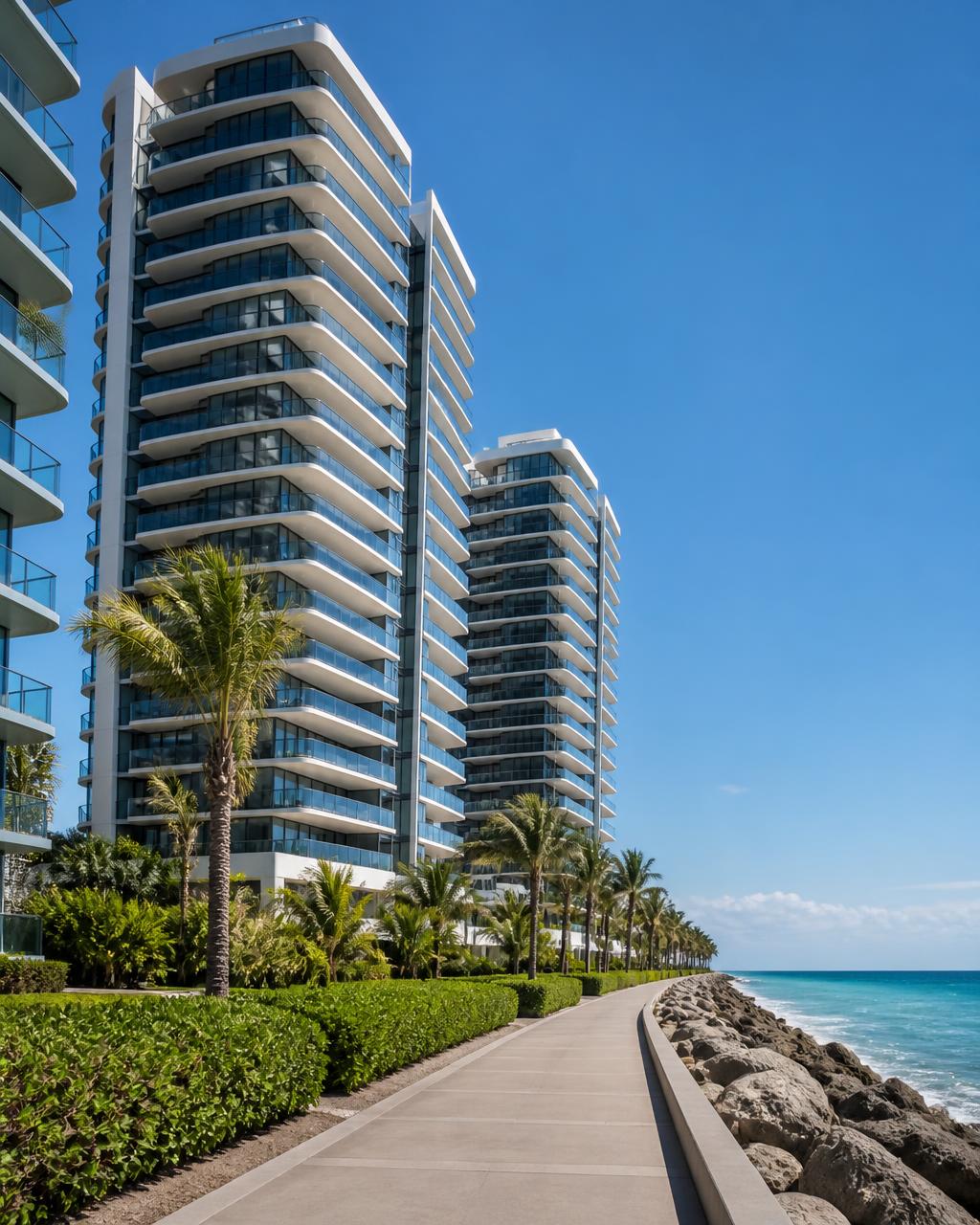
"Penthouse" can describe different configurations depending on the building — there is no single, universal definition. Depending on the property, a penthouse may include a top-floor position, a larger floor plan, larger terraces, higher ceilings, private rooftop areas where applicable, private pools where applicable, more expansive views, greater privacy, a limited number of residences on the floor, or special parking or garage arrangements where applicable. Not every penthouse includes every one of these features, so each should be evaluated on its own merits rather than assumed from the label.
What Is a Trophy Residence?
"Trophy residence" is not a legal classification. In consumer terms, it generally describes an unusually scarce, distinctive high-value property whose appeal comes from a combination of location, architecture, scale, view, privacy, provenance where relevant, scarcity, position within the building and unique features — not simply a large price tag or square footage.
How Important Are Views and Elevation?
Miami's ultra-luxury buyers weigh Atlantic Ocean views, Biscayne Bay views, city-skyline views, sunrise and sunset exposure, and unobstructed versus partially obstructed sightlines quite differently depending on personal preference. A higher floor does not always mean higher value — floor and view should be evaluated together with exposure, layout, terrace, the building's position relative to neighboring towers, and future development that could affect sightlines over time.
How Do Privacy and Exclusivity Affect Value?
Privacy at the top of the market can come from several sources: the number of residences per floor, private elevator access where applicable, a dedicated elevator foyer, overall building size, staffing and security presence, physical separation between residences, and private garage or parking arrangements where applicable. These factors vary meaningfully from one building to the next, and no two buildings deliver privacy in exactly the same way.
What Role Do Amenities and Services Play?
At the top end, buyers often compare concierge service, valet, fitness and spa facilities, pools, private dining, resident lounges, beach service, marina access, a house car and other building-specific services. Amenities should only be attributed to specific buildings once verified, since offerings change over time and vary by development.
What Are Branded Residences?
Branded residences involve partnerships between a condominium developer and a hospitality brand, design house, automotive brand or other luxury name, depending on the project. Rather than assuming the brand alone determines value, buyers should evaluate the actual residence, building, services, management structure, fees, location, contract, association and resale market on their own merits.
Where Are Miami's Most Expensive Condos Located?
Upper-tier condo inventory is concentrated in several distinct luxury submarkets, each offering a different type of luxury experience rather than a single "best" location.
Fisher Island and the Private-Island Market
Fisher Island offers privacy through limited, controlled access and an island-wide residential environment with water views throughout. Its geography — reachable only by ferry, helicopter or boat — is itself a scarcity factor that shapes value across the island's residences.
Miami Beach and the Oceanfront Luxury Market
Miami Beach combines direct oceanfront positioning with a mix of established luxury buildings and new construction, creating ongoing competition between resale towers and newly delivered product along the same stretch of coastline.
Bal Harbour and the Ultra-Luxury Condo Market
Bal Harbour and the adjacent Surfside corridor concentrate oceanfront condominium towers within a small geographic footprint, where new and resale inventory compete closely and residence-specific characteristics carry significant weight.
Brickell and the High-Rise Luxury Market
Brickell offers an urban high-rise environment with Biscayne Bay views in many towers, walkable access to the financial district, and an active mix of new construction and branded residences. It is one of several markets relevant to Miami's ultra-luxury conversation, not the singular "best" one.
Coconut Grove and Biscayne Bay Residences
Coconut Grove offers bayfront orientation and a lower-density feel relative to some urban high-rise markets, with large luxury residences set within an established, tree-lined residential neighborhood.
How Is an Ultra-Luxury Miami Condo Valued?
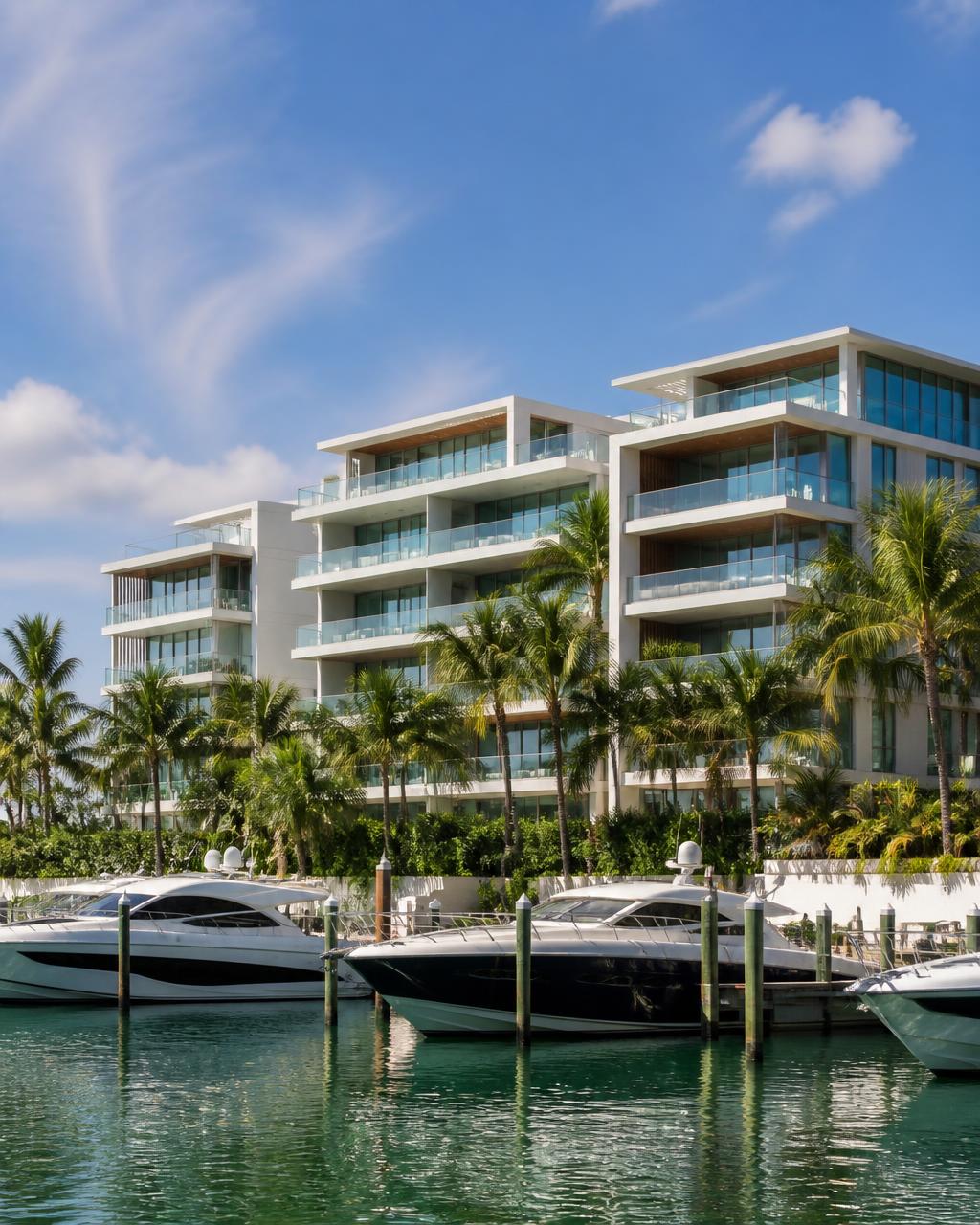
Rather than a single formula, valuation at this level draws on a combination of building, location, residence, floor, view, exposure, size, layout, condition, terrace, parking, privacy, scarcity, current competition and recent comparable sales. The relative importance of each factor varies by property — a residence with an exceptional view may command a premium that a lower unit with more square footage cannot match, while a full-floor residence may be valued primarily for its scarcity rather than its finishes.
Why Price Per Square Foot Does Not Tell the Whole Story
Price per square foot can be a useful comparison tool, but it is not the entire valuation. Trophy residences can differ substantially in views, terraces, floor, layout, condition, scarcity, private amenities, parking, exposure and penthouse status, so two residences of similar size are not automatically comparable on a per-square-foot basis alone.
How Does New Construction Affect the Top of the Market?
New construction brings new product, contemporary design, updated amenities, expanded services, larger residence sizes in some developments, new technology and defined completion timing, along with developer inventory, deposit structures and contracts that differ from a resale purchase. New construction is not automatically superior to an established building — it competes with resale inventory on its own merits, and buyers should weigh both. Our guide to buying new construction in Miami and current Miami new developments overview cover this process in depth.
What Should Buyers Review Before Purchasing?
At this level, due diligence extends well beyond the unit itself. Buyers should review the building and its association: financial condition, reserve funding, existing or approved assessments, insurance, governing documents, maintenance responsibilities, fees, parking, storage, rental restrictions, renovation rules, financing considerations, current competition and recent comparable sales. Florida condominium associations are also subject to statutory reserve and structural requirements set out in the Florida Condominium Act, which is worth reviewing alongside a building's own financial documents. The complete due-diligence framework — the documents, reserves and inspections worth requesting before you buy — is covered in our guide to buying a condo in Miami.
What Should International and Out-of-State Buyers Consider?
International and out-of-state buyers evaluating ultra-luxury Miami condos generally benefit from remote evaluation support, thorough video or in-person property review, local building due diligence, dedicated local representation, an understanding of financing differences that may apply, advance planning for fund transfers, clarity on closing logistics, and a plan for ongoing property oversight after closing. Buyers should consult appropriate legal and tax professionals for their specific circumstances; this article does not provide legal or tax advice.
How Does a Luxury Condo Compare With a Waterfront Estate?
A luxury condo purchase combines a unit, a building, an association and shared services, along with views and lock-and-leave convenience. A waterfront estate purchase combines the house, the land and the water frontage itself, along with dockage where applicable and generally greater direct maintenance responsibility. Both compete for the same high-end Miami buyer, and the right choice depends on how you plan to use the property. Our luxury condo vs waterfront estate guide covers this comparison in full, and our Miami condo vs single-family pricing guide covers the broader price comparison between property types.
Explore Miami's Ultra-Luxury Condo Market
Understanding what defines the top of Miami's condo market — building, residence, position, view, privacy, services and scarcity — puts you in a stronger position to evaluate any specific opportunity as it comes to market. From there, the current Miami real estate market and dedicated buyer representation can help you compare real, currently available residences against this framework rather than a stale price list. For buyers exploring Miami more broadly, our team also supports Miami real estate searches across every price point and property type.
Next Step
Related Miami Luxury Guides
- Miami Luxury Condo vs Waterfront Estate
- How to Buy a Condo in Miami
- Miami Condo vs Single-Family Home
- How to Buy New Construction in Miami
Building details referenced in this guide were verified against official developer, architect or brokerage sources as of the article's publication date and are provided for general informational purposes. Verify current availability, pricing and amenities directly with the building or developer, and confirm parcel and assessment records with the Miami-Dade County Property Appraiser.