Miami Waterfront Buyer Guide
Waterfront Homes for Sale in Miami: What Buyers Need to Know
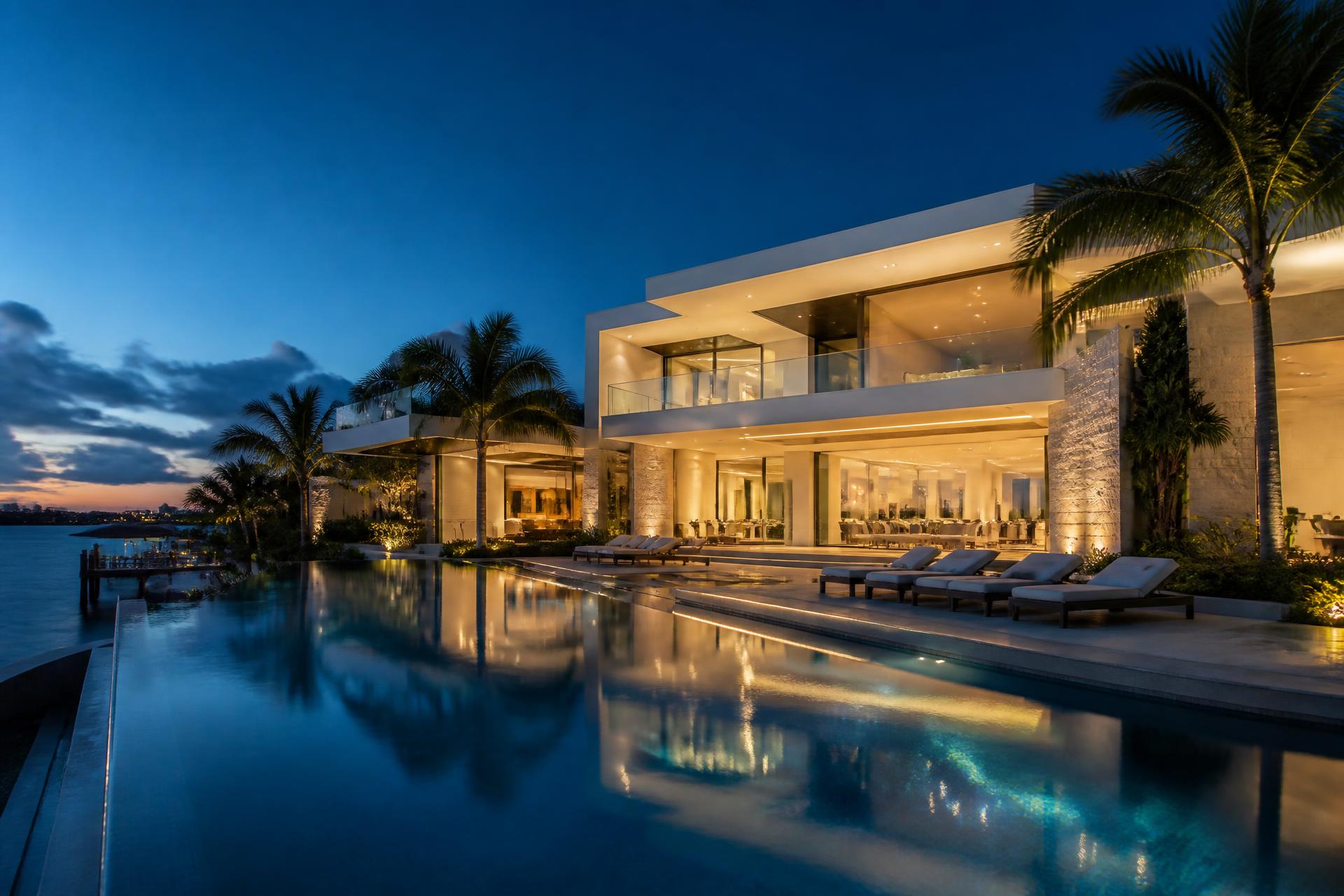
What Should You Know Before Buying a Waterfront Home in Miami?
Before buying a waterfront home in Miami, evaluate the property and the water separately. Confirm the type of waterfront, dockage, water depth, bridge access, seawall or shoreline condition, flood exposure, insurance considerations and any property-specific restrictions that could affect how you intend to use the home. Waterfront does not automatically mean boat-accessible.
Two Miami properties can both be marketed as waterfront and offer entirely different ownership experiences. One may sit on open bay with a permitted dock and an unobstructed route to the ocean; another may sit on a narrow canal behind a fixed bridge with shallow water at the seawall. Both descriptions are accurate. Only one of them may suit a given buyer — which is why waterfront searches benefit from Miami buyer representation early rather than after an offer is written.
What Does "Waterfront" Mean in Miami?
Waterfront describes a physical relationship between a property and the water, and in Miami that relationship takes several forms. Oceanfront property faces the Atlantic directly. Bayfront property faces Biscayne Bay, often with wide views and open exposure. Canal-front property sits along one of the many residential canals that connect, directly or indirectly, to the bay. Riverfront property lines the Miami River, a working waterway with its own characteristics. Each arrangement produces different views, water conditions, privacy, exposure and practical access.
Those differences matter more than the label. Frontage width, orientation, the width and depth of the waterway, the surrounding development and the route from the property to open water all shape what ownership actually feels like day to day — and what the property can support.
What Types of Waterfront Property Are Available in Miami?
Miami's waterfront inventory spans single-family homes on bay, canal and river frontage, island properties, and waterfront condominium residences. Within the single-family category alone, the range is wide: original mid-century houses on generous lots, renovated homes, new custom construction and redevelopment opportunities where the land and the water frontage carry most of the value. Property type and waterfront type are separate variables, and buyers benefit from deciding on both.
It is also worth separating three things that listing language often blends together. A property may offer a water view without touching the water. It may own water frontage without offering practical navigation. Or it may offer both frontage and usable access to open water. The comparison between owning a house on land and owning a residence in a building is covered separately in our Miami condo vs single-family ownership comparison.
The Miami Waterfront Framework
A waterfront purchase is really a set of overlapping variables rather than a single feature. Read together, they describe the actual opportunity in front of you:
Waterfront property + water access + dockage + seawall or shoreline condition + bridges and clearance + water depth + flood and insurance considerations + location + property condition= the actual waterfront opportunity
Weakness in one variable does not disqualify a property; it simply changes what the property is. A home with limited boating access can still be an outstanding bayfront residence for a buyer who does not own a vessel. The mistake is assuming all nine variables come bundled with the word waterfront.
Current Waterfront Inventory
Explore Waterfront Homes for Sale in Miami
Explore current Miami waterfront properties and compare location, waterfront type, dockage, water access and property characteristics. Waterfront features vary by property, so listing information should be verified against the buyer's intended use.
For the broader collection of high-end Miami inventory and representation at that level, see our Miami luxury real estate page. The sections below explain what to verify on any property you shortlist.
Does Waterfront Automatically Mean Boat Access?
No. A waterfront property can have water frontage without providing the type of navigable access a particular boat owner needs. Whether it does depends on the dock and its dimensions, water depth at the dock and along the route, tidal conditions where relevant, channel access, any fixed bridges and their clearance, the distance and route to open water, and applicable permits or restrictions.
These are property-specific answers. A buyer who intends to keep a particular vessel should treat boating access as a due-diligence item with its own verification path rather than as a feature implied by the listing category.
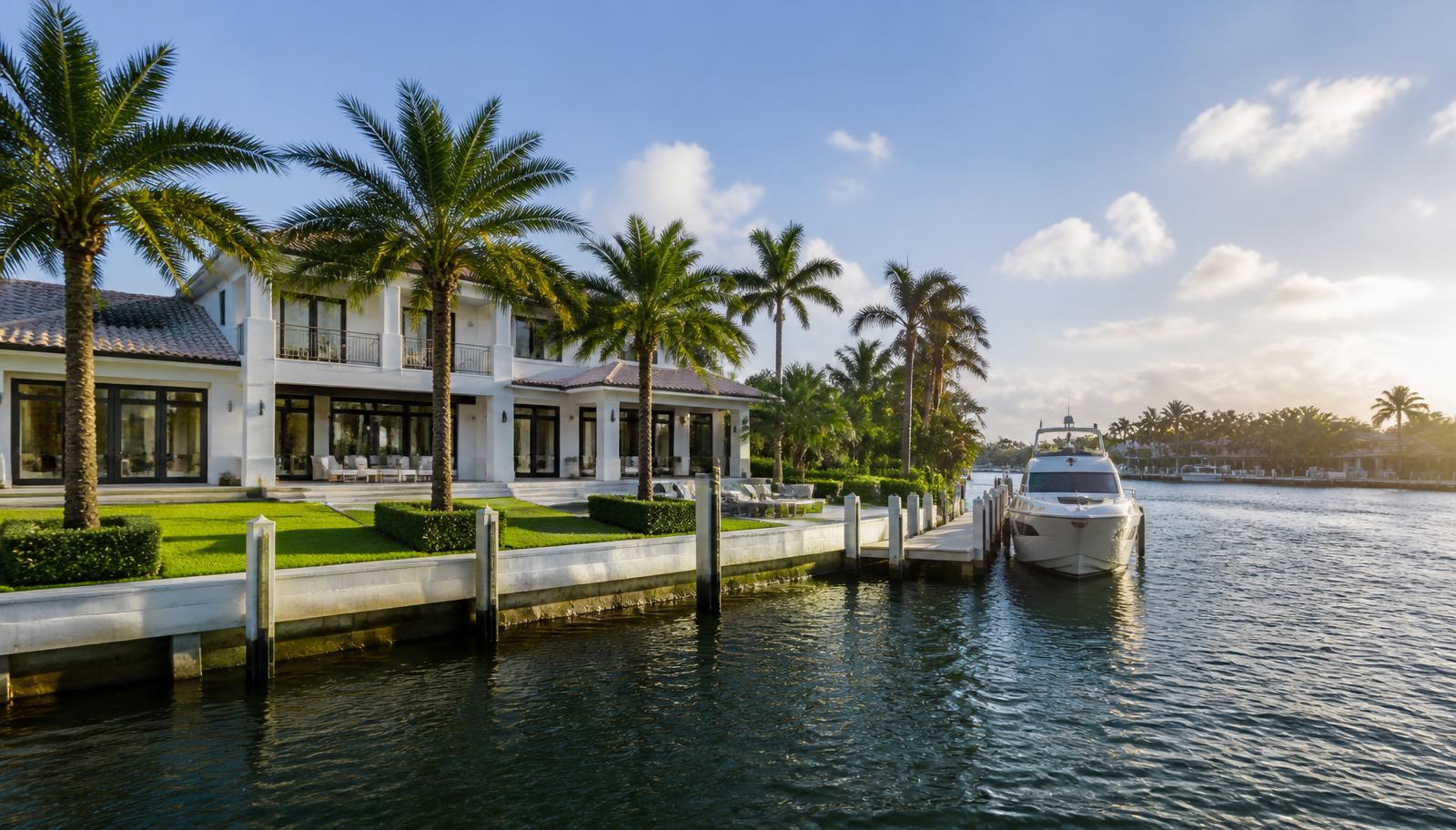
What Should You Know About Docks and Dockage?
An existing dock is a starting point, not a conclusion. It is worth confirming rather than assuming that the dock is permitted, that it suits your intended vessel, that its length translates into usable capacity, and that water frontage corresponds to dockage capacity — none of these follow automatically.
- Whether a dock exists, and its condition and dimensions
- Permits and records for existing marine improvements
- Lifts and utilities where present, and their condition
- Water depth alongside the dock at varying tide
- Setbacks, waterway characteristics and any applicable restrictions
Dock, seawall and shoreline work in unincorporated and coastal Miami-Dade is regulated through the county's coastal resources and environmental permitting program, while work in state waters may also involve the Florida Department of Environmental Protection. Requirements can depend on the property's municipality, the waterway and the type of proposed work, so verification should be directed to the authority with jurisdiction over that specific property.
Why Does Water Depth Matter?
Water depth determines whether a waterway is practical for the way a buyer intends to use it. A vessel's draft, tidal variation, where the dock sits relative to the channel, the characteristics of the waterway itself and any shoaling all influence usability. Depth can also vary along a single property's frontage.
There is no universal number that makes a Miami property "deep water." The useful question is whether the depth available at this dock, at the tide levels you would actually use, suits the vessel you actually plan to keep — a question best answered by measurement rather than by listing language.
How Do Fixed Bridges Affect Waterfront Property?
A fixed bridge does not open. When one sits between a property and open water, passage depends on the bridge's clearance, the vessel's height above the waterline, water level at the time of passage and the route being used. Some vessels pass comfortably; others cannot pass at all.
This is why "minutes to the ocean" can be misleading. Two homes an equal distance from an inlet may have entirely different practical access depending on what sits along each route. Bridge and waterway information should be verified for the specific property rather than inferred from a neighborhood's reputation.
What Should You Know About Seawalls?
Where a property has a seawall, its condition can be one of the more consequential parts of waterfront due diligence — and one of the least visible from a showing. Depending on the property, evaluation may include visible condition, age where known, construction type, the cap and panels, tiebacks where applicable, evidence of prior repair, and engineering documentation where it exists.
Replacement cost and remaining service life vary too widely by construction, exposure and length to generalize, and any figure quoted without a property-specific assessment should be treated with caution. What matters at the diligence stage is understanding condition well enough to know whether a qualified marine contractor or engineer should look at it before closing.
What About Waterfront Orientation and Exposure?
Orientation shapes the daily experience of a waterfront home: which direction the water views face, whether the property receives sunrise or sunset light across the water, and how much sky and open water are visible from the main living spaces. Open-bay exposure can deliver expansive views along with more wind, chop and weather exposure. A canal setting can offer calmer water, more shelter and, in many cases, closer neighbors across a narrower span.
Privacy follows from the same variables — the distance across the water, what sits on the opposite bank and how the surrounding parcels are developed. No orientation is universally superior. The right one depends on how you plan to use the outdoor space and what you want to see from inside.
How Do Flood Zones Affect Waterfront Property?
Flood risk should be evaluated property by property. Flood-zone designations are published by FEMA and can be reviewed by address through the FEMA Flood Map Service Center, with elevation information adding property-specific detail where available. Lender requirements may also apply depending on the loan and the property.
It is not accurate to say that all Miami waterfront homes fall into one flood zone, that every waterfront property carries the same insurance requirement, or that two properties in the same designation carry identical risk. Elevation, construction, location within the parcel and site characteristics all differ. Use the official maps and your insurance and lending professionals rather than generalizations.
What Should Buyers Know About Waterfront Insurance?
Insurance outcomes on waterfront property depend on the individual property: construction type, age, roof, elevation, location, flood and wind exposure, the coverage selected, the carrier, deductibles, financing and other underwriting characteristics. Two neighboring homes can present differently.
Because of that variability, it is not meaningful to state a typical waterfront premium or a fixed percentage difference against inland property. The practical approach is to obtain property-specific insurance quotes during the diligence period, before the purchase is complete, so the actual carrying cost is known rather than estimated.
How Are Miami Waterfront Homes Valued?
Waterfront valuation combines several distinct sources of value at once, and the market weighs them together rather than in sequence:
House + land + waterfront + location + water access + dockage + frontage + seawall or shoreline + condition + privacy + current competition + recent comparable sales
No single variable determines value. A superb house on constrained water and a modest house on exceptional water can occupy similar price territory for entirely different reasons. Broader pricing context for the market as a whole is covered on our Miami real estate market page.
Why Two Waterfront Homes Can Have Very Different Values
Consider two properties described the same way in search results. The first sits on open water with wide frontage, a permitted dock, an unobstructed route to open water, a recently rebuilt seawall and a larger lot. The second sits on a canal behind a fixed bridge, with shallower water at the seawall, narrower frontage and an older shoreline structure of unknown condition.
Both are genuinely waterfront. They are not the same product, and they will not attract the same buyer, the same use or the same pricing logic. Reducing either one to house square footage multiplied by a neighborhood price per square foot obscures nearly everything that distinguishes them.
Where Are Miami's Waterfront Homes Located?
Waterfront single-family property is concentrated in a handful of Miami-Dade submarkets, each with its own mix of bay, canal and island frontage. The distinctions below are about waterfront character rather than ranking — the right area depends on the kind of water relationship you want.
Miami Beach Waterfront Homes
Miami Beach waterfront ranges from Biscayne Bay frontage along the west side of the island to residential canal frontage in neighborhoods laid out around interior waterways, along with the guard-gated islands between the beach and the mainland. Views, lot dimensions, frontage and dockage vary widely between these settings.
Ocean-access considerations differ by location and route as well, so a Miami Beach address does not by itself indicate direct or unobstructed access to open water. As elsewhere, that is a property-level question.
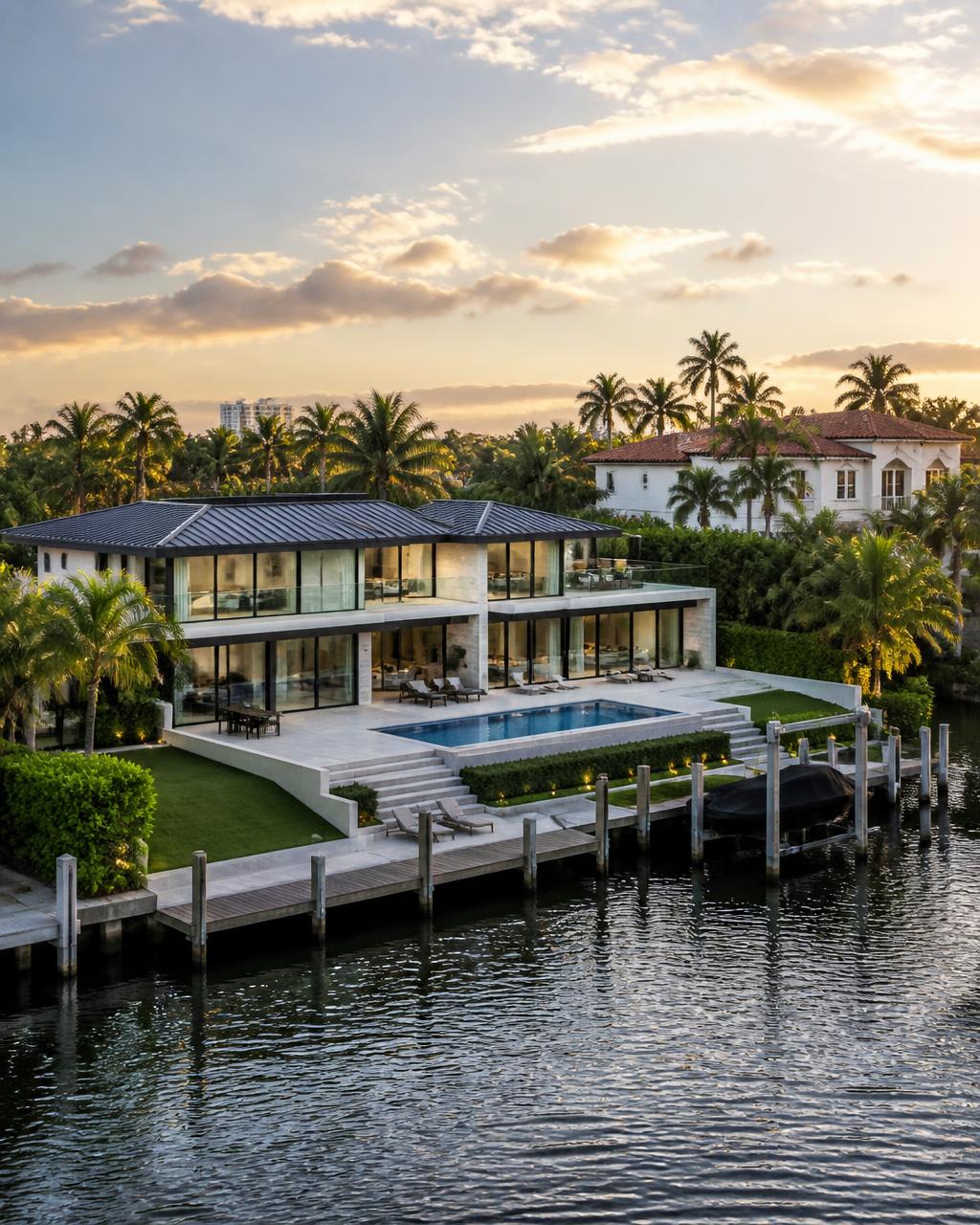
Coral Gables, Gables Estates and Cocoplum Waterfront
Coral Gables waterfront includes bayfront parcels and an extensive canal system, and access characteristics differ meaningfully by exact location within it. Gables Estates and Cocoplum are established waterfront communities within the area, where lot size, water frontage and dockage characteristics vary from street to street and private-community rules may apply.
Because access, bridges and depth vary across the canal network, two homes a short distance apart can differ in what they support on the water. Community rules, membership requirements and access arrangements should be verified directly for any specific property rather than assumed from the neighborhood name.
Key Biscayne Waterfront Property
Key Biscayne is an island community with both bay and ocean relationships, offering waterfront single-family homes as well as waterfront condominium residences. Views, exposure and water access depend heavily on which side of the island a property sits on and on its individual frontage.
Other Miami Waterfront Markets
Coconut Grove offers bayfront and near-bay property with a distinctly established, tree-canopied character, and there are additional mainland bayfront and canal-front pockets across the county. The relevant question in each is the same: what kind of waterfront is it, and what does it support?
What Should You Inspect Before Buying Waterfront Property?
A waterfront inspection begins with everything a standard house inspection covers — roof, structure, electrical, plumbing, HVAC, pool where present — and then extends to the parts of the property that meet the water. Depending on the property, that can include the dock, the seawall or shoreline, elevation and flood information, and any marine improvements.
Where specialized waterfront conditions exist, a general home inspector may not be the right professional for every element, and a marine contractor or engineer may be appropriate. Nothing in this guide replaces professional inspection of a specific property.
What Should You Verify Before Buying for Boating?
If boating is part of the plan, work through this list before making an offer rather than after:
- What vessel do you plan to keep, now and realistically later?
- What is its draft?
- What is its height above the waterline?
- Does the property have a dock, and in what condition?
- Is the dock suitable for that vessel's dimensions?
- What is the water depth at the dock across tide levels?
- Are there fixed bridges along the route to open water?
- What are those bridge clearances?
- What route actually leads to open water, and how long is it?
- Are permits available for the existing marine improvements?
- Are there restrictions affecting your intended use?
A Realtor does not determine these answers alone. They come from official records, the relevant permitting authorities and qualified marine professionals — your representation's role is to make sure the questions are asked while you still have the ability to act on the answers.
What About Waterfront Condos?
A waterfront condominium can offer water views, a waterfront building location, marina access where applicable, services and amenities. But the ownership structure is fundamentally different from owning a waterfront house: the buyer owns a unit plus an interest in the common elements, subject to the applicable condominium documents and association governance.
That structure carries its own due diligence — documents, reserves, insurance and assessments — which is covered in our guide to buying a condo in Miami. At the top of that market, the buildings and residence types are covered in our review of the most expensive condos in Miami.
Waterfront Estate or Luxury Condo?
A luxury condo is a unit, a building, an association, a set of services and a view. A waterfront estate is a house, land, waterfront, privacy, direct maintenance responsibility and dockage where applicable. Both can be excellent; they are simply different commitments.
The full comparison — privacy, carrying costs, maintenance, lock-and-leave use and long-term fit — is laid out in our luxury condo vs waterfront estate guide. If you are still mapping out the transaction itself, the complete guide to buying property in Miami covers the process end to end, and buyers considering a newly built waterfront home can review the Miami new construction guide.
What Should International and Out-of-State Buyers Consider?
Buyers purchasing from outside Florida face the same waterfront diligence with an added layer of logistics: remote property evaluation, local representation on the ground, inspections coordinated without the buyer present, insurance quotes obtained before closing, financing that may differ for non-resident buyers, closing logistics and a plan for property oversight afterward. Waterfront property in particular benefits from someone physically verifying dock, seawall and shoreline conditions.
Buyers should also consult appropriate legal and tax professionals for their circumstances; this guide does not provide legal or tax advice.
Explore Miami Waterfront Real Estate
Waterfront is not one property type, and the difference between two homes that share the label is usually found in the details this guide covers — access, dockage, depth, bridges, shoreline, exposure and flood position. Working through those questions on specific properties, with Miami real estate agents at Supreme Capital, is what turns a waterfront search into a property that supports the way you actually intend to use it.
Next Step
Explore Miami luxury real estate
Browse the full collection of luxury waterfront homes and condominium residences.
Work with a Miami buyer's agent
Have dockage, seawall and access questions verified on the properties you shortlist.
Search Miami properties
Filter current MLS inventory by area, price and property type.