Coral Gables Buyer Guide
Coral Gables Homes & Condos for Sale: Buyer's Guide
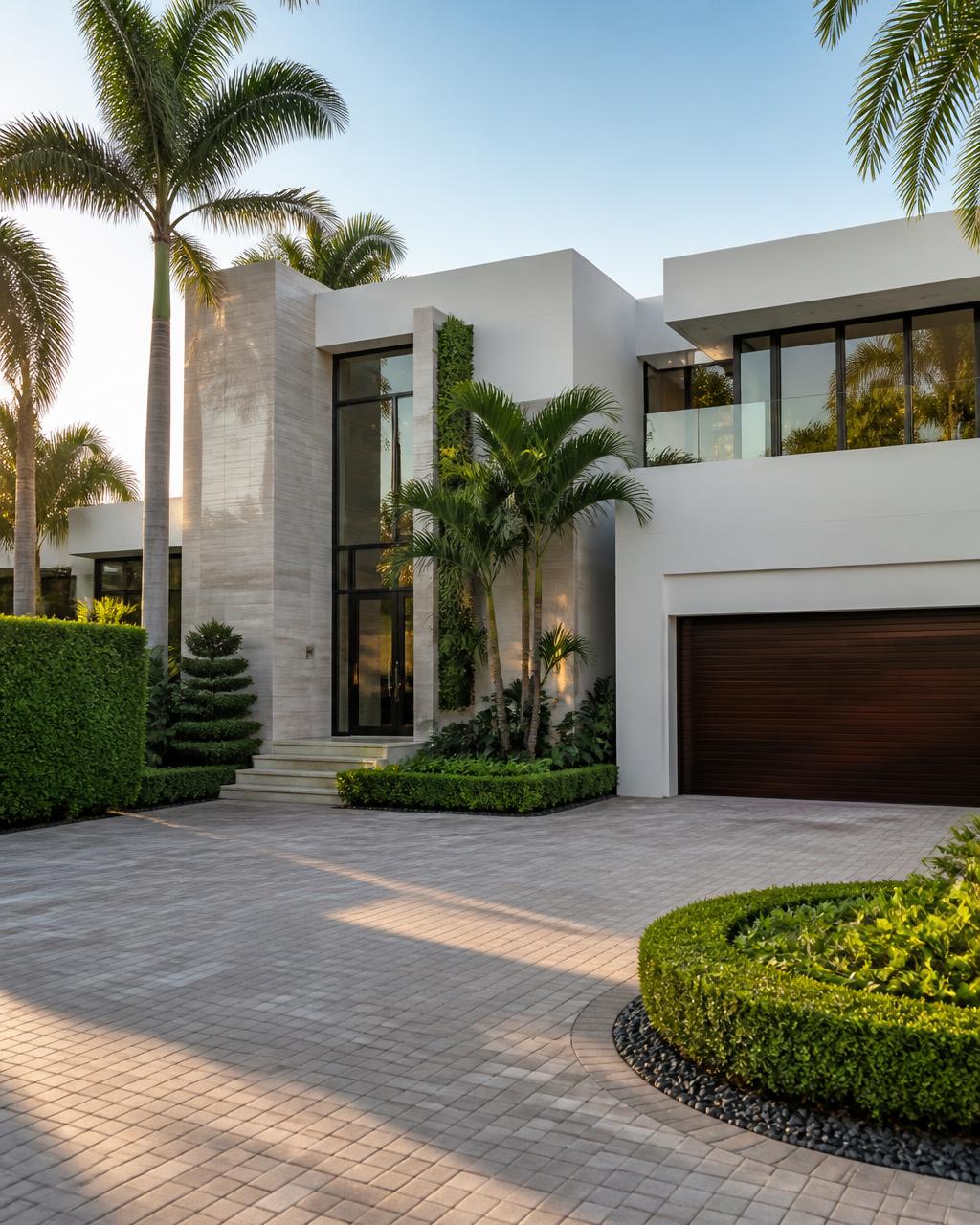
What Should Buyers Know About Coral Gables Real Estate?
Coral Gables includes single-family homes, waterfront properties and condominiums, but each requires different due diligence. For houses, buyers should evaluate the structure together with the lot, location, condition and property-specific restrictions; waterfront and condo properties add further considerations.
That distinction is the spine of this guide. Most of what trades in Coral Gables is a house on a lot, and the lot, the street, the architecture and the condition of the structure carry as much of the value as the floor plan does. A condominium purchase here follows a different logic entirely, closer to the analysis in our Miami condo buying guide. For area context and property discovery, our Coral Gables community page sits alongside this article; here we explain how to evaluate what you find there.
What Makes Coral Gables Different From Other Miami Markets?
It is a planned city with an architectural identity, and that identity is written into how properties are regulated, renovated and compared. Unlike the vertical, association-governed markets that dominate the coastline, Coral Gables is primarily a single-family market where land, street character and architectural review shape both what you can do with a property and how it compares to the one two blocks away.
The practical consequences for a buyer are specific. Lot sizes vary widely across the city, from compact lots on older interior streets to large estate parcels near the waterfront. Architecture is not incidental: the city maintains design and historic preservation frameworks that can affect exterior work, and the applicable review depends on the property. There are established gated and private communities, waterfront sections with their own physical constraints, and a downtown condominium environment that behaves more like an urban condo market than like the residential streets around it.
A short historical note is useful only because it explains the present: the city was laid out as a designed community, which is why the streetscape, the tree canopy and the architectural vocabulary are unusually consistent. What matters to a buyer today is the consequence — property-specific rules, property-specific renovation paths and property-specific value differences — not the history itself.
What Types of Properties Can You Buy in Coral Gables?
Mainly single-family homes, with waterfront homes and condominiums as distinct sub-markets. Homes in gated or private communities form another category, and new construction appears both as individual replacement houses and, in the downtown area, as condominium development.
- 01Single-family home — house + lot + location + architecture + condition
- 02Waterfront home — house + land + waterfront + water access + dockage and shoreline + condition
- 03Condominium — unit + building + association + position + ownership costs
These are not variations on one purchase. A house transfers land and full maintenance responsibility to you. A waterfront house adds a shoreline you own and a set of physical questions about the water itself. A condominium transfers a residence plus membership in an association whose budget, insurance and rules you inherit. The general version of the house-versus-condo comparison for the wider county is in our guide to Miami condo and single-family pricing; this page applies the decision to Coral Gables specifically.
Where Should Buyers Look in Coral Gables?
Start with the property type and let the geography follow, because Coral Gables contains several distinct residential environments rather than a ranked list of neighborhoods. The city's interior streets, its waterfront sections, its private communities and its downtown condominium corridor offer genuinely different ownership experiences.
Established residential streets make up the largest part of the city: tree-lined blocks with a mix of original architecture, renovated homes and replacement construction, on lots that vary meaningfully in size and frontage from one area to the next.
Waterfront and private communities sit toward the south and southeast of the city. Gables Estates and Cocoplum are established examples, each with its own association, access structure and mix of waterfront and interior lots. Nearby Hammock Oaks and Tahiti Beach are further Coral Gables addresses along the same southern corridor.
Downtown Coral Gables is where most of the city's condo inventory sits, in a walkable commercial district with a different daily rhythm from the residential streets a few minutes away.
One boundary note that matters more than it seems: Pinecrest, South Miami, Coconut Grove and Palmetto Bay are separate markets, and in Pinecrest's and South Miami's case separate municipalities. They are useful for comparison — our Pinecrest and Coconut Grove pages cover them — but their rules, comparable sales and property character are their own.
Current Coral Gables Home Inventory
Explore Coral Gables Homes for Sale
Explore current single-family homes for sale in Coral Gables and compare location, lot characteristics, architecture, property condition and waterfront features where applicable. Individual property details should be verified before making a purchase decision.
What Should Buyers Know Before Buying a Coral Gables Home?
That bedrooms, bathrooms and interior square footage describe only a fraction of the purchase. In a market where land, architecture and condition vary this much block to block, the rest of the analysis is where the real differences between two homes appear.
- 01House — layout, construction, systems and interior condition
- 02Lot — size, shape, frontage, orientation and usable outdoor space
- 03Location — street character, traffic, proximity and privacy
- 04Architecture — style, quality of construction and exterior condition
- 05Condition — roof, systems, structure and deferred maintenance
- 06Renovation and improvements — what was done, when, and whether it was permitted
- 07Property-specific restrictions — zoning, setbacks, review requirements, any designation
- 08Current competition and recent comparable sales — what else a buyer can choose today
Working through that list on real properties — and getting straight answers from listing agents, the city and inspectors — is the substance of buyer representation in Miami. Most of it cannot be resolved from a listing page, because the listing describes the house and not the conditions attached to it.
What separates them is usually structural to the property rather than cosmetic: the lot and how much of it is usable, the street and what sits across it, the architecture and the quality of the original construction, the condition of the roof and systems, the renovation history and whether the work was permitted, waterfront features where they exist, privacy, and any restriction that limits what the next owner can change.

Why Lot Size and Location Matter
Because in a built-out city the land is finite and it carries a meaningful share of the price. Lot size, shape, frontage and orientation determine how the house sits, how much usable outdoor space exists, and what can be added later — a pool, a garage, an addition that depends on setbacks.
Location works at the scale of the street rather than the neighborhood. What sits across the street, whether the block is a through-route or quiet, how mature the canopy is, how much separation exists between houses and where the property sits relative to commercial corridors all affect daily use and resale. Two houses a few hundred feet apart can present different privacy, noise and light conditions, and buyers who visit only once, at one time of day, tend to miss it.
Why Architecture and Property Condition Matter
Because Coral Gables houses span roughly a century of construction, and both the style and the state of the structure carry into what you will spend after closing. Architecture affects value, exterior review requirements and renovation feasibility; condition affects the near-term capital you will commit whether or not you planned to.
On the architectural side, the relevant questions are the period and style, the quality of the original construction, the integrity of the exterior, and whether the property carries requirements that govern exterior changes. On the condition side, the list is concrete: roof age and type, electrical, plumbing and mechanical systems, structural condition, impact windows and doors, moisture history, pool and landscape when present, and the accumulated deferred maintenance the seller did not address.
Renovation history is where those two threads meet. An older home fully and properly renovated can be a more straightforward purchase than a newer one with unpermitted work in its file. Ask what was done, when, by whom, and whether permits were pulled and closed out — the City of Coral Gables building department is where that record lives.
What Should Buyers Know Before Renovating or Rebuilding?
That renovation and redevelopment rights are property-specific and should be verified before they are priced into an offer. Zoning, setbacks, lot coverage, height, applicable design review and any historic designation together determine what a given address allows.
The practical sequence is to confirm the zoning and dimensional requirements with Coral Gables planning and zoning, establish whether any historic designation applies, understand what review the scope of work triggers, and only then estimate cost and timeline. A renovation assumption that turns out to require a different approval path can change the economics of a purchase substantially. Where the work is significant, involve an architect and the city early rather than after the inspection period has started running.
What Should Buyers Know About Historic Properties?
That designation is a status attached to specific properties, not a characteristic you can read off a facade. A home can be old, Mediterranean in style and located on a historic-feeling street without being designated — and a home can be designated without looking the part.
Designation also does not mean a property cannot be renovated. It means a defined review process applies to certain work, usually focused on exterior and character-defining features. The workable approach is to check the status of the exact address with the City of Coral Gables historical resources department, learn which review applies to your intended scope, and treat the answer as a planning input rather than a verdict on the house.
What Changes When a Coral Gables Home Is Waterfront?
A physical layer of due diligence is added that does not exist on a dry lot. A waterfront property includes a shoreline you are responsible for, and it may or may not support the use you have in mind for the water.
- 01House + land — everything you would verify on any Coral Gables home
- 02Waterfront — shoreline type, seawall existence and condition
- 03Water access — where the property sits on the canal, waterway or bay
- 04Dockage — whether a dock exists, its condition, dimensions and permit status
- 05Water depth — what the property can actually accommodate
- 06Bridge and route conditions — the path out and any fixed clearance along it
- 07Flood and insurance — the property-specific exposure and cost
Coral Gables waterfront is a varied category. Some properties sit on canals and waterways, some closer to open water, and the conditions — depth, dock permitting, route and clearance — differ by location and by property. Broad claims that every waterfront home in a given community has unrestricted deep-water access, or that no bridges affect the route, should not be accepted without verification for the specific address. Where high-end waterfront is the focus of the search, our Miami luxury real estate page covers the broader inventory context.
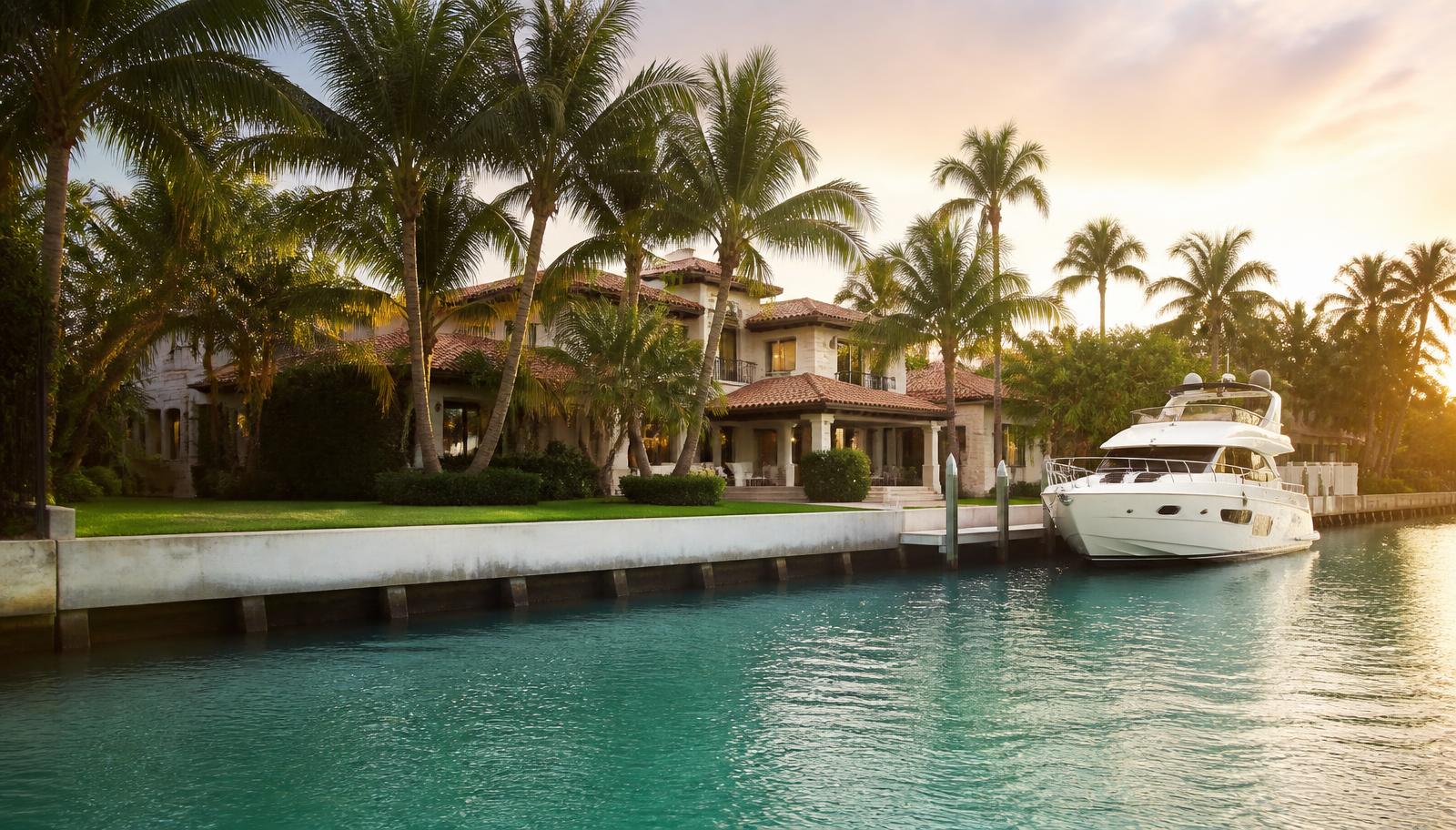
What Should Buyers Verify About Water Access and Dockage?
Whether the waterfront can physically support the vessel and the use you intend — a question about the dock, the water and the route, not about the listing description. Dock existence, structural condition, permit status, water depth at the property, tidal variation where relevant, the path to open water and any fixed bridges along it determine the answer.
Seawall and shoreline condition belong in the same review, because they are the owner's responsibility and repair is a capital item rather than routine maintenance. None of this can be resolved from a photograph. When boating is central to the purchase, the technical evaluation belongs in the inspection period, and our guide to waterfront homes for sale in Miami covers docks, depth, bridges, seawalls and shoreline in the detail the subject deserves.
What Should Buyers Know About Gated and Private Communities?
That access structure, ownership structure and community rules vary, and the words used to describe them are not standardized. Some communities control vehicular access; some also own and maintain private streets and waterways; some layer an approval process onto purchases and renovations.
Within Coral Gables, Gables Estates and Cocoplum are established examples, each with an association and its own governing documents. The useful comparison is not which one is better but how each one works: what the association owns and maintains, what the assessments cover, what the purchase or membership approval process involves, what the renovation rules require, and how the community relates to the water where waterfront lots are involved. Our guide to gated and private communities in Miami compares the structures in more depth. Access control is a matter of community structure and should not be read as a security guarantee.
Current Coral Gables Condo Inventory
Explore Coral Gables Condos for Sale
Explore current condos for sale in Coral Gables and compare residences, buildings, locations and property characteristics. Buyers should also evaluate the association, ownership costs and building-specific considerations before purchasing.
What Should Buyers Know Before Buying a Coral Gables Condo?
That the purchase is decided twice: once about the residence and once about the building and association behind it. The first decision is visible on a floor plan and during a showing. The second lives in a budget, a reserve study, an inspection history, an insurance policy and a recorded set of rules.
- 01Unit — layout, exposure, condition and interior updates
- 02Building — age, construction, maintenance history and inspection status
- 03Association — governing documents, management, budget and financial condition
- 04Location — where the building sits and what surrounds it
- 05Floor and position — light, noise, outlook and privacy
- 06Fees, reserves and assessments — what is funded and what is pending
- 07Insurance, parking and rental rules — the terms you inherit at closing
Florida law requires residential condominium associations to maintain reserves for specific structural components identified in a Structural Integrity Reserve Study under Florida Statutes §718.112, and applies milestone inspection requirements to certain buildings based on age and height under Florida Statutes §553.899. Resale buyers are also entitled to a defined set of association documents under Florida Statutes §718.503. The Florida Department of Business and Professional Regulation is the state authority for condominium regulation. Requesting the documents is the start of the review, not the end of it; our guide to buying a condo in Miami walks through how to read them.
What Does It Cost to Own Coral Gables Real Estate?
More than the mortgage, and differently by property type. The purchase price is one figure; the recurring cost structure determines whether the property is comfortable to hold.
For a house: price, financing, property taxes, property and flood insurance where applicable, roof and systems, landscaping, pool where present, and general maintenance on its own schedule.
For a condo: price, financing, property taxes, unit insurance, association fees, assessments, parking or storage charges where separate, and interior maintenance.
For a waterfront home: the relevant house costs, plus seawall, shoreline and dock maintenance, and the insurance treatment specific to the location.
Property taxes deserve a note of their own. Florida's assessment and exemption rules mean the current owner's bill is not a reliable guide to yours; verify the parcel and current assessment with the Miami-Dade County Property Appraiser rather than the figure printed on a listing. Tax questions belong with a qualified tax professional.
What Should Buyers Know About Flood Risk and Insurance?
That both are specific to the property. Flood zone, ground and finished-floor elevation, construction type, age and mitigation features vary parcel by parcel across Coral Gables, and insurance pricing follows those particulars rather than a citywide generalization.
The practical sequence is to check the exact address at the FEMA Flood Map Service Center, establish whether an elevation certificate exists, and then obtain real quotes for that property before contingencies are released. For condominiums, the association's master policy and the owner's coverage interact, so read both. Nothing about flood exposure or insurance cost should be generalized from one Coral Gables property to another.
New Construction vs Existing Homes in Coral Gables
They are different purchases that call for different evaluations, not a ranking. New construction delivers current building systems, contemporary layouts and code-current construction with limited deferred maintenance. Existing homes deliver established architecture, mature landscaping, a known street context and, frequently, larger or better-positioned lots.
Evaluate each on its own terms. For new construction, the questions concern the builder, the quality of the work, how the house sits on its lot and how it relates to the surrounding block. For an existing home, the questions concern condition, systems, renovation history and permits. Both are subject to the same property-specific restrictions, and in a built-out city the replacement house on a compromised lot is not automatically the better buy. Where condominium development is the relevant context, our new developments page and our new construction buying guide cover contracts and deposits.
How Should Buyers Compare Two Coral Gables Properties?
First establish that they are the same property type, then compare the full set of inputs rather than a single metric. For houses, that means house, lot, location, architecture, condition, renovation history, property-specific restrictions, current competition and recent comparable sales.
For waterfront homes, add waterfront characteristics, water access, dockage and shoreline condition. For condominiums, compare unit, building, association, floor and position, and total ownership cost. Mixing categories produces a number without a conclusion.
In Coral Gables the metric is especially incomplete, because interior square footage does not price the lot, the street, the architecture, the condition, the renovation quality, waterfront features, privacy or the utility of the property. Those are precisely the variables that separate two homes of similar size.
The same caution applies to comparable sales. Proximity alone does not make a sale comparable: a house one street away on a larger lot, in different condition, with a different renovation history or a different waterfront position is a different property. Reading market context correctly — inventory, absorption and how they move by property type — is easier with our Miami real estate market page and our guide to reading Miami market trends.
What Should Buyers Review Before Making an Offer?
Identify the property type and review what applies to it. Common to every Coral Gables purchase: recent comparable sales, listings competing today, condition, inspection, financing, insurance, property taxes and intended use.
- House — lot and elevation, architecture, roof and systems, renovation history, permits, property-specific restrictions and flood exposure where relevant.
- Waterfront — everything on the house list, plus water access, dock condition and permits, water depth, route and bridges, seawall and shoreline, flood and insurance.
- Condo — association documents, budget, reserves and reserve study, assessments, insurance, building condition and inspection status, parking and storage, rental rules.
What Should International and Out-of-State Buyers Consider?
Mostly logistics, because remote purchasing mechanics are well established here. Live video tours, side-by-side property comparison, inspections attended on the buyer's behalf, remote document review and remote or hybrid closings are routine in Coral Gables.
Financing terms often differ for foreign nationals, closing logistics can add identification and funds transfer steps, and insurance quotes should be obtained before contingencies are released rather than after. Ownership structure and tax treatment are questions for qualified legal and tax professionals. Property oversight after closing — who holds keys, handles correspondence and manages maintenance on a house that sits empty part of the year — is worth resolving before you close. Our guide to buying Miami property from outside the United States covers the full process.
Explore Coral Gables Real Estate
Choosing the right Coral Gables property requires looking beyond bedrooms, bathrooms and interior square footage. Lot characteristics, location, architecture, condition, property-specific restrictions and, where applicable, waterfront or condominium considerations can all change the purchase decision. Explore current Coral Gables properties and compare the options that fit how you plan to use the property. When it is time to resolve those questions on specific listings, buyer representation from Supreme Capital Real Estate Agents Miami is available for Coral Gables purchases.
Next Step