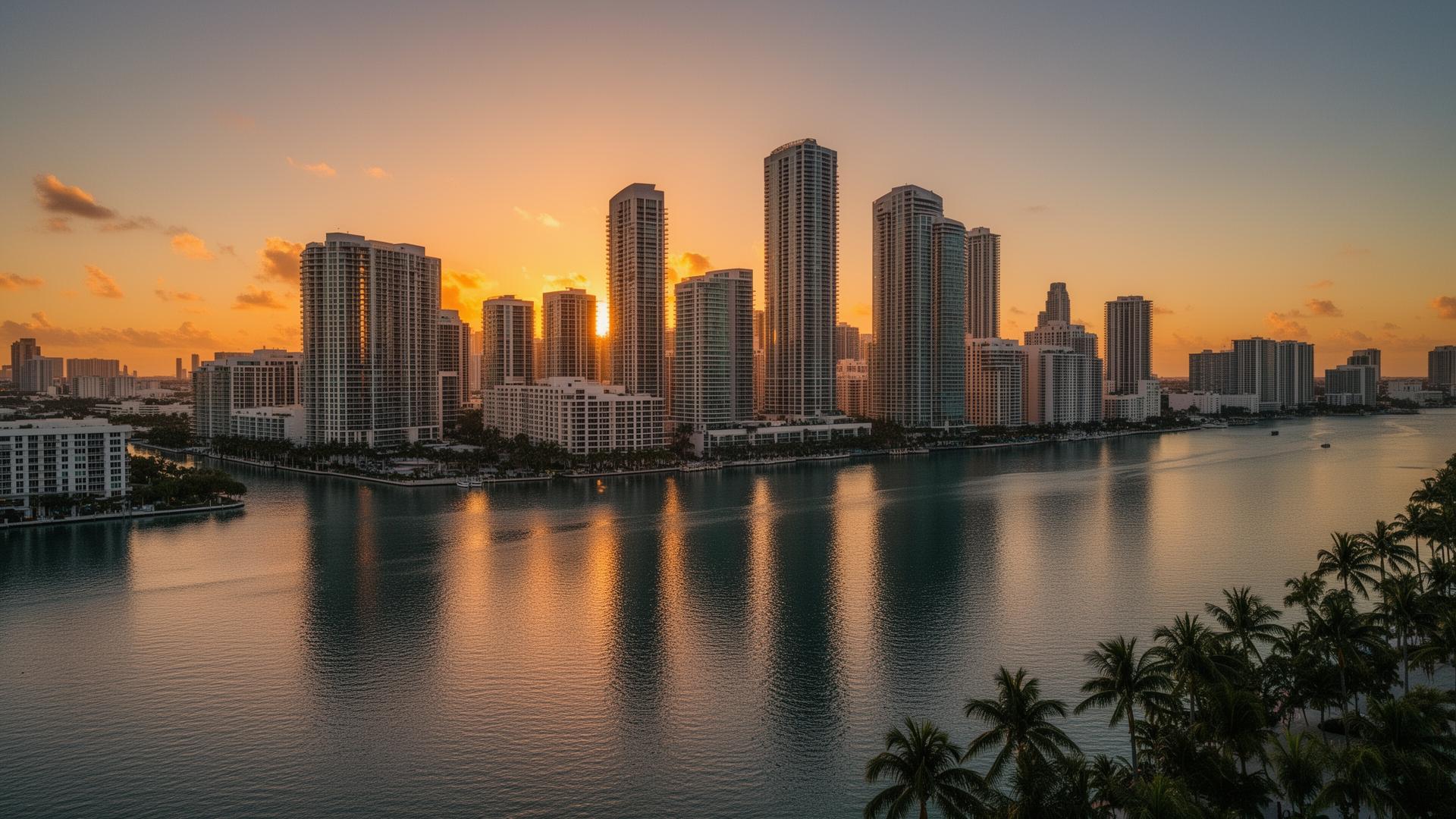
Miami Real Estate Market
Current Miami housing market trends, pricing, inventory and buyer activity across Miami's residential markets — reviewed by a licensed Miami brokerage.
Neighborhood Market Review
A broker-prepared review of current activity, competing inventory and recent comparable sales for your neighborhood or property.
Get My Neighborhood Market ReportMiami Housing Market: What's Happening Right Now?
Miami's housing market can vary significantly by property type, price range and neighborhood. Inventory, mortgage rates, buyer demand, new construction and the availability of well-positioned properties all influence current conditions. Markets such as Coral Gables, Pinecrest, Brickell and Miami Beach can behave very differently, which is why Miami-wide statistics should always be read alongside neighborhood-level data and recent comparable sales for a specific property.
Last updated: August 2026 — market commentary reviewed
Miami Real Estate Market Update — August 2026
Miami is behaving as a segmented market rather than one moving in a single direction. Condominium supply, single-family supply, financing conditions and buyer activity can each vary considerably by neighborhood and price range, so the most useful reading of current conditions is the supply, competition and recent sales activity inside the specific segment being evaluated.
Two patterns are worth watching. First, buyers are more selective than they were during the peak relocation period: well-prepared, correctly positioned properties still draw focused interest, while properties priced against optimistic asking prices rather than closed comparables tend to sit and accumulate marketing time. Second, condominium and single-family conditions are diverging in several submarkets — condominium buyers are underwriting association finances, reserves, insurance and assessments alongside the unit itself, which changes how identical floor plans in different buildings are priced.
Financing remains the variable most likely to change activity quickly within a price band. Rather than publish figures we cannot source, we read current conditions from live MLS activity for a defined segment and cross-check the broader picture against primary reporting: monthly residential statistics from the MIAMI Association of Realtors, national mortgage rate data from Freddie Mac's Primary Mortgage Market Survey, and assessment and ownership records from the Miami-Dade County Property Appraiser.
What We Are Watching
- Competing inventory inside a defined segment, not countywide totals
- Financing conditions and how they shift activity within a price band
- Condominium building finances, reserves, insurance and assessments
- New construction competing with resale inventory in the same submarket
- Recent closed comparables versus current asking prices
Editorially reviewed August 2026 — qualitative commentary, no unsourced statistics
What Is Driving the Miami Real Estate Market?
Miami pricing is the product of several interacting forces rather than any single headline factor. The weight of each varies by neighborhood, property type and price band.
Inventory & Housing Supply
The number of comparable properties actively competing against each other is the single clearest influence on pricing power and negotiating conditions in any Miami segment.
Mortgage Rates & Financing
Borrowing costs shape purchasing power and monthly affordability, which affects how quickly buyers move and where they concentrate within a price band.
Domestic Buyer Demand
Relocation, primary-residence and second-home demand contribute to activity, with strength varying meaningfully by neighborhood and property type.
International Buyer Demand
Miami has a long-standing international buyer component, particularly from Latin America and Europe, which is more visible in certain buildings and coastal markets than countywide.
New Construction
New residential and condominium deliveries expand buyer choice and can shift how resale inventory in the same submarket is priced and absorbed.
Limited Land & Location
Established neighborhoods, gated enclaves and waterfront streets have finite supply, so scarcity carries more weight there than broad market averages suggest.
Lifestyle & Business Environment
Climate, international connectivity, and Florida's business and tax environment support demand — as contributing factors rather than a single explanation for pricing.
Why Miami's Luxury Market Can Behave Differently
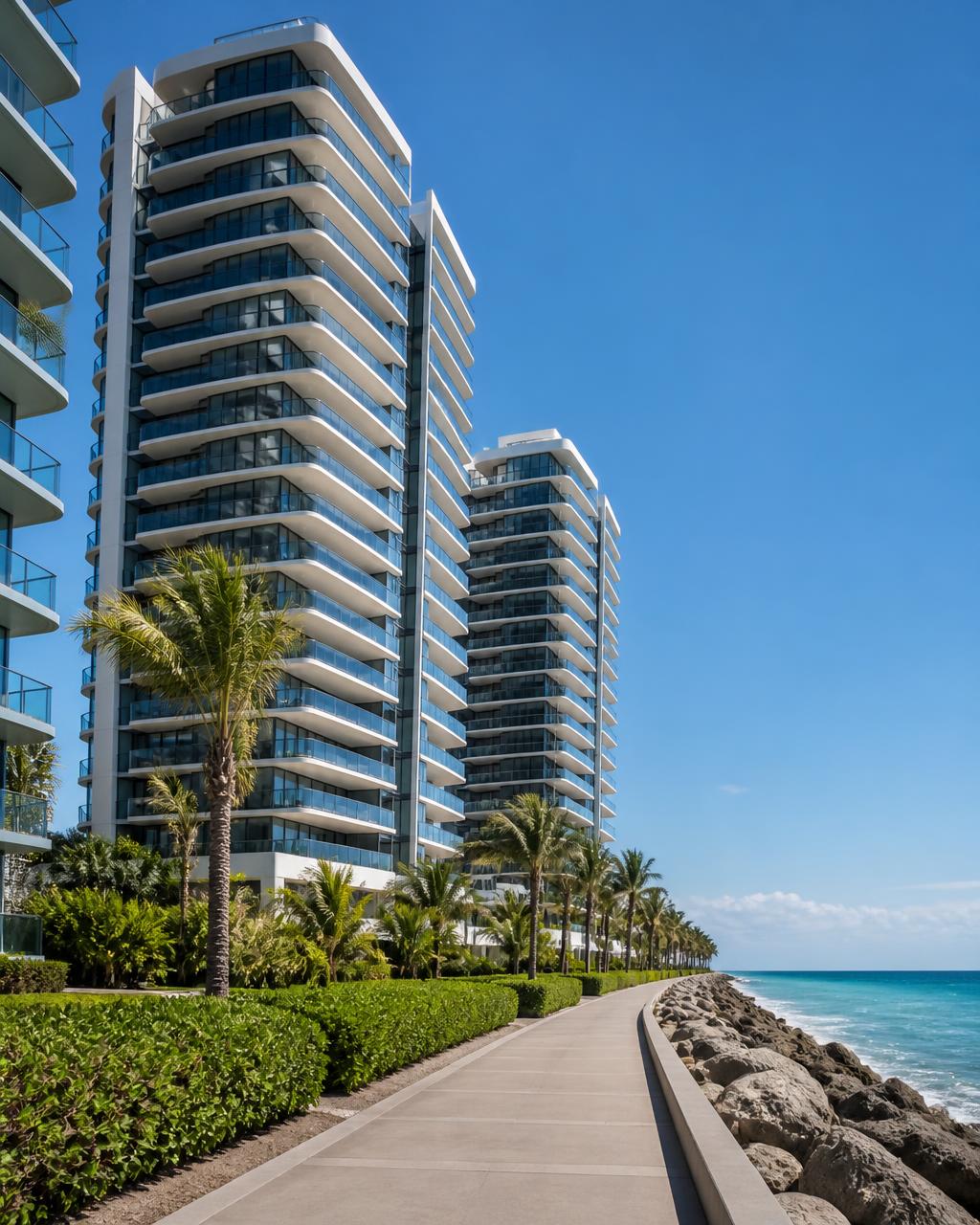
Higher-end and ultra-luxury properties can respond differently from the broader market because genuinely comparable properties are scarce. Water frontage and ocean access, lot size and land, privacy, views, architectural quality and — for condominium residences — the building itself, floor level and association health can each change value more than any citywide trend.
With few comparable sales and a smaller buyer pool, this tier often moves on its own timeline, which is why two homes a few streets apart can be valued very differently. Representation and property-level context for this tier sit on our Miami luxury real estate page.
Miami Real Estate Market by Neighborhood
Miami is a collection of distinct residential markets. Housing stock, supply and buyer profile differ enough that conditions in one neighborhood say little about another.
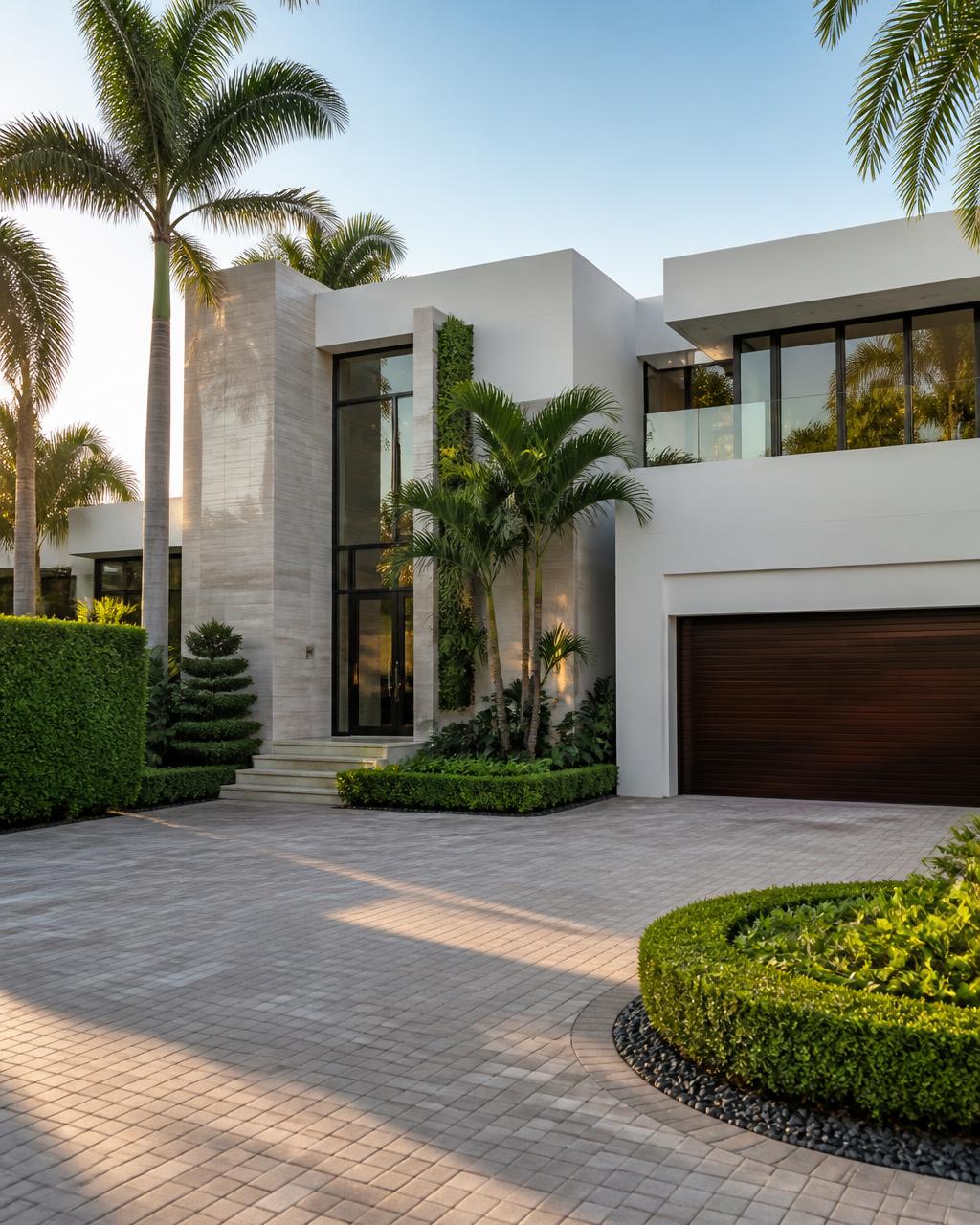





Comparable market notes for every area we cover are collected across all Miami communities.
Miami Condo Market vs. Single-Family Home Market
There is no single uniform Miami housing market. Condominiums and single-family homes respond to different supply dynamics, and neither category is universally stronger.
Miami Condo Market
Condominium conditions are building-specific before they are market-specific. Available units in the same tower compete directly with one another, and new construction can add or absorb inventory quickly.
- Competing units within the same building and line
- New construction deliveries in the immediate submarket
- Floor level, exposure and view quality
- Association reserves, insurance and any assessments
- Rental and occupancy rules that shape the buyer pool
Miami Single-Family Home Market
Single-family conditions are driven by neighborhood supply and property-specific scarcity. In built-out areas, the constraint is land itself, so condition and location often separate outcomes.
- Neighborhood inventory and available lots
- Renovated versus unrenovated condition
- Waterfront versus non-waterfront position
- New construction competing with older housing stock
- Lot size, orientation and privacy
The trade-offs between the two property types are examined further in our comparison of Miami condo vs single-family home ownership.
Is It a Buyer's or Seller's Market in Miami?
Whether Miami favors buyers or sellers depends on the neighborhood, property type, price range and available inventory. A market with limited single-family inventory can behave very differently from a condominium segment with greater supply.
The practical test is how many genuinely comparable properties are competing at your price point, how recent comparable sales closed relative to asking, and how long well-prepared properties are taking to place under contract. Those three measures — read at segment level — describe leverage far better than any countywide label.
Miami can contain all three conditions at once: segments where buyers hold leverage because competing inventory has built up, segments that are broadly balanced, and segments where limited supply of well-positioned property still favors sellers. Condominium and single-family markets in the same neighborhood can sit on opposite sides of that line, and so can two price bands within one building. Defining the segment is what makes the label meaningful.
What Does the Miami Real Estate Market Mean for You?
The same market conditions read differently depending on what you are trying to do. What stays constant is the level of detail required: the segment, not the county.
Buying
Inventory, recent closed sales, competition and financing terms together determine where there is room to negotiate and where there is not. Narrowing to a defined segment before touring is what makes that readable, and it is where buyer representation in Miami starts.
Selling
Competing inventory, recent comparable sales, buyer activity, pricing and presentation decide how a property is positioned. Our Miami seller representation begins with what buyers are actually comparing your property against.
Owning
Market conditions are not the same thing as an individual property's value. A Miami-wide headline cannot account for your location, condition and competitive set — a Miami home valuation addresses the property itself.
A Miami-wide headline is a starting point, not an answer. The useful version of this question is narrower: what is competing with a specific property, at a specific price, in a specific area, and how did the most recent comparable sales actually close.
Tell us the neighborhood or property and we will prepare that review — current activity, competing inventory and recent comparable sales for your segment. It is the same segment-level work behind our Miami real estate representation for buyers, sellers and owners.
Get My Neighborhood Market Report
Tell us the property or area you're interested in and we'll prepare a broker review of current activity, competition and recent comparable sales.
Miami Real Estate Market FAQs
What is the Miami real estate market like right now?
Conditions differ by segment rather than following a single Miami-wide trend. Inventory levels, mortgage rates, buyer demand, new construction deliveries and the supply of well-positioned properties all shape what a buyer or seller experiences. A limited-supply single-family neighborhood and a condominium building with several competing units can behave very differently in the same month, which is why a property-level review matters more than a countywide headline.