Miami Buyer Guide
Is Now a Good Time to Buy Real Estate in Miami?

Is Now a Good Time to Buy Real Estate in Miami?
It depends on the market, the property and the buyer. Miami is not one market — a Brickell condo, a Pinecrest house and a Coral Gables residence can face different inventory and demand at the same time. Current conditions provide context, but they do not tell you whether a specific property is priced fairly, whether it fits your needs, or whether you are financially ready to buy it. Rather than trying to time the broader market, evaluate the actual property against recent comparable sales and current competition, understand the total cost of owning it, and confirm that the purchase fits your finances and plans. A well-suited, fairly priced property can make sense even in an uncertain market, and a strong headline does not make an overpriced property a good buy.
Every Miami buyer eventually asks the same question: is now the right time? The honest answer is that no single market condition can answer it for you. The question is really three questions in one — what is the market doing, does this specific property make sense, and are you personally ready — and working through them with Miami buyer representation is what turns a vague sense of timing into an informed decision.
The Market, the Property, the Buyer
A useful way to evaluate timing is to separate three layers that are often blurred together into one vague feeling about "the market."
- 01The Market — What are buyers and sellers doing?
- 02The Property — Does this specific opportunity make sense?
- 03The Buyer — Are you financially and personally prepared?
The Market
Understanding current conditions means looking at available inventory, new listings, pending activity, closed sales, days on market, price reductions, recent comparable sales, the financing environment, and how conditions differ by property type and neighborhood. That context matters — but it does not automatically tell you whether one particular property is a good purchase.
The Property
Beyond the market, evaluate the asking price against recent comparable sales, current competing inventory, condition, location, property type, the building and association where applicable, land and waterfront characteristics where applicable, new-construction competition, and ownership costs. The question is not "is Miami expensive?" — it is whether this property makes sense at this price under these conditions.
The Buyer
Timing also depends on you: financial readiness, cash reserves, financing, monthly payment comfort, down payment, expected ownership period, whether the property is a primary or second home, relocation timing, rental plans where relevant, risk tolerance and personal objectives. A market opportunity does not make a purchase appropriate for someone who is not financially prepared, and a prepared buyer who finds the right property does not necessarily need a perfect headline to move forward.
What Is the Miami Real Estate Market Doing Right Now?
Current conditions are worth understanding before you evaluate a specific property. Look at inventory, new listings, pending activity, closed sales, days on market and price reductions — and pay attention to how those figures differ by property type, neighborhood and price range, since citywide averages can mask very different conditions in different segments.
This article focuses on how to use that context to make a buying decision, not on reporting the figures themselves, since current statistics change and need to stay current to be useful. For current Miami real estate market conditions, see our dedicated market page, and for help interpreting what those figures actually mean, see our guide to reading Miami real estate market data.
Why Miami Is Not One Real Estate Market
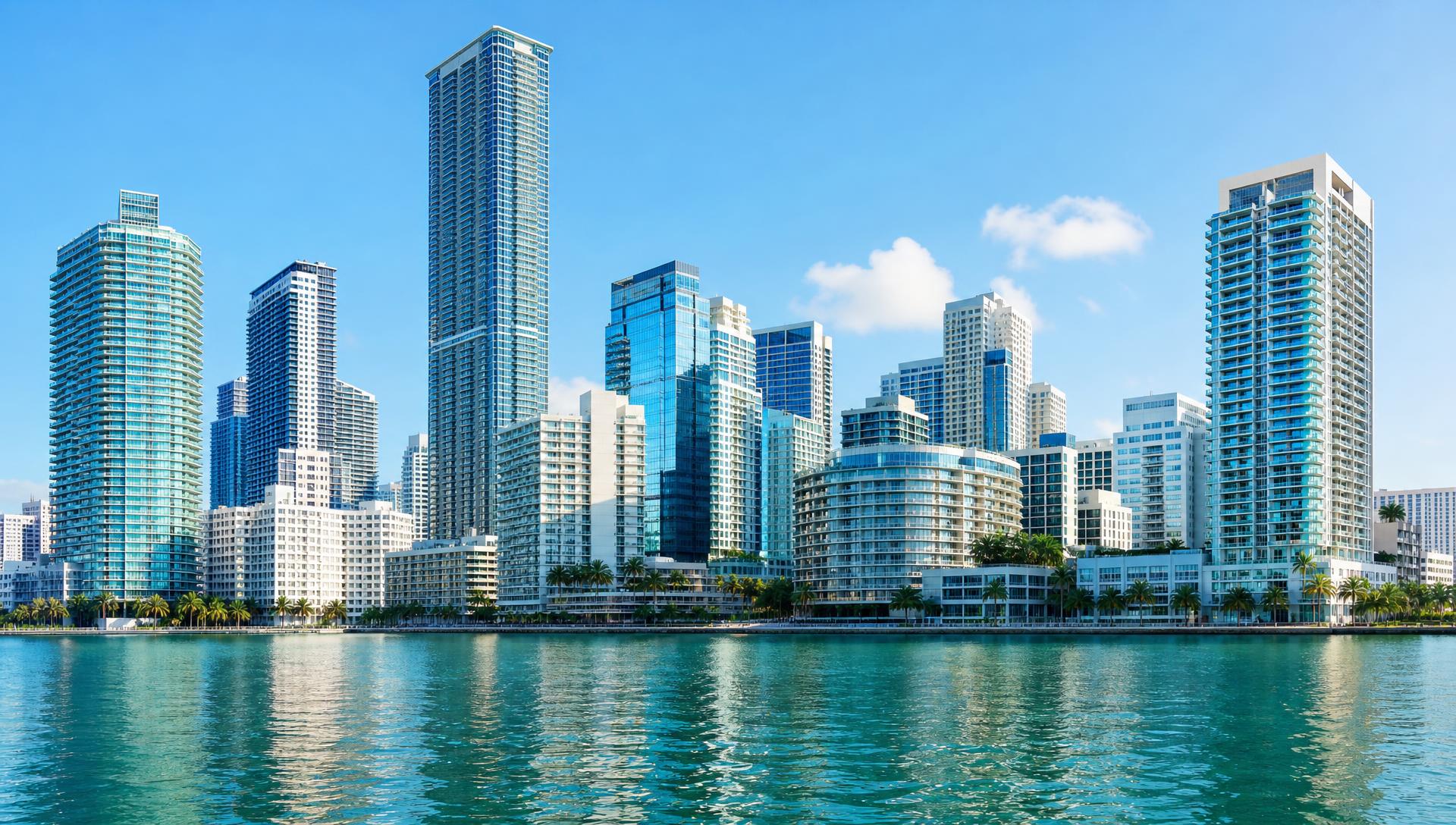
A Brickell condo can behave differently from a Pinecrest single-family home. A Coral Gables residence can behave differently from a Miami Beach waterfront property. A $900,000 property can experience different demand than a $9 million property, and a resale condo can face different competition than new construction down the street.
Does More Inventory Make It a Better Time to Buy?
More inventory can give buyers more choices, more time in some situations, more competing properties to compare, and in some segments, greater negotiating room — but it does not automatically mean prices will fall, that every seller will negotiate, or that every available property is a good buy.
The useful question is: more inventory of what? Condos or single-family homes? Luxury or entry-level? Waterfront or inland? New construction or resale? Which neighborhood, and which price range? Our guide to Miami real estate market trends explains how to read inventory and other metrics without over-generalizing from a single citywide number.
Do Price Reductions Mean Buyers Should Buy Now?
A price reduction can indicate that a seller is adjusting expectations, but a reduction alone does not make a property a good value. A reduced property can still be overpriced, and a properly priced property may sell without ever being reduced at all.
Compare the current price, the original price, recent comparable sales, condition, competition and the property's specific characteristics — the reduction itself is only one data point among several.
Should You Wait for Miami Home Prices to Fall?
No one can know with certainty whether the exact property a buyer wants will cost less in the future. Waiting for a broad market decline introduces its own uncertainty — around future prices, inventory, financing costs, competition, and whether the property you want will even still be available.
This article will not tell you that Miami prices are going to rise, and it will not tell you they are going to fall. Instead, evaluate whether the specific property makes sense today, based on the evidence available to you now.
Should You Wait for Mortgage Rates to Fall?
Lower mortgage rates can improve purchasing power for financed buyers, but future rates cannot be known with certainty, and if rates do change, buyer demand, competition, purchasing power and seller behavior may change along with them.
Rate is one variable. Price is another. Inventory is another. Property quality is another. Your own finances are another. The full decision should not rest on a single variable, however visible it is in the headlines. Current mortgage-rate benchmarks, when cited, are published by sources such as Freddie Mac's Primary Mortgage Market Survey and should always be read with their reporting date attached, since they change frequently.
What If Mortgage Rates Fall After You Buy?
Some borrowers later explore refinancing if market conditions, property value, their qualifications, closing costs and available loan terms make it appropriate at that time. Refinancing availability and benefit are not guaranteed, so it should not be treated as a built-in feature of today's purchase. Evaluate the financing and payment you can comfortably accept now, on its own terms.
How Do You Know Whether a Miami Property Is Fairly Priced?
Fair pricing is established with genuinely comparable recent transactions — the same property type, a similar location, similar size, condition, renovation level, lot where applicable, building where applicable, view, waterfront status, features, parking and age, weighed against current competition.
The buyer-guide detail on how to evaluate a specific property — from offer strategy through inspections and closing — is covered in our complete guide to buying property in Miami, so this article stays focused on the timing question itself.
Why Current Competition Matters
Recent closed sales show what buyers recently paid. Current listings show what buyers can choose from today. Both matter together. If multiple similar properties are available, you may have more alternatives to weigh; if the property you want is genuinely unusual or scarce, waiting carries a different tradeoff. Neither situation calls for urgency for its own sake — evaluate the specific competitive picture in front of you.
How Long Do You Plan to Own the Property?
A buyer expecting to own a property for a short period may weigh transaction costs and market risk differently than someone planning longer-term ownership. There is no universal rule about how many years of ownership make a purchase worthwhile — the right framing depends on your own plans, the property, and how it fits your circumstances.
How Do Total Ownership Costs Affect the Decision?
Purchase price is only part of the equation. Total ownership cost can include principal and interest where financed, property taxes, insurance, flood insurance where applicable, association fees, potential special assessments, maintenance, repairs, utilities, parking or storage where applicable, and closing costs.
Those costs also differ meaningfully by property type. Our comparison of Miami condo vs. single-family home ownership costs walks through those differences in more depth than this article can, since the condo-versus-house decision has its own dedicated framework.
When Might Waiting to Buy Make Sense?
- You do not yet have sufficient reserves.
- The monthly payment would be uncomfortable.
- You are unsure where in Miami you want to live.
- You have not decided which property type fits you.
- Your employment or income situation is changing.
- You expect to relocate again soon.
- The available properties do not fit your needs.
- The property you are considering does not appear to justify its price.
- You would be stretching financially merely to complete a purchase.
When Might Buying Now Make Sense?
- You are financially prepared.
- You understand the total ownership costs involved.
- You expect the property to fit your plans for an appropriate period.
- You have identified the Miami area and property type you want.
- You have found a property that compares well with recent sales and current competition.
- The financing and payment structure is acceptable to you.
- The property meets your needs without relying on speculative future appreciation.
Current Miami Inventory
Explore Miami Properties for Sale
Market conditions become more useful when you compare them with the properties buyers can actually choose from today. Explore current Miami inventory, then evaluate individual opportunities by location, property type, condition and price.
Does the Right Time to Buy Differ by Miami Neighborhood?
Yes — conditions can vary substantially by local submarket and property type. In Brickell, condo inventory, building-specific competition, new construction and association considerations drive the picture. In Pinecrest, single-family inventory, lot size, condition and land value matter more. In Coral Gables, micro-location, architecture and condition vary block by block, and in Coconut Grove, single-family homes, condos and new construction compete for the same buyers in different ways. Miami Beach adds another layer, where condo and house buyers and waterfront and non-waterfront buyers are often evaluating entirely different sets of properties. For a deeper look at where to buy, see our guide to the best neighborhoods in Miami to buy a house.

Is Now a Good Time to Buy a Miami Condo?
It depends on the building. Condo buyers should evaluate competing units, recent sales, association fees and financial condition, reserves, any existing or approved special assessments, insurance, building condition, financing eligibility and new-construction competition, along with applicable rental rules. The full evaluation process is covered in our guide to buying a condo in Miami, and the tradeoffs against buying a house are covered in Miami condo vs. single-family home.
Is Now a Good Time to Buy a Single-Family Home in Miami?
It depends on the property. Evaluate recent similar sales, current competing homes, condition, lot, location, needed renovation, waterfront characteristics where applicable, redevelopment potential where relevant, insurance considerations, financing and total ownership costs. There is no universal yes or no answer for houses any more than there is for condos.
Is Now a Good Time to Buy New Construction in Miami?
It depends on the project and your plans. Consider the project's construction stage, remaining developer inventory, deposit structure, projected completion timing, financing terms, the developer contract, competing resale inventory, and your intended use of the property. Our guide to buying new construction in Miami covers the process in detail, and current Miami new developments is the place to see what is actually available to compare today.
Is Now a Good Time to Buy Luxury Real Estate in Miami?
Luxury and ultra-luxury properties often trade within smaller, property-specific buyer pools, so broad citywide statistics tend to be less useful than the individual property's scarcity, location, waterfront status, condition, architecture, views, land, building and genuinely comparable recent transactions. Explore current opportunities on our Miami luxury real estate page.
Is Now a Good Time to Buy an Investment Property in Miami?
It depends on the numbers for that specific property, not on the market as a whole. Investors should evaluate purchase price, realistic achievable rent, vacancy assumptions, taxes, insurance, association fees, potential special assessments, maintenance, financing, applicable rental restrictions, new competing supply, resale demand and an exit strategy.
Market appreciation does not equal investment return — appreciation is only realized on sale, and it says nothing about carrying costs, vacancy or financing along the way. Evaluate each property on its own numbers rather than assuming the broader market will do the work for you.
What Should Out-of-State and International Buyers Consider?
Beyond the market, property and buyer framework above, out-of-state and international buyers often need to plan for remote property evaluation, local representation, financing differences, fund-transfer timing, property-management needs where the property will be rented, condo or building due diligence conducted remotely, and closing logistics. Tax and legal questions specific to your situation should be directed to qualified tax and legal professionals rather than answered generally here.
How Can You Decide Whether to Buy Now or Wait?
Work through the questions in order, honestly:
- Am I financially ready?
- Do I know what type of Miami property I want?
- Do I understand the relevant local submarket?
- Does the specific property compare well with recent sales?
- What competing inventory exists right now?
- Can I comfortably carry the total ownership costs?
- How long do I expect to own or use it?
- Am I buying because the property fits my goals — or because I am trying to predict the market?
Do not try to buy the perfect market. Evaluate the right property. No buyer can know with certainty where prices, mortgage rates or inventory will move next, and the goal is not to predict the market perfectly — it is to make a well-informed purchase based on current evidence, the specific property, your finances and your expected ownership plans.
Miami Home Buying FAQs
Is now a good time to buy real estate in Miami?
There is no universal answer. Whether now is a good time to buy depends on current conditions in the relevant Miami submarket, whether the specific property compares well with recent sales and current competition, and whether you are financially ready to carry the total cost of ownership. A strong market headline does not make an overpriced property a good purchase, and uncertain market news does not make a well-priced, well-suited property a bad one.
Should I wait for Miami home prices to fall?
Should I wait for mortgage rates to fall before buying?
What happens if mortgage rates fall after I buy?
Does more inventory make it a better time to buy?
Do price reductions mean Miami is becoming a buyer's market?
How do I know if a Miami home is overpriced?
Is now a good time to buy a condo in Miami?
Is now a good time to buy a house in Miami?
Is now a good time to buy new construction in Miami?
Is now a good time to buy luxury real estate in Miami?
Is now a good time to buy an investment property in Miami?
How much does the neighborhood matter when deciding when to buy?
How long should I plan to own a Miami property?
What should I consider before deciding to buy now or wait?
Evaluate the Miami Opportunity in Front of You
The right time to buy is not determined by a single market statistic. It depends on the property, its price, current competition, financing, ownership costs and how well it fits your plans. The next step is to evaluate actual Miami opportunities within the market and property type you are considering, with representation that works on your behalf from Supreme Capital Real Estate Agents Miami.