Brickell Condo Buyer Guide
Brickell Real Estate Guide: What Buyers Need to Know
What Should Buyers Know About Brickell Real Estate?
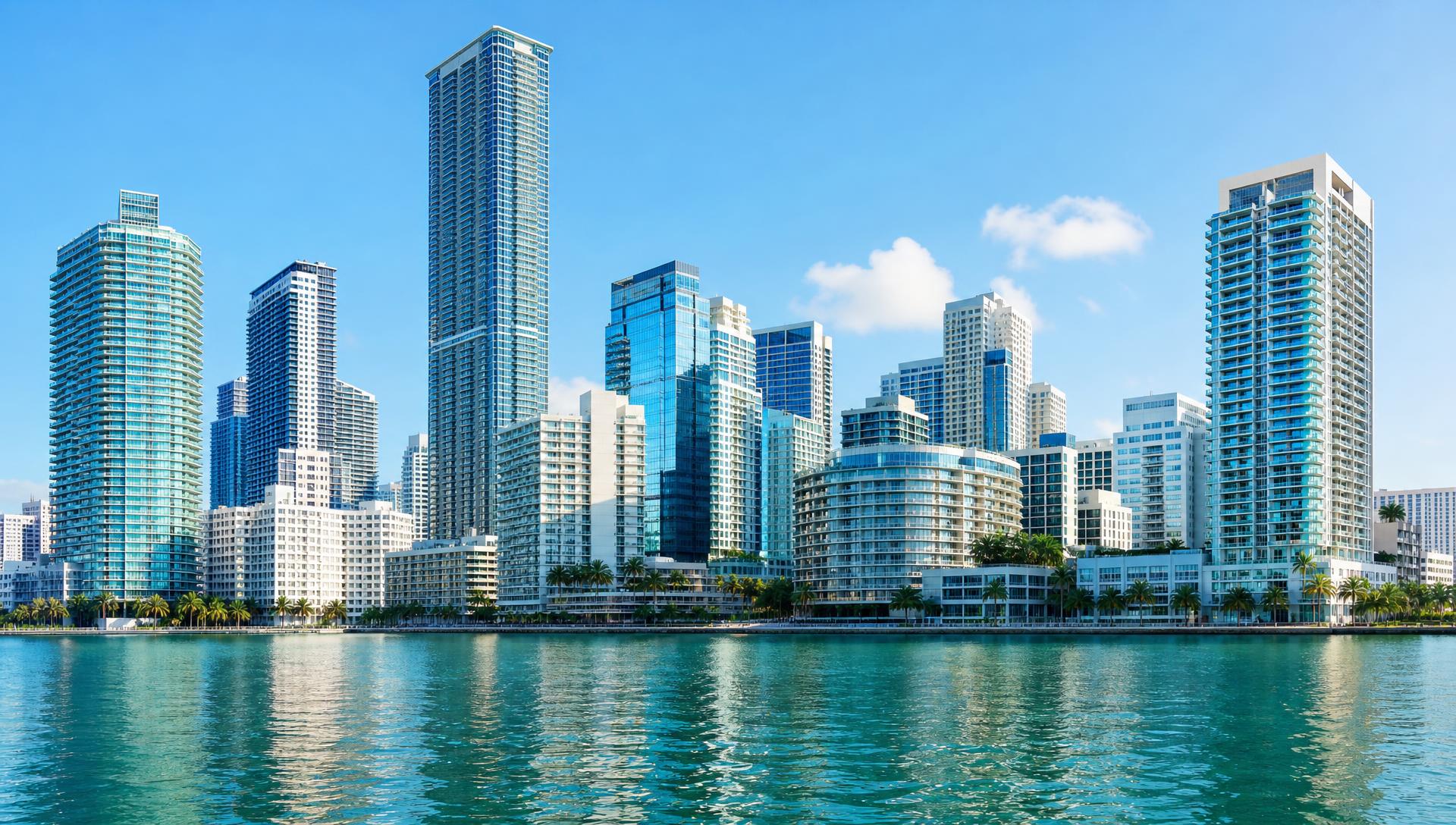
Brickell is primarily a vertical condominium market, which means buyers should evaluate both the individual residence and the building around it. Two condos near each other can differ significantly because of the building, association, floor, view, ownership costs, rules and current competition.
That distinction is the whole point of this guide. Almost every listing in Brickell is a unit inside a condominium association, so a purchase decision is made twice: once about the residence, and once about the building and the association that governs it. The first decision is visible on a floor plan. The second sits in a budget, a reserve study, a set of rules and a maintenance history. For a neighborhood-level view of where things are and what the district contains, our Brickell community page is the companion to this article; this page is about how to evaluate what you find there.
What Makes Brickell Different From Other Miami Markets?
Brickell sits immediately south of the Miami River and west of Biscayne Bay, and it is one of the few parts of Miami-Dade where daily life is genuinely vertical and walkable. Offices, residences, retail and restaurants occupy the same blocks, often the same buildings. Ground-floor retail, a covered mall, elevated transit and a short walk to Downtown give the district a density that most of Miami — a low-rise, car-oriented county by default — does not have.
For a buyer, the practical consequence is that the housing stock is concentrated in towers rather than spread across streets of houses. That changes what comparison means. In a single-family neighborhood you compare lots, structures and streets. In Brickell you compare buildings first, then residences within them. The trade-offs between the two property types are set out in our guide to Miami condos versus single-family homes.
The second consequence is variation. Brickell's towers were built across several decades and several regulatory eras, from 1980s bayfront buildings to towers delivered in the last few years and projects still in pre-construction. They differ in structure, systems, amenity programs, association finances and rules. A neighborhood-wide statement about "Brickell condos" therefore describes very little; the useful unit of analysis is the building.
That is not a figure of speech. When you buy a Brickell condominium you acquire a unit plus an undivided interest in the common elements, and you accept the association's budget, rules and obligations. The roof, façade, elevators, garage, plumbing risers and amenity decks are all part of what you own a share of — and part of what you pay for.
Brickell vs Brickell Key: What's the Difference?
These are often discussed as one market. Geographically they are not. Mainland Brickell is the dense district running south from the Miami River along Brickell Avenue, Miami Avenue and the surrounding grid, with street-level retail, offices and the largest concentration of residential towers. Brickell Key is a separate man-made island east of the mainland in Biscayne Bay, connected by a single bridge from Brickell Avenue.
The island's environment is different in character rather than in rank. It holds a comparatively small, largely residential set of buildings arranged around a perimeter path, with a hotel and limited supporting retail. The mainland offers far more inventory, more dining and shopping at street level, and far more new construction. Which of the two suits a buyer depends on whether they want to walk out into a busy district or into a quieter enclave.
A few things are worth stating plainly, because they are frequently assumed and are not automatically true: Brickell Key is not uniformly more expensive than the mainland, its buildings are not all waterfront-facing, and a unit on the island does not come with a guaranteed permanent view. Price, outlook and ownership costs are decided building by building and unit by unit in both locations.
The island is also where one of Miami's most significant branded pre-construction projects is being developed. Rather than repeat that project's details here, our Mandarin Oriental Residences guide covers it as a building-specific example of what a Brickell Key pre-construction purchase involves. On the north side of the river, in Downtown Miami rather than Brickell, our Aston Martin Residences guide covers a completed branded tower that many Brickell buyers also consider.
Current Brickell Inventory
Explore Brickell Condos for Sale
Explore current condos for sale in Brickell and compare buildings, residences, prices, floor plans and property characteristics. Listing availability changes continuously, so use the live inventory below to see what is currently offered in the neighborhood.
Reading current listings alongside the framework in this guide is more useful than either on its own. Comparing what is actually available — and having the building-level questions answered on specific units — is the work of buyer representation in Miami.
Why the Building Matters as Much as the Condo
A listing describes a unit. It rarely describes the association behind it. Yet the association determines your monthly assessment, decides when capital work happens and how it is funded, carries the master insurance policy, sets the rules you live under, and — through its financial condition — influences whether lenders will finance a purchase in the building at all.
Building-level considerations that can distinguish two otherwise similar Brickell condos include age and construction era, physical condition and deferred maintenance, association finances and reserves, any approved or pending assessments, insurance, amenity program and staffing, parking and storage arrangements, leasing rules, quality of management, financing eligibility, how many units in the same building are currently listed, what has recently closed there, and what new construction nearby offers to the same buyer.
How Should Buyers Compare Brickell Condo Buildings?
A defensible building comparison is a document review, not an impression formed in a lobby. The sequence below is the same one a buyer's agent should be running on your behalf, and none of it depends on a ranking of buildings.
- 01Building condition — age, construction era, maintenance and any inspection history
- 02Association — governance, management, rules and how they are enforced
- 03Reserves — what is funded, and against which structural components
- 04Assessments — anything pending, approved or recently completed
- 05Insurance — master policy scope, deductibles and what owners must carry
- 06Fees and amenities — what the monthly figure actually covers
- 07Parking, storage and leasing rules — what conveys, and what is permitted
- 08Current competition — what else is listed and what recently closed in the building
This guide deliberately does not publish a list of the "best" Brickell buildings. Any such list would be out of date within a season, and it would be wrong for most readers anyway: the right building depends on budget, intended use, leasing plans, tolerance for assessments and how long you expect to hold the property.
Older vs Newer Brickell Condo Buildings
Brickell contains both, and neither category is superior. Older towers often offer larger or more conventional floor plans, established resale histories, longer operating track records and, in some cases, positions closer to the water that newer sites could not replicate. Newer towers typically bring contemporary systems, updated amenity programs, current building-code construction and, sometimes, developer inventory still being sold.
The differences that matter are financial and physical rather than chronological. An older building with a funded reserve, completed capital work and a stable budget can present less ownership risk than a newer building with an unresolved construction issue — and the reverse is equally possible. Evaluate the specific association, not the decade.
Why Floor, View and Exposure Matter
Within a single Brickell tower, floor and orientation often explain more price variation than square footage. Exposure determines light through the day, heat load on the glass, how usable a balcony is, whether you look into a neighboring tower, and how much street or highway noise reaches the unit. Elevation determines sightlines, privacy and the relationship to amenity floors and mechanical levels.
Depending on position, Brickell residences may look east over Biscayne Bay and Key Biscayne, north to the Miami River and the Downtown skyline, west across the city, or south along the Brickell corridor — and many look primarily at other buildings. Water views are not a default feature of the neighborhood.
View durability deserves its own question. An open outlook today is not a protected outlook forever unless something physically or legally prevents construction between the residence and the water. This guide does not predict which parcels will be developed; it recommends that where a view materially drives your decision, you understand what surrounds the building and what the adjacent sites permit before you pay for the outlook.
What Do Brickell Condo Fees Actually Cover?
Association fees are set by each condominium's own budget, so what they include varies widely between buildings. Depending on the association, they can fund building operations and utilities for common areas, staffing such as front desk, valet, security or maintenance personnel, amenity operation, common-area repair and cleaning, association insurance premiums, reserve contributions and other obligations set out in the declaration.
Because those inputs differ, this guide does not publish a Brickell-wide dollar-per-square-foot fee figure. Any such number would be an average across buildings with materially different service levels and would be stale quickly. Ask for the current budget and the exact monthly figure attributable to the unit you are considering.
A low assessment can reflect efficient management — or underfunded reserves and deferred work that will eventually be paid for another way. The fee should always be read next to the reserve study and the association's financial statements.
Why Condo Reserves and Assessments Matter
Reserves are money set aside for future capital work: roofing, structural elements, waterproofing, plumbing, electrical, elevators and similar long-life components. A special assessment is what happens when the cost arrives and the reserve does not cover it. For a buyer, the reserve position of an association is one of the most consequential numbers in the transaction and one of the least visible in a listing.
Florida law is specific here. Under Fla. Stat. §718.112(2)(g), residential condominium associations with buildings of three or more habitable stories must have a Structural Integrity Reserve Study covering defined components — including roof, load-bearing and primary structural systems, fireproofing and fire protection, plumbing, electrical, waterproofing and exterior painting, windows and exterior doors — and repeat it at least every ten years. Associations in existence on or before July 1, 2022 were required to complete a first study by December 31, 2025. For budgets adopted on or after December 31, 2024, reserves for the components identified in that study generally may not be waived or reduced by an owner vote.
Separately, Fla. Stat. §553.899 requires milestone structural inspections for condominium and cooperative buildings of three or more habitable stories, generally at 30 years of age and every ten years afterward, with a local enforcement agency permitted to require inspection at 25 years for buildings near saltwater — which applies to a great deal of coastal Miami-Dade. Miami-Dade County also maintains its own building recertification program, described on the county's official recertification page.
What this means practically: for an older Brickell tower, ask whether the milestone inspection has been completed, what it found, whether the reserve study is current, how the reserves are funded, and whether any assessment has been approved or is under discussion. This is a description of the statutory framework, not legal advice — confirm how it applies to a specific building with qualified counsel.
What Does It Really Cost to Own a Condo in Brickell?
- 01Purchase price
- 02Financing — rate, term and lender requirements where applicable
- 03Property taxes — reassessed on transfer, not inherited from the seller
- 04Insurance — unit-owner coverage alongside the association's master policy
- 05Condo fees — the association's regular assessment
- 06Assessments — special or capital charges beyond regular fees
- 07Parking and storage — where separately owned, leased or charged
- 08Unit maintenance — interior systems, finishes and appliances
- 09Total ownership economics
Property taxes deserve particular care in Florida. A seller's current bill is often not a reliable guide to what a new owner will pay, because the assessed value can reset following a change of ownership and the seller's homestead-related benefits do not transfer with the property. The Miami-Dade Property Appraiser explains how the assessment cap works and what happens on a sale on its Save Our Homes page. Verify the parcel and consult a qualified tax professional; nothing here is tax advice.
What Should Buyers Know About Insurance?
Condominium insurance operates on two levels. The association carries a master policy covering the building and common elements, funded through assessments; the owner carries a separate unit-owner policy covering the interior, contents, liability and, depending on the declaration, certain fixtures. What falls on which side is defined by the condominium documents and varies between buildings.
Buyers should also understand the association's deductible structure, because a large deductible on a master policy can translate into an assessment after a loss event. Flood coverage is a separate question and should be evaluated for the specific building and unit. Premiums are property-specific and move over time, so this guide does not quote figures — obtain a quote for the actual unit early in the process. This is general information, not insurance advice.
How Does New Construction Affect Brickell Real Estate?
Brickell is one of the most actively developed submarkets in Miami. The district contains established resale towers, buildings delivered within the last few years, branded residences and projects in pre-construction. That pipeline matters to resale buyers even when they never intend to buy new.
New supply expands the alternative set. It can shape amenity expectations, influence pricing at the margin, and add competition when a resale unit eventually returns to the market. It can equally leave resale buildings looking better value on floor plan size or price level. Neither outcome is automatic. To see what is currently in the pipeline, review Miami new developments; for how a pre-construction purchase actually works, including deposit structures and delivery risk, see our new construction buying guide.
What Should Buyers Know About Brickell Rental Rules?
Leasing is governed by the individual association, and Brickell buildings differ substantially. Rules commonly address minimum lease duration, how many times a unit may be leased in a year, whether a waiting period applies after purchase, tenant application and association approval procedures, restrictions on short-term or vacation rentals, furnished-rental policies and pet rules.
If leasing forms any part of your plan, treat the rules as a condition of the purchase rather than a detail to check later. Read the declaration and current rules for the specific building; do not rely on what is typical in the neighborhood, and do not rely on marketing language about a building being "investor friendly."
Where a purchase is genuinely income-driven, the analysis has to be complete: purchase price, achievable rent for that specific unit, vacancy, association fees, insurance, taxes, financing, maintenance, leasing restrictions, competing rentals in the same building and new supply arriving nearby, and how you would eventually exit. This guide makes no return, yield or appreciation claims, because none can be made responsibly at the neighborhood level.
Why Parking and Storage Matter in Brickell
In a dense high-rise district these are not minor details. Parking may be deeded, assigned, leased or allocated by the association; a unit may come with one space, several or none. Some buildings operate valet, some self-park, some both. Storage may or may not convey. Guest parking, EV charging and motorcycle or bicycle provision vary building to building.
None of this is standardized across Brickell. Confirm in writing what actually conveys with the specific residence, and whether any of it carries a separate monthly cost.
Brickell vs Downtown Miami: What's the Difference?
They adjoin each other across the Miami River and are frequently discussed together, but they are not the same market. Downtown extends north of the river and includes the government and courts district, the bayfront park and arena area, and a housing stock that mixes older conversions, large rental towers and newer condominiums. Brickell, south of the river, is more consistently residential-and-office in character with a denser street-retail layer.
Waterfront relationships differ as well: Downtown's residential frontage relates to Biscayne Bay and the north bank of the river, while Brickell's runs along the bay's western edge and the river's south bank. Neither district ranks above the other — they suit different preferences, and buyers often shortlist buildings in both.
How Should Buyers Compare Two Brickell Condos?
- 01Building and association
- 02Unit — layout, size and condition
- 03Floor and elevation
- 04View and exposure
- 05Fees and assessments
- 06Parking, storage and leasing rules
- 07Current competition and recent comparable sales
- 08Better Brickell condo comparison
Price per square foot belongs in that table, but only as one column. It compresses layout, condition, exposure, terrace area, parking, fees and association quality into a single number, and it travels badly between buildings: a unit one block away in a different association may not be a comparable at all. Recent closed sales inside the same building are usually the most informative evidence available. Our guide to reading market metrics explains how to interpret price per square foot, days on market and inventory without over-reading any one figure.
What Should Buyers Review Before Making an Offer?
- The specific unit, its condition and any renovation or permit history
- Recent comparable closed sales, prioritizing sales inside the same building
- Current competing listings in the same building and in directly comparable towers
- Inspection of the unit, including systems, finishes and balcony condition
- View and exposure verified in person, at more than one time of day where possible
- Parking and storage rights that convey, and any separate charges
- Declaration, bylaws and rules, read against your intended use
- Association budget, financial statements and reserve position
- Any pending, approved or recently completed special assessments
- Milestone inspection and structural reserve study status where applicable
- Insurance at both association and unit-owner level
- Meeting minutes where available, for issues not yet in the budget
- Leasing rules and any waiting period after purchase
- Financing eligibility, including lender conditions specific to the building
- Nearby development that could affect outlook, noise or competition
- Total ownership cost, including taxes reassessed on transfer
Florida resale buyers have a statutory right to a defined set of association documents under Fla. Stat. §718.503, including the declaration, bylaws and rules, the annual financial statement and budget, and the association's most recent structural integrity reserve study or a statement that none exists. The full condominium review process — how to read those documents and what to do with what they say — is set out in our Miami condo buying guide.
What Should International and Out-of-State Buyers Know?
A large share of Brickell purchases are made by buyers who are not physically in Miami for most of the process, and the mechanics are well established: live video walkthroughs of specific units, floor-by- floor comparison within a building, remote review of association documents, inspections attended on the buyer's behalf, and remote or hybrid closings.
Financing terms often differ for foreign nationals, closing logistics may involve additional identification and funds-transfer steps, and ownership structure and tax treatment are questions for qualified legal and tax professionals rather than a real estate guide. Property oversight after closing — who holds keys, handles association correspondence and manages a lease — is worth deciding before closing rather than after. Our international buyer pillar covers the process end to end, and current conditions across the wider market are summarized on our Miami market page.
Explore Brickell Real Estate
Buying a Brickell condo means evaluating both the residence and the building around it. Floor, view, association finances, ownership costs, parking, rental rules, current competition and nearby development can all affect the decision. Explore current Brickell inventory and compare the buildings and residences that fit how you plan to use the property. Where it helps to have those questions answered on specific units, buyer representation from Supreme Capital Real Estate Agents Miami is available for Brickell purchases.
Next Step