Miami Seller Decision Guide
Cash Buyer vs Listing Your Miami Home: What Sellers Should Compare

Quick Answer
A direct cash sale may appeal to a Miami homeowner who prioritizes speed, a simpler transaction or selling a property in its current condition. Listing on the open market generally provides broader exposure to potential buyers — including both cash buyers and financed buyers — but may involve preparation, showings and a longer overall process. Sellers should compare more than the headline offer price. A sound decision weighs estimated net proceeds, property condition, seller expenses, inspection terms, financing, appraisal exposure, deposit, closing timeline, contingencies and overall transaction certainty.
Want to compare your selling options? Explore Miami seller representation →
What Is the Difference Between a Cash Buyer and an Open-Market Listing?
The common framing — "cash buyer versus agent" — is not quite the right comparison. Cash describes how a purchase is funded. A listing describes how a property is exposed to buyers. Plenty of open-market sales in Miami are all-cash. The more accurate comparison is between a direct negotiated sale with one buyer or a small group of buyers, and a broader market exposure process in which many potential buyers can see and respond to the property.
In a direct sale, a single buyer evaluates the property and proposes price and terms, and the seller negotiates within that relationship. In an open-market listing, the property is marketed through normal real estate distribution and brokerage channels, and the seller observes how the available buyer pool responds before choosing among the offers that arrive.
How Does Selling Directly to a Cash Buyer Work?
A cash buyer is simply a buyer purchasing without mortgage financing. That category is broader than most sellers assume. It can include an individual buyer, an owner-occupant with liquidity, a second-home buyer, an investor, a renovation buyer, a developer, or a company that purchases property directly. These buyers have very different objectives, and they price property differently. Treating them as one group is the first mistake in evaluating a direct offer.
The typical sequence is straightforward. A seller receives an inquiry or an offer, provides information about the property, allows the buyer to evaluate it, reviews the proposed price and terms, negotiates, enters into a contract, works through whatever due diligence the contract provides for, and proceeds toward closing. Depending on the buyer and the agreement, the process can be relatively contained.
What cash does not automatically mean is no inspection, no contingency, no deposit questions, no renegotiation and no closing risk. Those outcomes are set by the agreement, not by the funding method. The contract controls.

How Does Listing Your Miami Home on the Open Market Work?
An open-market sale generally begins with a valuation and market analysis, followed by a strategy conversation: what to prepare, what to leave as-is, how to price the property against recent sales and current competition, and how it should be presented. From there the property is photographed and launched to the market, buyers are reached through brokerage distribution and marketing, showings take place, offers arrive, terms are negotiated, and the transaction proceeds through inspection, any financing and appraisal steps, and closing.
This guide is not the place to unpack all of that in depth — pricing method, preparation decisions, presentation and negotiation strategy are covered in How to Sell a House in Miami for Maximum Value, and the marketing period plus the contract-to-closing stretch is mapped out in how long it takes to sell a house in Miami. What matters here is the structural difference: a listing is designed to let the market respond, while a direct sale is designed to conclude a negotiation with a known buyer.
Why Would a Seller Choose a Direct Cash Sale?
There are legitimate, non-distressed reasons an owner may prefer a direct sale. Speed may be the dominant priority. The property may need substantial work the owner has no interest in undertaking. The owner may not want extensive preparation or a long stretch of showings. The property may appeal strongly to a renovation or redevelopment buyer. There may be an estate or inherited-property situation where a contained process is preferable. Another transaction may depend on this one closing on a particular schedule. Or a credible buyer may simply have approached the owner already.
None of these circumstances imply distress, and none of them establish that a direct sale is financially better. They establish that convenience, timing and simplicity carry real weight for that seller — which is a valid input into the decision, provided the economics are understood alongside it.
Why Would a Seller Choose to List on the Open Market?
A seller may prefer a listing when broader exposure is likely to matter: when the property is highly marketable, when it appeals to owner-occupants as well as investors, when its characteristics are difficult for a single buyer to price confidently, when the seller has flexibility on timing, or when the seller simply wants to see what the market will do before committing. Presentation and marketing can also help communicate qualities of a property that are not obvious from a data sheet.
What a listing does not do is guarantee multiple offers, an above-asking result or a maximum price. It creates the conditions for the market to respond. The response itself depends on the property, the price and the moment.
Does a Cash Offer Mean the Seller Gets Less?
There is no universal rule here, and sellers are poorly served by the ones that circulate. A cash offer might come in below what the property could achieve with broader exposure, near that level, or above a competing financed offer. Where it lands depends on the property, the specific buyer and their plans, the condition, how much competition exists, the seller's circumstances, the terms attached and the market at that moment.
It is also worth understanding how a direct buyer typically arrives at a number. A buyer planning to renovate or redevelop is generally pricing backward from an expected end result, subtracting the cost of work, the time and holding costs involved, resale and market risk, and a required return. That is ordinary commercial reasoning, not a judgment about the seller. The seller's task is simply to decide whether the convenience and terms on offer justify that economics for their situation.
Why Market Exposure Matters When Selling a Miami Property
This is the single most useful concept in the comparison. In a direct sale, one buyer — or a limited group — has the opportunity to establish a price through negotiation. In an open-market listing, the property is shown to a wider pool, and the seller gets to observe how that pool actually responds.
Exposure does not guarantee a higher price. What it produces is information: how much demand exists for this kind of property right now, how buyers position it against the alternatives they can see, which terms buyers are willing to accept, and where the property genuinely sits in the market rather than where anyone assumed it sat. For some properties that information is worth a great deal. For others — a property whose value is dominated by the land, for instance, with a small pool of qualified buyers — it may change very little.
How much that exposure is worth depends on conditions at the time you sell — available inventory, buyer demand and how quickly comparable properties are trading. Current conditions across the Miami real estate market are the backdrop for any offer you receive, and you can see the live competition side of that picture yourself through the Miami MLS map search, the same way a buyer would.
What Costs Should You Compare?
Avoid working from assumed percentages. Costs vary by contract, property type, building and negotiation. The categories to price out for each path include:
- Brokerage compensation, as agreed in writing
- Repairs and pre-market preparation, where applicable
- Seller concessions or credits negotiated during the transaction
- Title and closing charges, as allocated in the contract and by local custom
- Association estoppel, transfer or approval charges for condominiums and HOA communities
- Prorated property taxes
- Payoff of existing mortgages, liens or open permits
- Holding costs and moving costs over the expected timeline
- Any transaction-specific expenses particular to the property
A direct buyer may structure or absorb some of these differently. A listing may involve expenses a direct sale would not. Either way, the comparison should use actual estimated figures for your property, not averages borrowed from an article.
Why Estimated Net Proceeds Matter More Than the Headline Offer
An offer of a given amount is not the seller's result. Estimated net proceeds can be affected by transaction costs, credits, repairs, concessions, loan payoff, closing expenses, association charges and other obligations tied to the property. Two offers with identical prices can produce materially different outcomes once those items are applied.
The framework is simple enough to run on paper for each option:
Offer price
− Estimated seller costs
− Concessions and credits
− Property-specific obligations
= Estimated net proceeds
This is an analytical framework for comparing options, not a guaranteed closing statement. Final figures come from the closing agent, and tax consequences should be reviewed with a qualified tax professional.
How Should You Compare the Terms of Two Offers?
One million dollars and one million dollars can be very different offers. Terms are where that difference lives.
Purchase Price
The starting point, and the only figure most sellers look at closely — which is precisely why the rest of the list deserves attention.
Cash vs Financing
A cash purchase removes lender underwriting and any lender-required appraisal from the transaction. A financed purchase introduces loan approval, appraisal and a financing contingency, but may come with a stronger price, a larger deposit or terms that suit the seller better. Evaluate the whole offer rather than the funding method in isolation.
Deposit
Deposit size, when it is due, when it becomes non-refundable and where it is held all speak to how committed a buyer is. A thin deposit weakens an otherwise attractive number.
Inspection and Due-Diligence Terms
Whether an inspection period exists, how long it runs, and what the buyer may do at the end of it — request repairs, request credits, renegotiate, or terminate — is one of the most consequential differences between two offers.
Repairs and Credits
Some offers ask the seller to complete work; others request a credit; others accept the property as presented. Each has a different effect on both the timeline and the net result.
Appraisal Considerations
Where a buyer is financing, the lender generally lends against appraised value, and the contract's appraisal language determines what happens if the appraisal comes in below the contract price. A cash buyer may still obtain an appraisal independently if they choose.
Closing Timeline
An earlier closing date is only an advantage if it suits your plans and the transaction can realistically meet it. Title work, association requirements and property matters all bear on whether a date is achievable.
Seller Concessions
Requested contributions toward buyer costs reduce the net result even when the headline price is unchanged. Read them as a price adjustment.
Other Material Contract Terms
Occupancy or post-closing possession, personal property included or excluded, association approval requirements, assignment rights, and any unusual contingencies all change the character of an offer. Where contract language carries real consequence for you, review it with a Florida real estate attorney.
Is a Cash Offer Always Safer?
Cash removes a specific category of risk — lender underwriting — but it does not by itself produce certainty. Depending on the agreement, a cash buyer can still conduct due diligence, request an inspection, ask for changes after inspecting, rely on contingencies, delay a deposit, or fail to close. Certainty comes from the contract and from the buyer's demonstrated ability to perform, not from the word "cash."
Practical things worth reviewing include proof of funds where appropriate, deposit amount and timing, inspection and due-diligence rights, the agreed closing date, any remaining contingencies, and what the buyer is obligated to do at each stage.
Can a Financed Offer Be Better Than a Cash Offer?
It can. A well-qualified financed buyer with a strong deposit, a short inspection period, a realistic appraisal position and a higher price may produce a better net result with acceptable certainty than a lower cash offer with a long, open-ended due-diligence window. The disciplined approach is to score both offers on the same criteria — price, net proceeds, terms, timeline and likelihood of closing — rather than sorting them by funding method first.
What Does Selling a Property As-Is Actually Mean?
"As-is" is often read as "the seller has no obligations." That is not what it means in practice. Its actual effect depends on the contract used, applicable disclosure obligations, the circumstances of the property and applicable law. A buyer may still have inspection or due-diligence rights, and may still be able to terminate or renegotiate within those rights, even in an as-is agreement.
What as-is generally does signal is that the seller does not intend to undertake repairs. That can be a sensible strategy — including on the open market — when the likely buyer is planning significant work anyway. For the legal effect of specific contract language in your situation, a Florida real estate attorney is the right resource.
When Might a Direct Cash Sale Make Sense?
A direct sale may deserve serious consideration when:
- Speed is a major priority for reasons specific to your situation
- The property needs substantial work you do not want to manage
- You want minimal preparation before selling
- You would prefer to avoid an extended period of showing activity
- You already have a credible buyer who has approached you
- The property's value is largely tied to redevelopment or renovation potential
- You place substantial personal value on convenience and a contained process
Each of these is a "may," not a rule. They point toward evaluating direct offers carefully — not toward accepting one without comparison.
When Might an Open-Market Listing Make More Sense?
A listing may deserve stronger consideration when:
- You want broad exposure to the available buyer pool
- The property shows well or can be presented well with reasonable effort
- It appeals to several buyer types rather than one
- You have flexibility on timing
- Demand is uncertain and market feedback would be genuinely useful
- The property has unique characteristics that a single buyer may struggle to price
- You want buyers weighing your property against the alternatives available to them
How Should You Evaluate an Investor Cash Offer?
An investor or company offer is not inherently better or worse than any other. It is simply an agreement that should be understood before it is signed. Useful questions include:
- How did the buyer arrive at the price?
- What assumptions are being made about the property's condition?
- Is the buyer planning to renovate, redevelop, hold or resell?
- What inspection or due-diligence rights does the contract provide?
- What deposit is being offered, and when does it become at risk?
- Is proof of funds available?
- What are the closing requirements and the proposed closing date?
- Does the contract include assignment rights?
- Are there unusual contingencies?
- Which seller costs are included, and which are not?
- What is the estimated net result for you under this agreement?
Assignment rights and investor structures are not inherently problematic — they are terms. The seller's job is to know which terms they are agreeing to. Where a buyer is a company, its registration and officers are public record through the Florida Division of Corporations (Sunbiz), and if anyone in the transaction presents themselves as a licensed real estate professional, that license can be verified directly with the Florida Department of Business and Professional Regulation.
Should You Get a Home Valuation Before Accepting a Cash Offer?
Understanding the property's market context before responding to a direct offer is one of the most useful steps a seller can take. That means knowing what genuinely comparable properties have recently sold for, what competing properties a buyer could choose instead, which characteristics of your property matter most to the likely buyer pool, and where your property realistically sits within it. Recorded sales for Miami-Dade parcels can be verified through the Miami-Dade Property Appraiser.
You do not need a formal appraisal to make an informed decision. A market valuation provides the context an offer should be measured against. A Miami home valuation is a practical starting point before accepting or declining anything.
Cash Buyer vs Listing — Example Comparison Framework
A neutral side-by-side view of how the two paths typically differ in character. Neither column is a recommendation; the right fit depends on the property and the seller.
| Factor | Direct Cash Sale | Open-Market Listing |
|---|---|---|
| Buyer Exposure | One buyer or a limited group of buyers | A broader pool of available buyers |
| Property Preparation | Often purchased in current condition | Preparation and presentation are usually part of the strategy |
| Showings | Typically limited access for evaluation | Scheduled showings during the marketing period |
| Financing | No mortgage financing involved | Buyers may be paying cash or using financing |
| Appraisal | Generally not lender-required | May apply where the buyer is financing |
| Inspection | Depends entirely on the contract terms | Depends entirely on the contract terms |
| Timing | May move quickly, depending on contract and title work | Includes a marketing period plus the contract-to-closing period |
| Market Feedback | Limited to the negotiation with that buyer | Buyer activity and offers provide market information |
| Potential Seller Costs | Some costs may be structured or absorbed differently | Brokerage compensation, preparation and negotiated credits may apply |
| Transaction Complexity | Often a more contained process | More parties and more moving parts |
| Offer Evaluation | Price and terms of a single agreement | Comparison across offers and terms received |
| Best Fit | Sellers prioritizing speed, simplicity or a current-condition sale | Sellers prioritizing exposure, price discovery and buyer choice |
What Matters Most to You?
Before comparing offers, rank your own priorities honestly: speed, convenience, selling in current condition, market exposure, price discovery, minimal showings, flexibility, certainty. Sellers often discover that two or three of these dominate and the rest are secondary.
If speed and simplicity dominate, direct-sale options deserve careful evaluation — with the economics understood rather than assumed. If market exposure and price discovery dominate, an open-market listing may deserve stronger consideration. No formula produces the answer; the ranking of priorities plus real figures for each path is what makes the decision clear.

Miami Property Types Change the Calculation
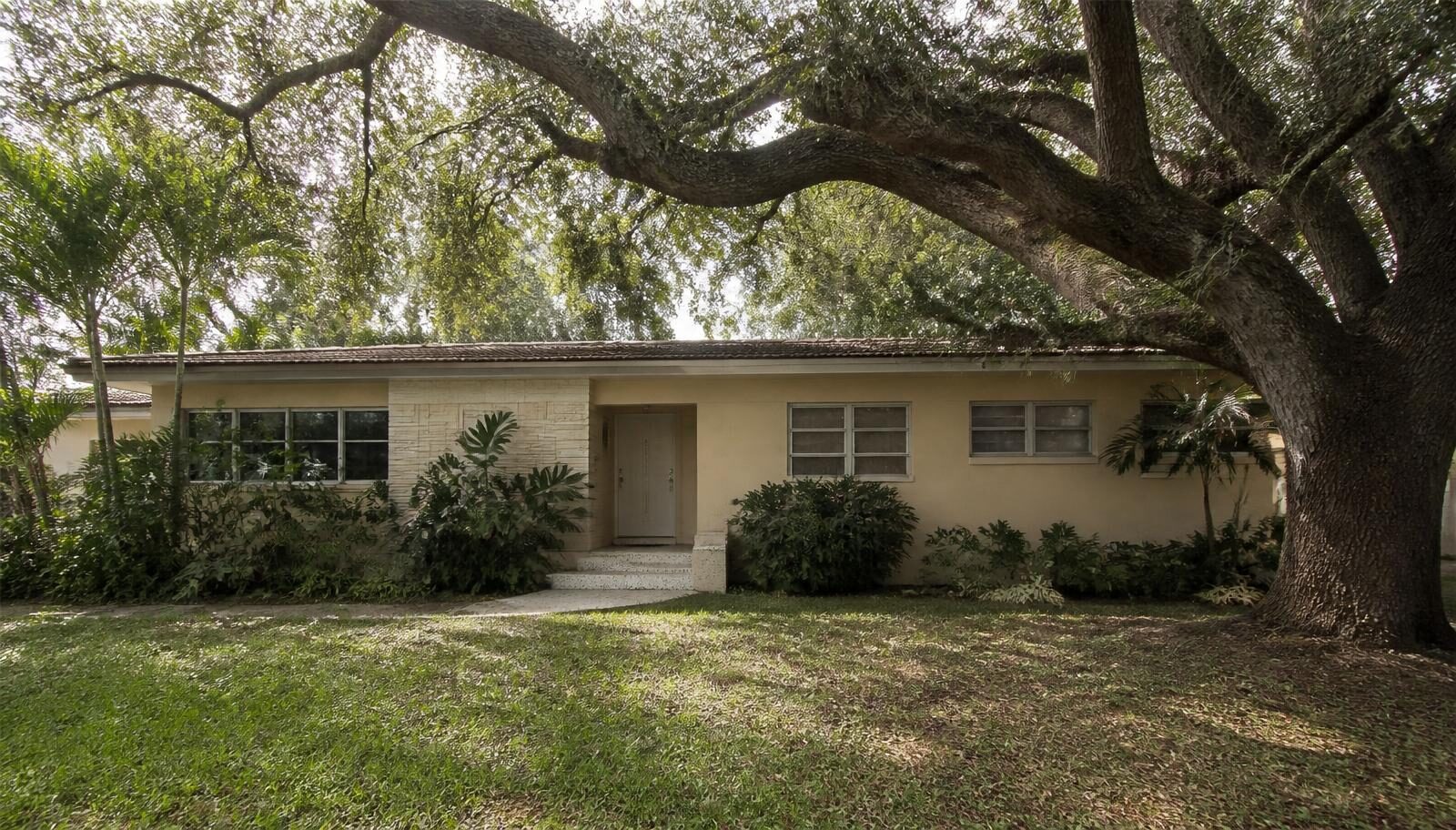
The decision does not look the same across every property. An older Pinecrest home requiring major renovation may draw strong direct interest from renovation buyers, since much of the value sits in the lot and the location. A Brickell condominium in good condition generally has an identifiable buyer pool that broad exposure can reach efficiently. A Coconut Grove residence with distinctive architecture may need exposure precisely because it is hard for one buyer to price. A Miami Beach property with redevelopment potential may be valued differently by a developer than by an owner-occupant.
Higher-value properties are their own case. Where a residence sits in the upper tier of the Miami luxury property market, the buyer pool is smaller, more international and often slower-moving, so a direct investor offer and broad market exposure can produce very different results. The strategy considerations there are covered in selling a luxury home in Miami.
Waterfront and Land Value
For many waterfront properties, value depends on factors beyond the existing improvements: lot size, linear water frontage, dockage, seawall condition, water depth and access, bridge clearance, orientation, and zoning or redevelopment potential. A seller in Coral Gables or on Key Biscayne should understand whether a direct buyer is pricing the existing home or the underlying real estate opportunity — those are different valuations, and the difference can be substantial. Flood zone designations, which affect insurance and rebuilding decisions for coastal parcels, can be checked on the FEMA Flood Map Service Center. Zoning and development questions belong with the appropriate municipal authority and your own professional advisors. Broader context on this segment is in our guide to Miami waterfront properties.
Condominiums
For a condominium, buyers evaluate the building alongside the unit: association finances and reserves, recent or pending assessments, monthly fees, milestone or structural inspection status, insurance, views, parking and storage, leasing restrictions, and whether the project is eligible for common financing programs. Those factors influence both the offers a unit attracts and how confidently a direct buyer can price it.
Questions to Ask Before Choosing How to Sell
- What is my property reasonably worth in today's market?
- What similar properties have recently sold, and how do they compare to mine?
- What competing properties are available right now?
- What repairs or preparation would be needed to list?
- How important is my timeline, honestly?
- How important is avoiding showings?
- What are my estimated costs under each option?
- What are my estimated net proceeds under each option?
- What contingencies does the cash buyer have?
- Does the cash buyer have proof of funds?
- What deposit is being offered, and when is it at risk?
- Can the buyer assign the contract?
- What happens after the inspection period?
- What happens if the buyer does not close?
- Would broader market exposure materially benefit this property?
- What matters more to me: convenience, timing or market exposure?
Compare Your Miami Selling Options
Before accepting a direct offer or placing a property on the market, understand how the price, terms, costs and likely net result compare. Supreme Capital Real Estate Agents Miami can help evaluate the property and discuss the selling strategies available based on your priorities. For broader guidance on buying, selling and reading this market, our wider Miami real estate representation resources cover each stage of the process.
Get a personalized selling strategy through Miami seller representation, or request a Miami home valuation to establish the market context first. Contract questions belong with a Florida real estate attorney, and tax questions with a qualified tax professional.