Miami Luxury Buyer Guide
Miami Luxury Condo vs Waterfront Estate: Which Is Right for You?

Should You Buy a Luxury Condo or Waterfront Estate in Miami?
Neither is universally better. A luxury condo may be a better fit for a buyer prioritizing services, amenities, views, security, location and lock-and-leave convenience. A waterfront estate may better fit a buyer prioritizing land, privacy, private outdoor space, dockage where applicable, water frontage and greater direct control over the property where permitted. The decision should compare how the property will be used, location, total ownership costs, maintenance responsibility, association obligations, waterfront requirements, privacy, services and future plans — not simply which category sounds more luxurious.
A luxury condo and a waterfront estate can compete for the same Miami buyer, and it is common for a single search to include both. But they are fundamentally different ownership experiences, and working through that difference early — ideally with Miami buyer representation — keeps the decision grounded in how you actually want to live rather than in a listing photo.
What Is the Main Difference Between the Two?
A luxury condo purchase combines a unit, a building and an association: you own the residence and participate in a community governed by documents, a budget, a board and a set of shared services. A waterfront estate purchase combines the house, the land and the waterfront itself: you own the property outright and generally carry maintenance, repairs and property decisions directly, subject to any applicable HOA or municipal rules.
Vertical Luxury
Unit
Building
Association
Services
View / Position
You own a residence within a shared building and rely on staff, amenities and governance you do not fully control.
Private Waterfront Ownership
House
Land
Waterfront
Privacy
Owner Responsibility
You own the structure, the land and the water frontage, and you generally carry the responsibilities that come with all three.
A luxury condo and a waterfront estate may compete for the same buyer. But they are fundamentally different ownership experiences — and that difference, not the price tag, is what should drive the comparison.
What Is It Like to Own a Luxury Condo in Miami?
Owning a luxury condo means owning far more than the interior square footage. The building, floor, view and exposure shape the day-to-day experience, and amenities, staffing, security, parking and storage vary substantially from one tower to the next. So does the association behind it — its fees, reserve funding, existing or approved assessments, insurance, rules and financial condition.
You are not only buying the residence. You are also buying into the building. Financing eligibility and new-construction competition can vary by tower as well, which is why two condos at a similar price point can offer very different ownership experiences. The complete due-diligence process — the documents, reserves and inspections worth requesting before you buy — is covered in our guide to buying a condo in Miami, so this comparison stays focused on how a condo stacks up against a waterfront estate.
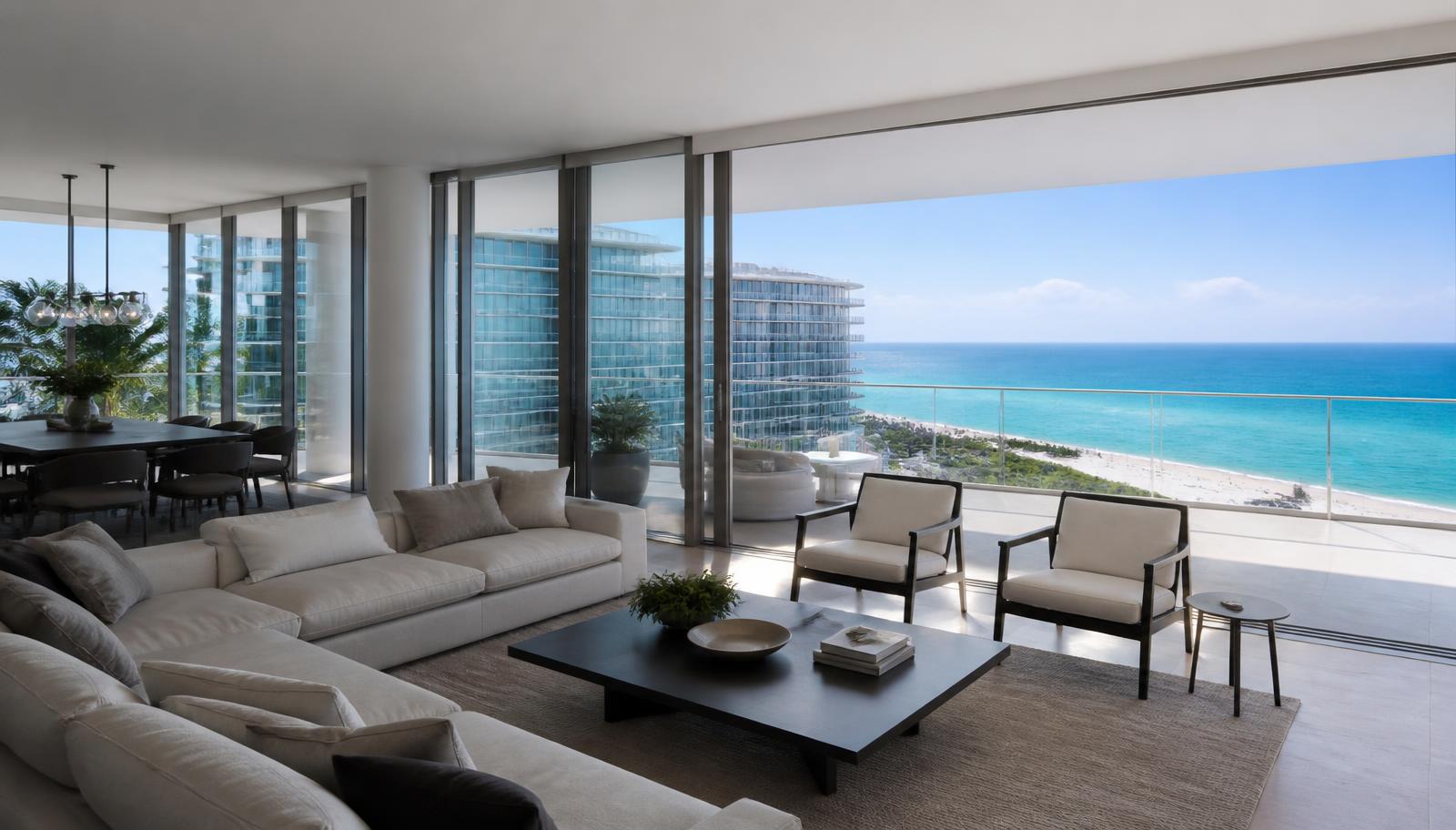
Current Luxury Inventory
Miami Luxury Condos for Sale
Explore current luxury condo opportunities across Miami and compare how building, location, views, amenities and unit characteristics shape the ownership experience.
For the full commercial collection of Miami's high-end inventory and buyer or seller representation at that level, see our Miami luxury real estate page.
What Is It Like to Own a Waterfront Estate in Miami?
Owning a waterfront estate means owning the land, the residence and the water frontage attached to it — and generally carrying the responsibility for all three. That can include the roof, exterior and landscaping, a pool where present, a private dock and seawall where present, mechanical systems and property-level security, in addition to the usual considerations of buying a house.
Water frontage also introduces its own variables: orientation, water depth, bridge access, seawall condition and flood exposure all affect how the property can actually be used and insured. These items belong in the comparison at a high level here; the deeper waterfront-specific due diligence — dock permits, seawall history, elevation certificates and insurance specifics — is covered in our Miami waterfront homes guide.
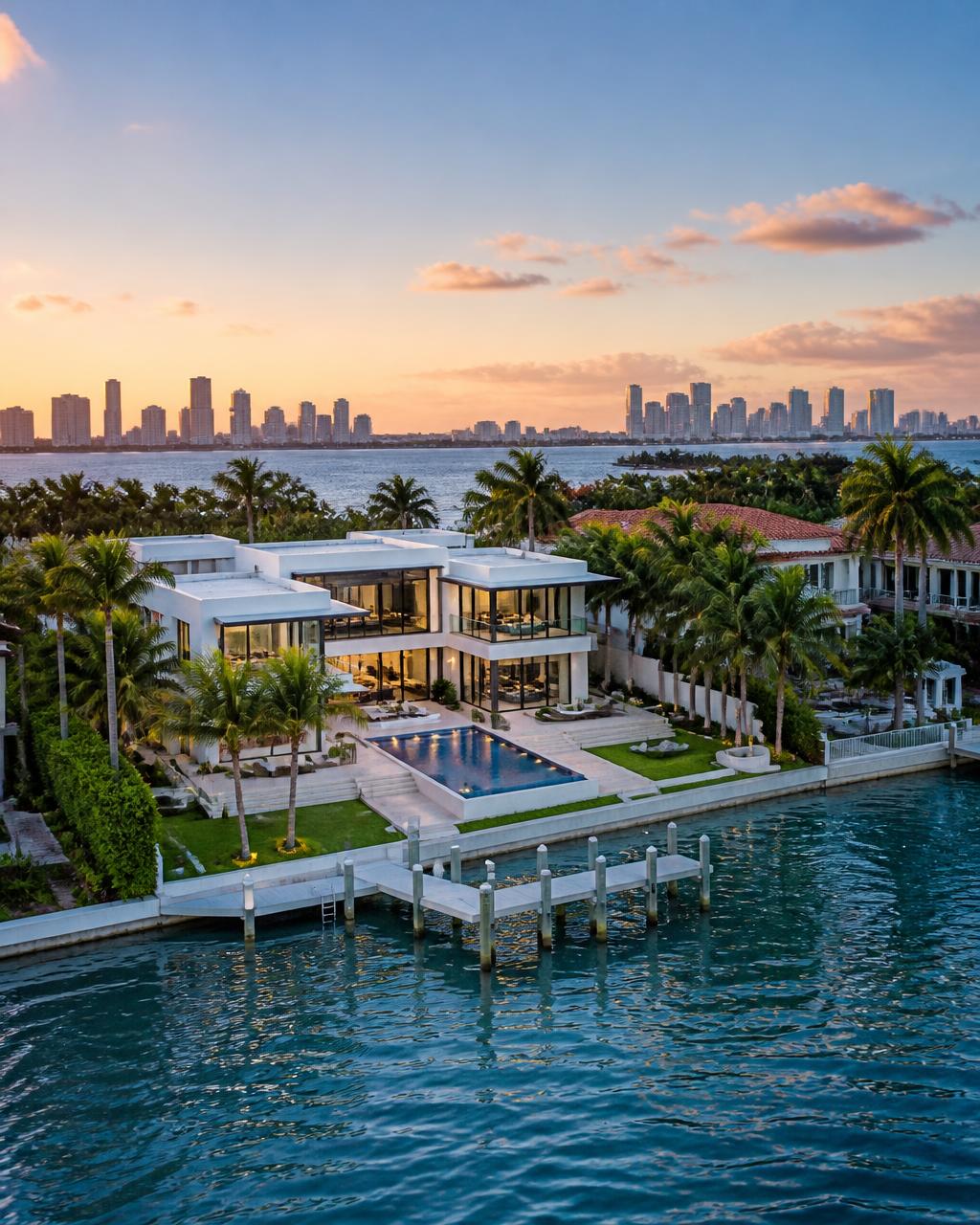
Current Waterfront Inventory
Miami Waterfront Estates for Sale
Explore current waterfront single-family properties across Miami and compare location, land, water frontage, dockage potential and property-specific characteristics.
How Do Ownership Costs Compare?
Purchase price is only one part of luxury ownership. A luxury condo can involve financing where applicable, property taxes, unit insurance, association fees, existing or approved assessments, parking or storage costs and interior maintenance. A waterfront estate can involve financing where applicable, property taxes, property insurance, flood insurance where applicable, landscaping and pool maintenance where present, roof and exterior upkeep, and dock or seawall maintenance where present.
How Does Maintenance Responsibility Compare?
In a luxury condo, certain common-element and exterior responsibilities may be handled by the association depending on its governing documents, while the unit owner retains specified responsibilities within the residence. In a waterfront estate, the owner generally assumes substantially more direct responsibility for the physical property and land — potentially including the exterior, roof, landscaping, pool, dock, seawall, mechanical systems and security systems where those features exist. Not every estate has every one of those features, and the age and condition of the property change the picture considerably.
How Do Privacy and Security Compare?
Neither property type has a monopoly on privacy. Luxury condos can offer controlled building access, staffing, security, private elevators in some buildings and a limited number of residences per floor. Waterfront estates can offer physical separation, private land, gated access where applicable and private outdoor space, with greater distance from neighboring residences depending on the property.
The comparison is really between building-based privacy and property-based privacy — two different kinds of privacy rather than more or less of it.
How Do Amenities and Services Compare?
Luxury condo buildings may offer concierge service, valet, fitness and spa facilities, pools, resident lounges, private dining and, in some buildings, marina or dock access — though not every building offers every amenity. A waterfront estate instead allows for private amenities the owner controls directly: a private pool, private gym, private dock or private outdoor entertaining space, where the property actually provides them.
It is a comparison between shared high-end services and private controlled amenities, and the right answer depends on whether you would rather have those features provided or built to your own specifications.
What Should You Know About Condo Associations?
A condo association's fees, reserve funding, existing or approved special assessments, insurance, governing documents, rules and overall financial condition all shape the true cost and experience of ownership. A higher fee does not automatically make a building worse, and a lower fee does not automatically make another building better — it depends on what each fee includes and how well the association is funded. Florida condominium associations are also subject to statutory reserve and structural-inspection requirements published in the Florida Condominium Act. This comparison stays at a high level; the full framework for evaluating an association is covered in our Miami condo buying guide.
What Should You Know About Owning Miami Waterfront Property?
At a comparison level, waterfront ownership generally requires attention to water frontage, seawall condition, dock condition and permits, water depth, bridge access, orientation and flood exposure, in addition to routine property maintenance. Each of these factors can materially affect both the ownership experience and the property's insurability. Recorded lot dimensions, land area and assessment records for a specific parcel can be reviewed through the Miami-Dade County Property Appraiser. For the full waterfront-specific due-diligence framework, see our Miami waterfront property guide.
How Important Are Dockage and Water Access?
"Waterfront" does not automatically mean "boat access." A waterfront buyer with boating in mind generally needs to evaluate dockage, water depth at the specific dock, any fixed bridges and their clearance, channel access to open water, seawall condition and water frontage itself — along with any applicable permits or restrictions tied to the dock. Dock, seawall and shoreline work in Miami-Dade is permitted through the county's environmental and coastal resources program, so existing structures and any planned changes should be verified for the individual property. What a given property can accommodate depends on its specific characteristics and the vessel or use intended, not on the word "waterfront" alone.
How Do Insurance and Flood Considerations Differ?
Insurance is not uniform across Miami luxury property. It depends on the specific property, the building where applicable, location, flood zone, coverage selected, association structure and lender requirements. Not every waterfront house requires the same flood insurance position, and not every condo carries the same insurance profile — building or master association coverage and unit-owner coverage are conceptually distinct in a condo, while a house owner generally insures the structure directly. Flood zone information and mapping is published by FEMA, and the applicable requirement for a given purchase depends on the property and the lender.
How Does Financing Differ?
Luxury condo financing can involve review of the buyer along with, depending on the loan or program, the condominium project itself — considerations may include association finances, insurance, occupancy and litigation. Waterfront estate financing can involve buyer qualification, property appraisal, property condition and insurance, among other lender requirements. At higher price points financing structures vary substantially by lender and program, so this is worth confirming early with your lender rather than assuming a standard jumbo structure applies.
Which Is Better for a Second Home?
There is no universal winner. A luxury condo may appeal for its lock-and-leave use, building staff, services and less direct exterior maintenance between visits. A waterfront estate may appeal for its privacy, land, private amenities, dockage where applicable and space for family or guests — but estate ownership generally requires more active property oversight while the owner is away.
Which Is Better for Full-Time Miami Living?
Full-time living brings space, privacy, services, location, maintenance, pets, vehicles, outdoor space, entertaining and daily water access all into the comparison at once. A condo can offer convenience and services close to work and city life; an estate can offer room to spread out and greater control over daily surroundings. Neither is a clear winner — the right fit depends on how you actually plan to use the property day to day.
What If You Plan to Rent the Property?
Rental rules vary and must be verified for the specific property. Condo associations may regulate lease frequency, minimum lease terms, approval procedures and other restrictions. A waterfront estate is not automatically unrestricted either — HOA rules, deed restrictions and municipal regulations can still apply. If rental use is part of your plan, confirm what is permitted before you are under contract, not after.
How Does Location Change the Decision?
In much of Miami, the property-type question is settled by geography before it is settled by preference. Luxury condo environments include vertical markets such as Brickell, Edgewater and portions of Miami Beach and Bal Harbour, where towers dominate the skyline and the practical comparison is often building versus building. Private waterfront ownership is concentrated in guarded islands and low-density waterfront enclaves such as Star Island, Palm Island, Key Biscayne, Gables Estates and Cocoplum, where land and water frontage — not floor plates — define the market.
Coral Gables and Coconut Grove present a mix of both, depending on the specific street and budget, which is why the neighborhood conversation and the property-type conversation should happen together rather than in sequence.
How Are Luxury Condos Valued?
A luxury condo's value can be influenced by the building, floor, view, exposure, unit size, condition, renovation, balcony, parking, storage, amenities, association finances, reserves, assessments, building age, new-construction competition and genuinely comparable recent sales. Two units in the same building are not automatically the same product — a high-floor residence with a direct water view can command a materially different price than a lower-floor unit with a different exposure.
How Are Waterfront Estates Valued?
A waterfront estate's value can be influenced by land, lot size, water frontage, dockage, seawall condition, bridge access, water depth, orientation, location, architecture, condition, renovation, privacy, property size and genuinely comparable recent sales. There is no simple price-per-square-foot formula at this level — two waterfront lots of similar size can differ substantially in value based on exposure, channel depth and bridge clearance alone.
Luxury Condo Value
Unit
Building
Position / View
Association
Market
Waterfront Estate Value
House
Land
Waterfront
Location / Condition
Market
What About New Construction?
New luxury condos and new or custom waterfront homes create different decision processes. A new condo purchase generally involves developer contracts, deposit structures, completion timing, association formation, warranties and unit selection. A new or custom waterfront home generally involves a builder relationship, lot characteristics, permitting and construction timelines instead. The complete process for either path is covered in our Miami new construction guide, and current projects can be reviewed through our Miami new developments overview.
What Should International and Out-of-State Buyers Consider?
International and out-of-state buyers evaluating either property type generally benefit from local representation for remote evaluation, inspections and due diligence, an understanding of financing differences that may apply to non-resident buyers, clarity on closing logistics, and a plan for ongoing property or association oversight after closing — whether that means a condo's management company or an estate's property care arrangements. Buyers should also consult appropriate legal and tax professionals for their specific circumstances; this article does not provide legal or tax advice.
How Should You Choose Between the Two?
A useful framework starts with a short set of questions rather than a scoreboard: Do you prioritize privacy or services? Do you want land? Do you want direct water access, and is boating actually important to you? Do you want building amenities, or would you rather build your own? How much property maintenance are you willing to manage? Is this a primary residence or a second home? How important is lock-and-leave convenience? Do you want private outdoor space? What total ownership costs are you comfortable with? How much control do you want over the physical property? Which Miami location best fits your lifestyle?
Choose the property by the ownership experience, not by the label. A remarkable luxury condo can be the better fit for one buyer, and a private waterfront estate can be the better fit for another. The objective is not to determine which category is more luxurious — it is to identify which property, which location, which ownership structure and which responsibilities fit you.
Find the Miami Luxury Property That Fits You
Whether you are drawn to a serviced high-rise residence or a private waterfront estate, the decision comes down to the specific property and how it fits your plans. Our team provides current Miami real estate market context alongside Miami buyer representation, so you can compare real options across both ownership types rather than choosing on the basis of a category alone. Explore additional guidance and property resources through Miami real estate agents at Supreme Capital.
Next Step
Explore Miami luxury real estate
Browse the full collection of luxury condos and waterfront estates currently available.
Work with a Miami buyer's agent
Compare specific condos and waterfront estates against your ownership priorities.
Search Miami properties
Filter current MLS inventory by area, price and property type.